Jalalabad Attack
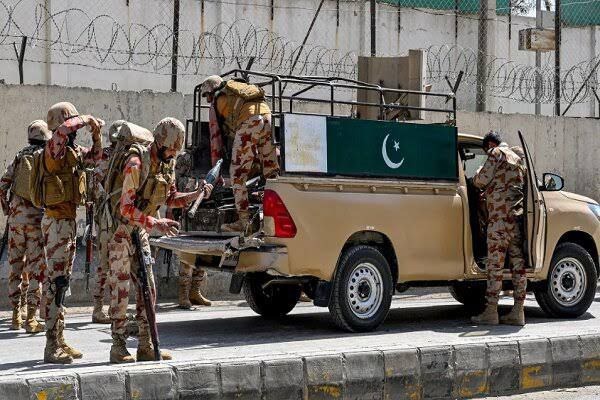
Kabul administration authorities in Jalalabad have asked residents to stay indoors. Afghan Army’s chief of staff Gen. Yasin Zia is also present in the city to lead the operation himself. Additionally, the security forces began a special operation when Jalalabad prison was attacked last evening. Authorities announced that the prison is now under control and five attackers have been killed. Jalalabad is some 115 kilometers east of Kabul and is the capital of Nangahar province. Taliban denied involvement in any attack during the ceasefire.This is not the first attack by ISIS-k.
https://twitter.com/Zabehulah_M33/status/1289946516732276737
ISIS Afghanistan branch is also known as ISIS-k or Daesh has claimed responsibility for the attack
Attack details
A suicide bomber slammed a vehicle bourn improvised explosive device (VBIED) into a prison in Jalalabad. According to Afghan media outlets. An SVBIED attack left about the number of people dead and many injured. After which the attackers opened fire. The SVBIED attack was used to clear the entrance of heavily fortified prison. The attack started just after 6:30 PM on Sunday and continued through the night and into Monday. Once SVBIED struck the main entrance and blew up all the barriers. Attackers stormed into the prison building and took positions.
Militants then stormed the facility. In the gun battle, hundreds of prisoners escaped. However, Daesh militants took control of two prison towers earlier. Some prisoners also joined and took up arms. They started fighting alongside the attackers. However, there has been no official confirmation of these reports.
Majority of prisoners fled away
This prison houses about 1300 inmates which include Taliban members, Daesh militants, and criminals. Afghan Security and Defense Force personnel in armored vehicles surrounded the prison in the middle of Jalalabad, just 700 meters (half a mile) from the governor\’s office. According to authorities, not more than 1000 prisoners have successfully fled after the attack. Security forces were able to arrest some of them but the majority of prisoners are still at large.
21 dead and many injured
Nangarhar governor’s spokesman, Attaullah Khogyani, meanwhile said the death toll has risen to 21 and 43 wounded. The dead included civilians, prisoners, guards, and Afghan security forces, Khogyani said. While Zahir Adil, a spokesman for the provincial health directorate, told Ariana News that 13 of those hurt are in a critical condition.
ISIS-K attacks are increasing
Furthermore, Afghanistan has seen a recent spike in violence. Most of these attacks by the ISIS Khurasan branch are gruesome in nature. Besides the prison break attack is also important regarding the future of the ISIS-k role. Taliban fighters have successfully established themselves as main stakeholders of Afghanistan and signed a peace deal with the US. This attack came on the last day of the Taliban declared a ceasefire. This is not the first attack by ISIS-k, the infamous so-called Islamic state has previously staged many gruesome and heinous attacks. Which includes an attack on the Sikh temple in Kabul and a recent attack in eastern Lugar province on Thursday that killed at least nine people and left 40 wounded.
Taliban have openly opposed ISIS ideology and also launched military campaigns against it. They blame Kabul administration for ties with ISIS-k and using it to sabotage peace deal. Some blame Kabul’s national directorate of security for giving safe houses to ISIS-k militants.

Your trusted source for insightful journalism. Stay informed with our compelling coverage of global affairs, business, technology, and more.