The chairman of Overseas Pakistanis Foundation boarded a series of flights earlier this year to Germany, South Korea, and Japan. During that trip, his responsibility was to listen directly to diaspora communities and address their concerns. It’s a minor but significant observation. Despite having over 9 million citizens across 115 countries, a single official travels from city to city to keep in touch.
Some years ago, Pakistan’s then Ambassador at Large, Javed Malik, put the bigger issue in words. The government had failed to tap into the potential of overseas Pakistanis by considering them mere “remittance machines,” he said. That phrase has aged well, for the wrong reasons, as it still describes the relationship today.
The numbers speak for themselves and illustrate just how much room there is for growth into that potential. In 2024, Pakistanis overseas remitted USD 34.6 billion. That continued to rise, with Pakistan closing FY26 with a record $41.6 billion in remittances, a 9 percent increase year-on-year, with the top three sources being Saudi Arabia, the UAE, and the UK.
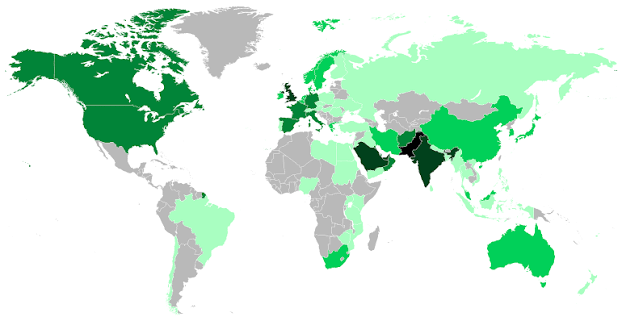
More than 12 million Pakistanis are residing in the UAE and the Gulf. The wider diaspora, which is estimated to be more than 9 million by the government, is bigger than that of most of the Pakistani provinces combined, and carries goodwill, access, and familiarity with culture where the government’s foreign ministry rarely reaches on its own.
The institute that is supposed to cater to the needs of this community, Overseas Pakistanis Foundation, has been doing genuine work since 1979 and has built houses, pensions, airport facilities, and an ever-expanding complaint cell for those who get into trouble abroad. It is, by design, a welfare body, and welfare is genuinely required. Its chairman, however, suggested in April 2026 that the foundation should require a small yearly membership fee to have the financial means to improve the services it offers.
Earlier, a parliamentary committee had also demanded that the foundation be monitored more closely, indicating that lawmakers are keeping tabs on how it benefits its members. The foundation has been renewed multiple times throughout the years, with a new mandate in 2017 that sought to do more for a community that continues to expand.
Other nations can provide a good example for the future direction of this. India maintains a special unit in the Ministry of External Affairs dedicated to dealing with the Indian diaspora, and the Pravasi Bharatiya Divas convention, which sees diaspora leaders meet the foreign minister and prime minister, is held every two years. In addition to its welfare role, India has established a permanent institution for representation and the coordination of narratives, with its diaspora as a stakeholder in the way India is perceived internationally.
The Philippines built something similar from a different starting point. President Duterte signed a law establishing a cabinet-level department for overseas workers in December 2021, consolidating seven separate agencies. Given the presence of about 10 million Filipinos abroad, the government determined that a single, well-funded department was more capable of meeting the needs of the overseas Filipinos than several smaller ones operating side by side.
Pakistan’s diaspora is as big and as generous with what it brings back. What would be useful right now would be another institution, in addition to the welfare work that is already being done. An institution focused on representation, whose aim is to coordinate the voices of the diaspora at international forums, which would help in public diplomacy from the Pakistani point of view, and provide communities abroad a direct route into Pakistan’s story being told.
The opportunity here is significant. Pakistani communities abroad, built over decades of remittances, business ownership, and civic engagement in their host countries, carry real standing there. A diaspora business owner in Houston, a diaspora journalist in London, a diaspora academic in Toronto, each already has access that took years to build. A dedicated representation office can help direct that goodwill at times when it is needed.
None of this means starting from zero. It involves the establishment of a second, targeted arm to the foundation’s welfare initiative, with a direct line to the foreign ministry and a distinct mandate to coordinate and represent.
The Philippines demonstrated that this can be done in just one election cycle with the will to do so. Pakistan doesn’t need to replicate every facet of that model; only the concept that welfare and representation are both worthwhile, and both should have an institution that is created for that purpose.
Any new office of this nature should be planned carefully from the beginning. A representation body answerable to parliament, with a clear and published mandate, kept separate from anything that handles welfare payments or personal data, and can focus entirely on coordination and voice would be a good start.
Having the design right the first time would give the office the credibility to perform its job well. Pakistan does not have to choose between welfare and diplomacy for its diaspora. It has just not yet had the opportunity to develop both at the same time.

Fakeha Laique
Fakeha Laique is a bachelor’s graduate in International Relations from BUITEMS, Quetta, and a young researcher with a growing focus on international relations, regional dynamics, and security issues in South Asia.