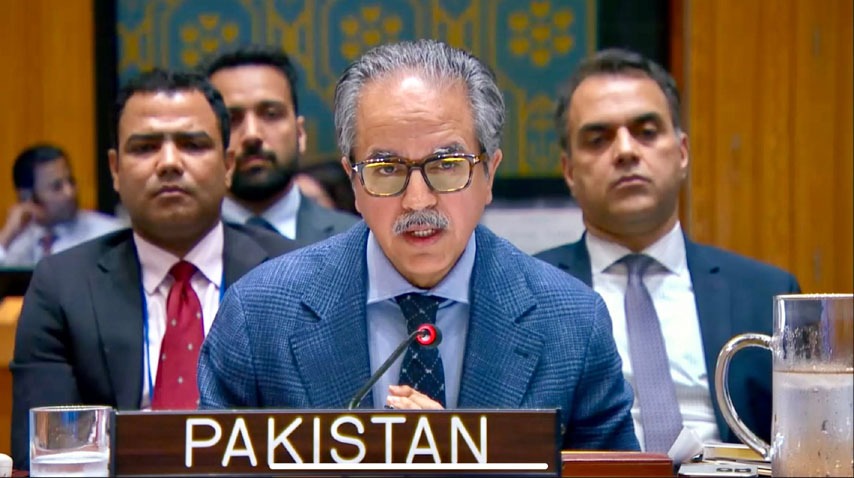
![WLF signs a deal with Pakistan's Crypto Council to boost blockchain, stablecoin adoption, and DeFi in the country. [Image via Reuters/File]](https://southasiatimes.org/wp-content/uploads/2025/04/4596268-826949502.webp)
KARACHI: World Liberty Financial (WLF), a decentralized finance platform backed by US President Donald Trump, signed a letter of intent with Pakistan’s Crypto Council on Saturday to advance blockchain innovation, stablecoin adoption and decentralized finance (DeFi) integration across the South Asian country.
The agreement, signed in Islamabad, comes as Pakistan looks to formalize its crypto economy amid rising interest in blockchain technologies.
Pakistan is already among the world’s fastest-growing crypto markets, ranking near the top in global adoption rates, with an estimated $300 billion in annual crypto transactions and around 25 million active users.
The government has signaled plans to announce comprehensive cryptocurrency legalization policies soon, building on its wider digital economy ambitions fueled by a largely young population and growing mobile penetration.
“Pakistan’s youth and technology sector are our greatest assets,” Finance Minister Muhammad Aurangzeb, who is currently in Washington and attended the ceremony through video link, said, according to a government statement. “Through partnerships like this, we are opening new doors for investment, innovation and global leadership in the blockchain economy.”
Also See: World Bank Trims Pakistan’s Economic Growth Forecast to 2.7pc
The WLF delegation also met Prime Minister Shehbaz Sharif, Chief of Army Staff General Asim Munir, Deputy Prime Minister Ishaq Dar and several federal ministers during the visit.
The partnership outlines cooperation on areas such as regulatory sandboxes for blockchain product testing, tokenization of real-world assets, expansion of stablecoin applications for remittances and trade and advisory support on blockchain infrastructure and regulatory trends.
Pakistan’s proactive stance follows its broader push to position itself as a hub for digital finance innovation, with 64 percent of its population under the age of 30.
Rising mobile broadband access, a booming freelance economy and increasing government interest in blockchain have accelerated the country’s Web3 adoption.
Bilal Bin Saqib, CEO of the Pakistan Crypto Council, said the collaboration with WLF was aimed at empowering Pakistan’s young population and integrating the country more deeply into the future of global finance.
WLF leadership praised Pakistan’s “energy, vision and talent,” calling it one of the most exciting places in the world to build decentralized finance ecosystems.
This news is sourced from Arab News and is intended for informational purposes only.

Your trusted source for insightful journalism. Stay informed with our compelling coverage of global affairs, business, technology, and more.