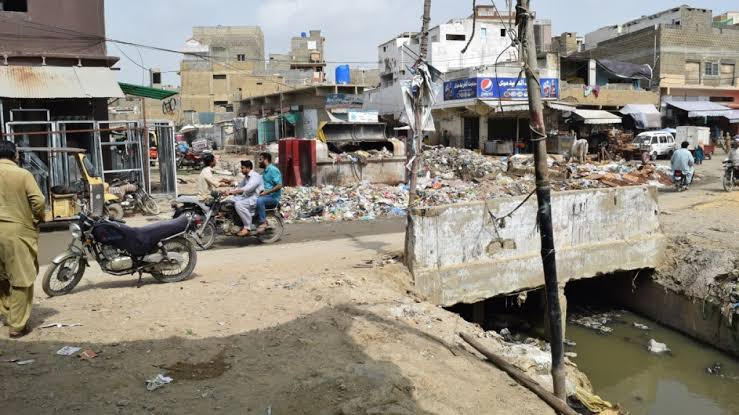
In Sindh’s politics, we often hear about massive projects, budgets worth billions of rupees, and developmental achievements. But the real test of any government’s performance is not a press conference, a budget speech, or an advertisement. The real question is: what kind of road does an ordinary citizen find when they step out of their home? How safe is the building a mother sends her child to school in? And when a student in some remote village opens a book, is there a solid roof over their head? If the answers to these basic questions are not satisfactory, then large financial figures begin to lose their significance.
A child sitting in a broken-down school building is not merely a photograph. It is a test of the social contract that exists between the government and the citizen. The child has not asked the government for any extraordinary facility. Their only wish is that the school have a safe room, a roof to protect from heat and rain, clean drinking water, and a usable path to reach it. These are the very basic needs whose provision becomes the clearest measure of a state system’s success or failure.
This issue is all the more important because it is not easy to argue that resources are completely unavailable. According to the Sindh government’s own financial records, 613.36 billion rupees were allocated for the education sector in fiscal year 2025-26, including development expenditure. During the same period, the government also mentioned spending on completing the recruitment of nearly 75,000 teachers, free textbooks, Sindh Education Foundation projects, and the rehabilitation of flood-affected schools. These measures are important in their own right, but the very existence of this official record strengthens a fundamental question: how quickly and evenly is the impact of allocated resources reaching every district, every school, and every child?
Floods undoubtedly caused severe damage to Sindh’s educational infrastructure, and the government also launched projects to rebuild the affected schools. In April 2025, Sindh’s Education Department also formally recorded the start of a new phase of reconstruction of schools in flood-hit areas. This fact cannot be ignored. But explaining a natural disaster and ensuring ongoing administrative accountability are two different things. Reviewing the pace, quality, priorities, and use of funds in reconstruction is just as necessary as announcing new projects.
Similarly, the problem of roads and drainage is not merely a question of urban aesthetics. A road filled with dirty water affects transportation, business, health, education, and daily life in an area, all at once. A child going to school, an employee going to the office, a laborer traveling by motorcycle, and a family taking a patient to the hospital all pay the price of the same poor infrastructure. When the difference between a road and a drain becomes indistinguishable, the citizen’s problem is no longer just difficulty in travel — they also begin to feel that the taxes they’ve paid and the state’s resources are not bringing about the needed change in their daily lives.
When a mother sends her child off to school, she doesn’t send them as part of some political debate. She simply wants the child to reach a safe building by a safe path and get an education that builds a better future. If there’s an open drain along the way, a road submerged in water, or a dilapidated school building, this problem cannot be resolved by a statement from any one party, official, or department. This is where the question of institutional responsibility arises. Which department is responsible? How many funds were released? How much was spent? When was the work supposed to be completed, and why does the situation on the ground differ from that? Citizens deserve clear answers to these questions.
The Sindh government has continued to maintain that work is ongoing on expanding access to education, recruiting teachers, non-formal education centers, school rehabilitation, and other reforms. The Education Department also describes free and compulsory education as its basic responsibility. These measures should be acknowledged, but in governance, results matter more than intentions and announcements. If a project’s paperwork is complete but the classroom is still unusable, then a gap exists somewhere in the administrative process. If there’s a budget for drainage but the neighborhood road remains constantly flooded with dirty water, the citizen is right to ask about the state of implementation.
The real issue is this: Sindh’s standard of development should not be measured only by how large the annual budget is or how many schemes have been announced. The real standard should be how many children got a safe school, how many dilapidated buildings were fully restored, how many roads became usable, how many drainage problems were permanently resolved, and how much time it took to act on citizens’ complaints. The government’s strongest defense will not be an advertisement, but rather a school where a child can sit without fear, and a road on which a citizen can travel with dignity and safety even after rain.
The broken roofs, open skies, damaged roads, and flowing dirty water seen in photographs matter precisely because they connect policy to human life. Behind every photograph lies a family, a child, and a daily struggle. The children of Sindh need safe classrooms more than political slogans. Citizens need walkable roads and effective drainage more than promises. A fair assessment of the government’s performance should also be based on these very outcomes.
Development, ultimately, is not the name of an amount recorded in a budget book. Development is the name of the moment when a mother no longer has to worry about her child’s school roof, when a student is not forced to leave class because of rain, and when a citizen does not have to wade through dirty water to reach their home. For Sindh, the real challenge is to move beyond announcing resources and turn them into improvements that are observable, measurable, and reach every citizen. This is the standard by which the government, the administration, and local institutions should be held accountable.
Translated into English, originally published in Urdu in Nigah
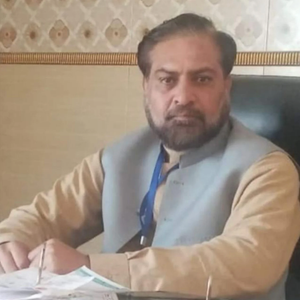
Sohail Javed
The author is a respected media professional currently serving as Chief Executive of a national news channel HD and Executive Editor of "The Frontier Interruption Report."