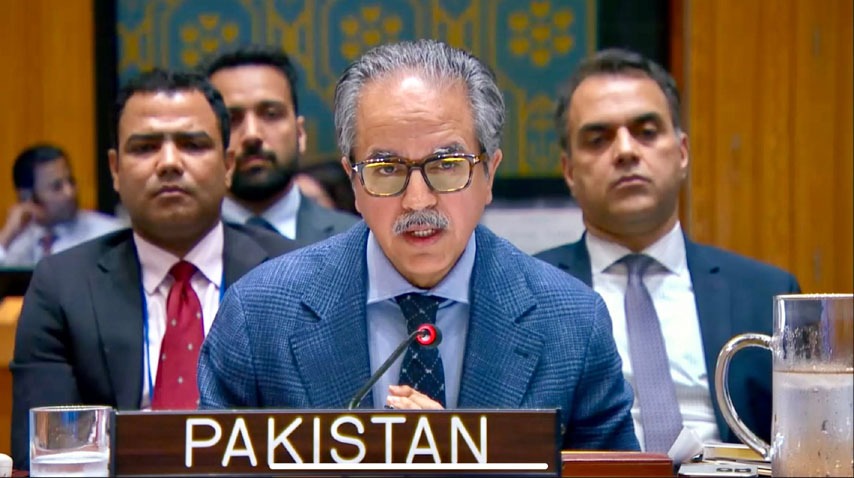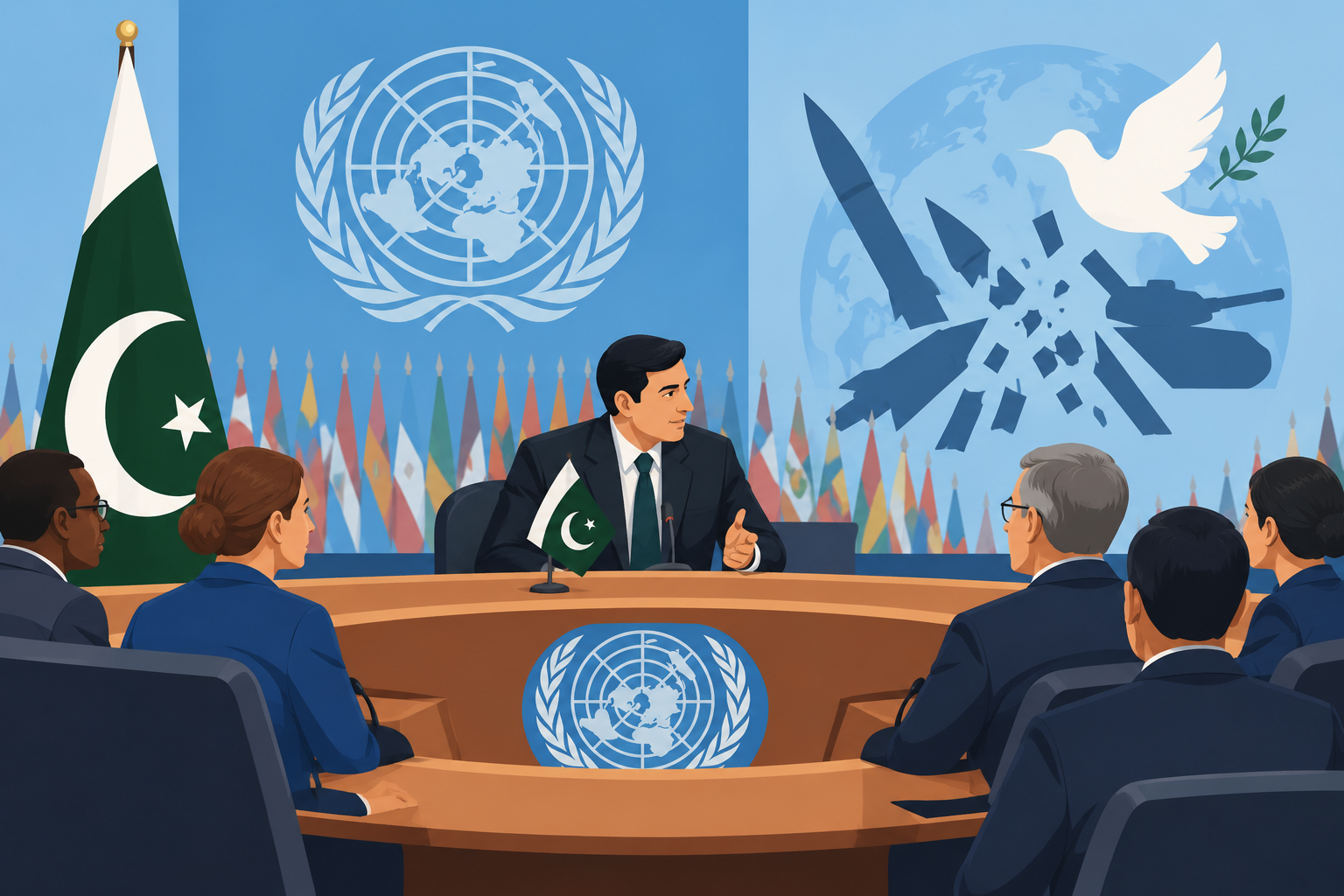
Pakistan’s leadership, under Ambassador Tahir Hussain Andrabi, at the United Nations Conference on Disarmament (CD) achieved a major diplomatic result at a time when international efforts to control nuclear weapons are facing uncertain political and strategic obstacles.
Under Pakistan’s presidency, the CD reached a mutual consensus and adopted an annual report for review; the report will now be sent to the United Nations General Assembly.
States agreed on a consensus technical report on the core elements of international security and arms control and also decided to include cutting-edge technological challenges in the official report for 2026.
This year, reaching an agreement was especially challenging because member states couldn’t agree on the conference’s agenda or the creation of subsidiary bodies.
The challenges the CD is facing are not new. The Conference has been unable to agree upon a meaningful program of work for more than 25 years. Because of its consensus-based rule of procedure, which permits any one member to obstruct progress on any agenda item.
For a long time, the Fissile Material Cut-off Treaty has been unresolved, as some states want to restrict only future production of fissile material; states like Pakistan have historically opposed an FMCT limited to future production because such an approach would not adequately address existing asymmetries in fissile-material holdings.
The debate over the Prevention of an Arms Race in Outer Space (PAROS) has become more urgent as major powers develop dual-use and counter-space capabilities. However, there are still fundamental differences between Russia, China, the United States, and its allies regarding how binding such an instrument should be.
A decline in confidence in current arms control agreements, growing great-power rivalry, and the spread of destabilising technologies, such as military uses of artificial intelligence, all of which put the CD’s practicality and productivity to the test.
The CD is still capable of achieving group results, as shown by the annual report. It suggests a small but significant example of how global diplomacy may still succeed when political players are prepared to interact, make compromises, and identify points of agreement.
This development also reaffirms Pakistan’s long-standing focus on multilateral approaches to disarmament and arms control. The presidency offered a chance to show that a South Asian nation could be helpful in promoting negotiation among nations with conflicting geopolitical objectives.
Pakistan will also have to lead negotiations in October on the UN General Assembly resolution about the Conference’s Annual Report as the last President of the CD’s 2026 session; the report’s approval does not exempt Pakistan from its obligations.
The First Committee will review the report after it has been sent to the General Assembly. As a result, Pakistan will have another chance to help reach a consensus and ensure that the CD’s results are carried over into the larger UN disarmament effort.
Pakistan’s presidency, instead of trying to impose a preconceived text, deliberately worked toward consensus language and conducted extensive talks with member states, and this was the successful adoption of the Pakistani presidency’s diplomatic strategy.
Nuclear-power states and other states are among the 65 member states of the CD, as major nuclear powers with conflicting strategic interests find it especially challenging to reach an agreement because of its consensus-based structure.
During Pakistan’s four-week presidency, open informal conversations and bilateral meetings with representatives from various regional and political organisations, including major nations, were held. Their priorities, concerns, and potential areas of flexibility were evaluated before the draft was finalised.
It highlighted that even in the face of deadlock among major nations, political divisions, and a continued lack of confidence, diplomatic space for compromise is still feasible.
Pakistan’s presidency did not overcome the Conference on Disarmament’s longstanding substantive divisions, but its success in facilitating consensus on the Annual Report demonstrates that sustained consultation, inclusive engagement, and carefully negotiated language can preserve limited avenues for multilateral cooperation even amid deep strategic rivalry.
Procedural consensus can serve as a modest but important confidence-building measure in a forum which unable to resolve its most contentious substantive issues.

Ms. Nazia Sheikh is a Research Officer at the Centre for International Strategic Studies, AJK. She holds an MPhil degree in International Relations from the International Islamic University, Islamabad, Pakistan. Her research interests focus on arms control and disarmament.