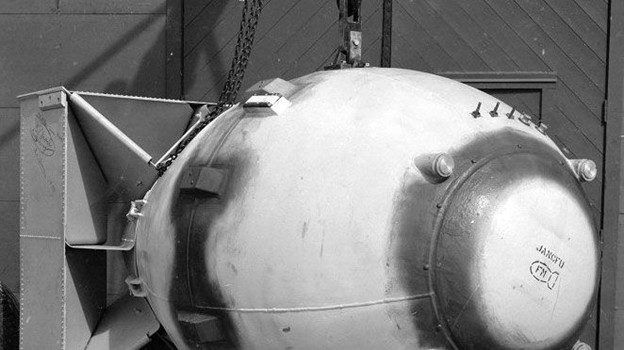
In the years following the atomic bombing of Hiroshima, the international community has continued to commemorate one of history’s greatest tragedies. These annual remembrances keep alive the memory of the immense humanitarian devastation caused by nuclear weapons and remind the world that the consequences of nuclear war extend far beyond the battlefield.
While the events leading to Hiroshima were themselves catastrophic for international peace, the bombing demonstrated the immense responsibility that accompanies the possession of nuclear weapons. That lesson remains particularly relevant for South Asia, where two nuclear-armed neighbours continue to navigate recurring crises under the shadow of deterrence.
To a considerable extent, nuclear deterrence has achieved its primary objective by preventing a full-scale war between India and Pakistan. Since both countries became overt nuclear powers in 1998, the region has avoided direct conventional conflict on the scale witnessed in earlier decades.
Yet deterrence has not guaranteed lasting stability. South Asia has experienced repeated crises including military standoffs, cross-border strikes, militant attacks, and periods of intense political confrontation that demonstrate the limitations of nuclear deterrence alone.
This reflects what strategic scholars describe as the stability-instability paradox. While the fear of nuclear escalation discourages all-out war, it does not prevent limited military operations, proxy conflicts, cross-border militancy, or coercive diplomacy.
Each of these carries the risk of miscalculation, particularly as military response times shorten and political decision-making becomes increasingly influenced by domestic pressures and nationalist rhetoric.
Technological change is introducing additional uncertainty. Cyber capabilities, artificial intelligence, hypersonic weapons, autonomous systems, and space-based military assets are transforming the strategic environment faster than military doctrines can adapt.
These technologies could complicate early-warning systems, disrupt communication, compress decision-making timelines, and increase the likelihood of unintended escalation during future crises.
Political relations between India and Pakistan offer little reassurance. Diplomatic engagement remains limited, bilateral dialogue has largely stalled, and many institutional confidence-building measures have weakened over time. Although military hotlines remain operational, meaningful political engagement often resumes only after tensions have already escalated.
India’s revocation of Article 370 in Jammu and Kashmir in 2019 further complicated regional dynamics by increasing political tensions and reducing opportunities for sustained dialogue. At the same time, continuing allegations of cross-border militancy, ceasefire violations, and competing security narratives continue to reinforce mutual distrust rather than strategic restraint.
Hiroshima also leaves an enduring humanitarian lesson that strategic debates often overlook. Discussions on deterrence frequently focus on missiles, doctrines, and military capabilities while giving insufficient attention to the human consequences of nuclear conflict.
Numerous studies suggest that even a limited nuclear exchange in South Asia would cause millions of immediate deaths, overwhelm healthcare systems, devastate infrastructure, and trigger severe environmental and climatic consequences extending far beyond the region. No state possesses the capacity to respond effectively to a catastrophe of such magnitude.
As the world commemorates Hiroshima once again, strengthening strategic stability should remain an urgent priority. Rather than focusing solely on expanding military capabilities or revising nuclear postures, greater emphasis should be placed on practical risk-reduction measures. Sustained political dialogue, military-to-military communication, transparency measures, and regular information exchanges remain essential to preventing crises from escalating into conflict.
Strategic stability also requires looking beyond the size of nuclear arsenals. The doctrines governing the potential use of nuclear weapons, shifts in military strategy, and changes in nuclear posture deserve equal attention because they directly shape crisis behavior and escalation risks.
Beyond traditional confidence-building measures and ceasefire arrangements, policymakers must place greater emphasis on the humanitarian consequences of nuclear conflict. Discussions on weapons of mass destruction should not remain confined to deterrence theory or emerging technologies such as cyber warfare.
They must also consider the political environments in which nuclear decisions are made. Domestic political pressures, electoral calculations, and nationalist narratives can all influence strategic decision-making during periods of crisis, increasing the risk of escalation.
Nuclear weapons have undoubtedly contributed to preventing full-scale war in South Asia. Yet Hiroshima reminds us that deterrence alone cannot guarantee peace. The region’s long-term stability will depend not simply on maintaining a nuclear balance, but on strengthening diplomacy, reducing strategic mistrust, and preserving channels of communication during periods of tension. Ultimately, it is diplomacy, not deterrence alone that prevents crises from becoming catastrophes.
The views and opinions expressed in this article are solely those of the author and do not necessarily reflect the editorial position of South Asia Times.

Umama Saifeen
Umama is undergraduate scholar of Strategic Studies at National Defense University