Pakistan’s GSP Plus journey has unfolded amid terrorism, instability across its western border, displacement and devastating climate disasters.
These pressures have consumed public resources and tested institutions. Yet Pakistan has maintained its international commitments and continued undertaking legal and institutional reforms. Any assessment of the partnership with Europe should recognise that persistence and consider how continued engagement can help turn commitments into lasting improvements.
For ordinary Pakistanis, the significance of GSP Plus begins with livelihoods. A household dependent on factory wages experiences trade through its ability to buy food, pay rent and keep children in school. For Europe, the arrangement offers commercial opportunities and a means of encouraging the rights, protections and standards it champions. Both interests deserve a place in the debate.
The European Community introduced its Generalised Scheme of Preferences in 1971 to help developing countries participate more effectively in international commerce. GSP Plus, established in 2005, added incentives linked to sustainable development and good governance. Preferential market access would encourage economic opportunity alongside internationally recognised standards on human rights, labour, environmental protection and governance.
Pakistan began benefiting on January 1, 2014. By then, it had already ratified the 27 required conventions. Participation linked preferential access to ongoing obligations for effective implementation and cooperation with monitoring.
The arrangement’s purpose therefore extends beyond increasing exports. It gives governments an economic incentive to improve implementation, employers a commercial interest in stronger standards, and workers and civil society commitments against which to seek accountability. Its influence can reach beyond exporting factories into national legislation and public institutions.
For Pakistan, this matters on a considerable human scale. The Economic Survey 2025–26 estimates its population at 252.09 million in 2025. Creating productive employment for a population of this size requires investment, skills and dependable access to markets, particularly when insecurity and disasters repeatedly disrupt economic activity.
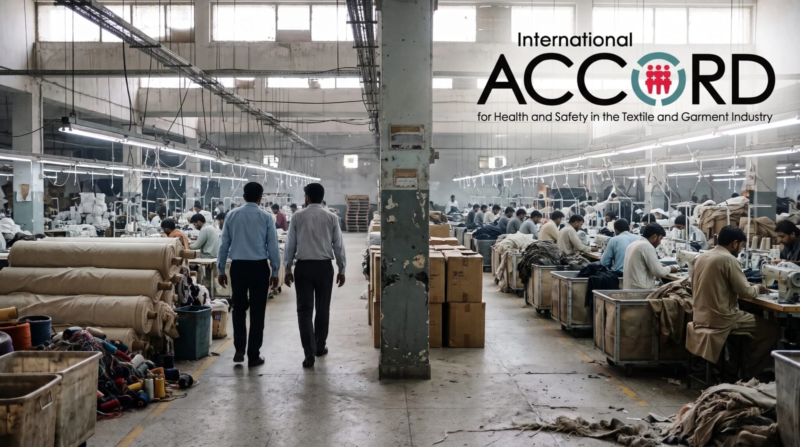
Textiles illustrate the stakes. APTMA has cited approximately three million direct workers and another nine million people indirectly affected by the industry. These industry estimates demonstrate how extensively production connects with suppliers, services and households. They should be understood as estimates with different coverage, rather than a single official employment count.
Women are an important part of this picture. An ILO document published in 2026 puts women’s employment across garments, textiles and footwear at approximately 1.5 million out of 4.76 million workers, roughly one-third. Decisions affecting these sectors consequently have implications for women’s earnings and economic independence.
The contribution to poverty alleviation depends on protecting those opportunities and improving their quality. A regular income can help a family withstand hardship. Fair wages, safer workplaces and access to social protection can make that income more secure. GSP Plus provides incentives for pursuing these outcomes, while domestic enforcement determines how widely the benefits reach.
Pakistan has undertaken this work against an exceptional security backdrop. For roughly a quarter-century since the US-led intervention in Afghanistan in 2001, it has faced the consequences of regional conflict, militant violence and displacement. Its security challenges have multiple causes, but the continuing cross-border threat requires international recognition.
UN monitoring published in 2026 reported that the TTP received greater liberty and support from Afghanistan’s de facto authorities, contributing to increased attacks against Pakistan. This reinforces Pakistan’s concerns about sanctuaries across the border and the difficulty of confronting networks operating beyond its territory.
The Global Terrorism Index 2026 ranked Pakistan as the country most impacted by terrorism, recording 1,139 deaths and 1,045 incidents in 2025. Institutions expected to deliver reform are operating within this environment, while communities bear the direct human cost.
Pakistan describes elements of this violence as a proxy campaign against the state. Specific allegations of sponsorship require evidence, while the documented cross-border militant threat is substantial. Pakistan’s resistance to these networks makes it an important bulwark against terrorism’s wider reach. Its economic and institutional resilience is consequently an interest shared by international partners.
Displacement adds another responsibility. The UNHCR reported approximately one million registered refugees and asylum-seekers in Pakistan in late 2025 and early 2026, alongside a larger Afghan population with varying documentation statuses. Hosting displaced populations creates additional demands on housing, education, healthcare and municipal services. International burden-sharing should support displaced people and the communities accommodating them.
Climate shocks compound these pressures. Germanwatch’s Climate Risk Index 2027 ranks Pakistan sixth among countries most affected by extreme weather in 2025. The ranking concerns that year’s recorded impacts, placing Pakistan among its ten hardest-hit countries.
Against this background, Pakistan’s continued compliance efforts deserve recognition. The EU’s 2026 assessment notes that Pakistan maintained ratification of all 27 conventions without new reservations. It acknowledges progress, including anti-torture implementation rules, a narrower scope for the death penalty and ratification of the forced labour protocol. It also identifies serious shortcomings and weak enforcement. Pakistan’s response should consolidate the progress already achieved and demonstrate further implementation.
For Europe, the relationship carries a diplomatic value that trade statistics cannot capture. GSP Plus can build soft power gradually by connecting the values Europe promotes with practical improvements in Pakistan. A safer workplace, greater opportunity for women or an effective remedy against exploitation gives those principles meaning in everyday life.
Such experiences can generate goodwill and trust, providing a crucial foundation for European diplomacy. Pakistan gains opportunities and support for reforms serving its citizens. Europe gains sustained engagement and greater acceptance of the standards it advocates. This mutual benefit deepens when cooperation remains dependable through difficult periods.
Regional perceptions make that engagement particularly important. Europe’s close defence partnership with India influences Pakistani perceptions of European strategic priorities. After all, French aircraft and missiles were used by India to kill Pakistani civilians in the May 2025 conflict.
GSP Plus provides an important window through which Europe can sustain a substantive relationship with Pakistan alongside its defence partnership with India. It demonstrates an interest in Pakistani society, its development and its institutional progress.
Pakistan must continue improving implementation. Its efforts should be judged seriously, with an understanding of the conditions in which they are being pursued. Continued GSP Plus access, supported by credible monitoring and practical cooperation, can protect livelihoods and strengthen reforms undertaken despite extraordinary hardship. For Europe, preserving that partnership also preserves trust, influence and a shared investment in a more resilient Pakistan.

Amir Jahangir
The writer is a strategic communications expert, media executive, and policy adviser