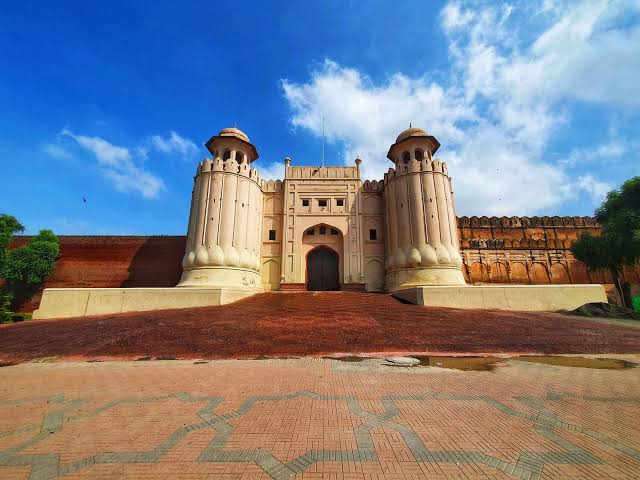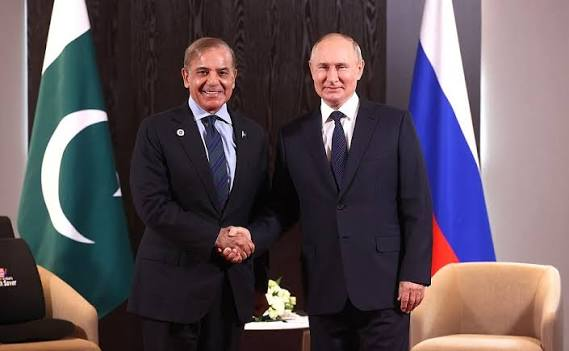
Pakistan’s Federal Minister, Dr Musadik Malik talked about the multi-layered civilizational heritage that, according to him, defines Pakistani society and culture. The most interesting thing about his speech in New Delhi was not what he said about India, but what it reminded Pakistanis about themselves. As we understood his speech, he clearly interpreted Pakistan’s civilizational heritage as multilayered and, in this connection, he not only mentioned Muslim luminaries of pre-colonial India like Ghalib and Khawaja Nizam-ud-din Auliya but also admired the Buddhist past of the lands which now form part of Pakistan.
Pakistan was born as a separate political state in 1947, but this doesn’t mean that the civilizations, cultures, intellectual, and literary traditions that preceded it have ceased to be part of its heritage. And the fact that Ghalib, Nizam-ud-din Auliya and Amir Khusru are physically located across the border doesn’t mean that we cannot claim them to be part of our cultural heritage. For decades Pakistani society behaved as if acknowledging multiple streams of cultural and intellectual heritage as its inheritance would compromise the ideological foundation of the Pakistani state. I found Dr Malik’s speech remarkable from this perspective: a representative of the Pakistani state must go to New Delhi to acknowledge this multi-layered civilization as Pakistan’s own.
It was subtle but Dr Malik did score a point on India’s ruling party, BJP which espouses an obscurantist policy in their society. The BJP led group of Hindu nationalist parties define Indian identity in a narrow ideological sense as Hindu civilizational identity. Dr Malik was right in pointing out that the historical contributions of Muslim, Persians and Central Asians cannot be removed from the history of the Indian sub-continent. This is an important layer in the civilizational history of the sub-continent. But Hindu nationalist parties are not ready to acknowledge this.
Pakistan has passed through this phase of religious obscurantism, in whose grip Indian society finds itself now. One strong indication that obscurantism’s grip on Pakistani society is loosening, is that a person like Dr Malik can go to New Delhi and claim ownership of multiple layers of civilizations that run parallel in this land of ours. Maybe it is true that Pakistani society is largely becoming more pragmatic and less rigidly ideological. India, on the other hand, is taking a fresh plunge into the sea of obscurantism. We see more brutal violence against Muslim communities in India.
The cultural exceptionalism that is on display in Indian society comes in the shape of violent fascism. India has a rich intellectual tradition through which it has a very deep understanding of the civilizational heritage of the lands called India. This deep intellectual tradition is in direct conflict with Hindutva ideology. The personality that epitomizes this intellectual understanding is none other than renowned historian Romila Thapar. She understands Indian civilization through its diversity, and multiple cultural and intellectual influences and diverse civilizational heritage. Hindutva ideology is the most venomous threat to this civilizational diversity.

Your go-to editorial hub for policy perspectives and informed analysis on pressing regional and global issues.