The 31st UN Climate Change Conference commenced on 9th November in Antalya and will continue until 20 November 2026. It is the first of its kind in the history of the 31st Conference of the Parties to the UNFCCC (COP31).
The conference is hosted in Turkiye and chaired by Minister for Environment Murat Kurum, and Australia’s climate minister, Chris Bowen, chairs the formal negotiations, while the Pacific island states are given a prominent voice as partners.
The climate change conference, like the former ones, comes with a question, of whether the promises made in this will be fulfilled or slipped aside yet again. Today, climate diplomacy progresses with diligent compromise, not joint enthusiasm. The same focus on delivery is seen in the program, where twelve days of thematic events are followed by a day of “Enhancing Implementation” on 19 November.
That reflects what COP30 left behind. In Belém, the “Global Mutirão” decision was undertaken, which aims to increase adaptation finance by at least 3 times by 2035. There was no baseline year nor binding contributions from the developed countries, so it is difficult to determine what it means in practice to “triple”.
The statistics are not promising. Adaptation finance has declined from USD 28 billion to USD 26 billion over 2022–2023 and an earlier commitment to double it at COP26 has not been fulfilled. Parties also agreed on 59 Belém Adaptation Indicators, but these are voluntary and they could not agree on how to close the gap between national climate plans and the 1.5°C pathway.
Antalya for the outside world is a test of credibility this time around, because the trust is lowest around climate finance. The USD 300 billion COP29 pledge proved insufficient to begin with and the Baku to Belém Roadmap aims for all-source finance to reach USD 1.3 trillion a year in developing countries by 2035.
The actual debate is the gap between those numbers and the current flows. COP31 is said to be the ultimate “stress test” of whether money and power can keep pace with the negotiators’ words and adaptation planning. Otherwise, the “implementation” tag will become another slogan that developing countries have come to accept with skepticism.
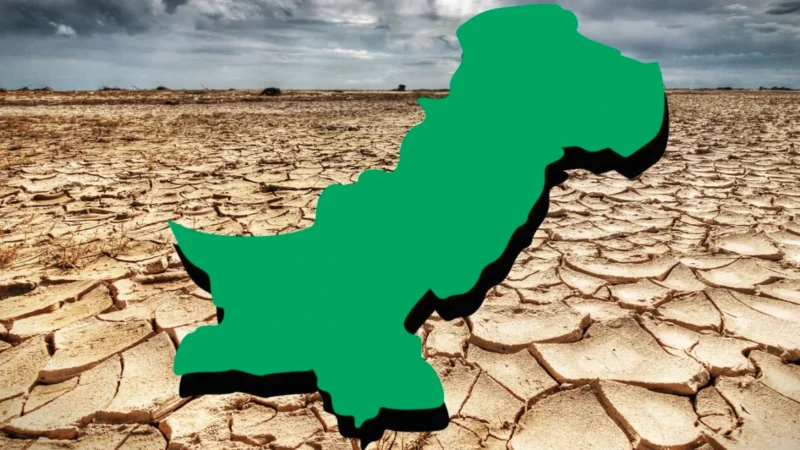
No other country knows this gap better than Pakistan. The country accounts for less than one percent of global emissions, and bore the brunt of the floods of 2022 that impacted 33 million people, killing 1,739 and leaving an estimated eight million displaced.
The post-disaster assessment determined that damages were USD 14.9 billion, economic losses were USD 15.2 billion and the cost of resilient reconstruction was at least USD 16.3 billion. The greatest impact was on housing, agriculture and transport, with damages of USD 5.6 billion, USD 3.7 billion and USD 3.3 billion respectively and Sindh accounted for nearly 70 percent of the damage.
In January 2023, total international pledges following the disaster stood at USD 10.7 billion, but this has not translated into disbursements, and recovery efforts have relied heavily on borrowing and domestic resources.
Pakistan’s path has not merely been determined by help from others. It has set its path itself. In September 2025, it submitted its third Nationally Determined Contribution (NDC), which pledges to reduce emissions projected for 2035 by 50 percent, or from 2,559 million tonnes of CO2 equivalent (MtCe) to 1,280 MtCe.
Just 17 percent of that cut is unconditional. The remaining 33 percent requires international financial support, transfer of technology and capacity building with Islamabad estimating the total requirement at USD 565.7 billion. It targets 38,000 megawatts of clean energy by 2035 and shifting the purchase of new vehicles to electric vehicles by 2030. The ambition is real, but so are the obstacles.
How, then, can Pakistan use COP31 to its advantage? First, it must shift the focus of its diplomacy to adaptation, where Pakistan’s losses are concentrated. It should call on G77 and other vulnerable countries to set a clear baseline and an annual delivery schedule for the tripling pledge. If there is no way to measure the goal, then it can’t be enforced.
This is also a question of equity, as agriculture contributes approximately 18 percent in contribution to Pakistan’s Gross Domestic Product (GDP) and 37 percent to employment and thus each failed monsoon is a national economic shock.
The second is to come with profitable projects rather than appeals. The Global Implementation Accelerator, launched in Belém, is a voluntary platform for turning national plans into action. Investors would see a credible partner in a solar pipeline of climate-screened projects and in flood-proof infrastructure and water management. Third, Pakistan should prioritise its mountains.
The Hindu Kush-Karakoram-Himalaya region contains over 13,000 glaciers, and Pakistan has already attracted the attention of the UNFCCC on accelerating glacier melt and glacial lake outburst floods. The Action Agenda led by Turkiye is a suitable framework for presenting glacier monitoring and early warning as a global public good.
Fourth, Pakistan needs to invest in partnerships. It has longstanding relations with Turkiye and has access to the Presidency, and negotiations with the Pacific states, which are equally exposed to climate shocks. A collective stance on finance from the Global South would be more impactful than a single delegation’s grievance.
The dialogue in Antalya will not be impactful if it is limited to empty slogans and broken promises. It will be assessed on whether a Sindhi farmer affected by the floods, or a village downstream of a melting glacier in Gilgit-Baltistan, sees any impact. Pakistan’s best state is the one that is the most vulnerable and the best equipped, with a clear case. So that it can attract more credible projects and join hands with even more reliable allies.
Harsa Kakar
Ms. Harsa Kakar is working as a Research Assistant at Balochistan Think Tank Network (BTTN), at BUITEMS, Quetta, Pakistan. She is an MS International Relations Scholar at BUITEMS, Quetta, and a distinguished graduate of International Relations from the University of Balochistan. She specializes in AI, Global Politics, Diplomacy, Soft Power, and Conflict Resolution.