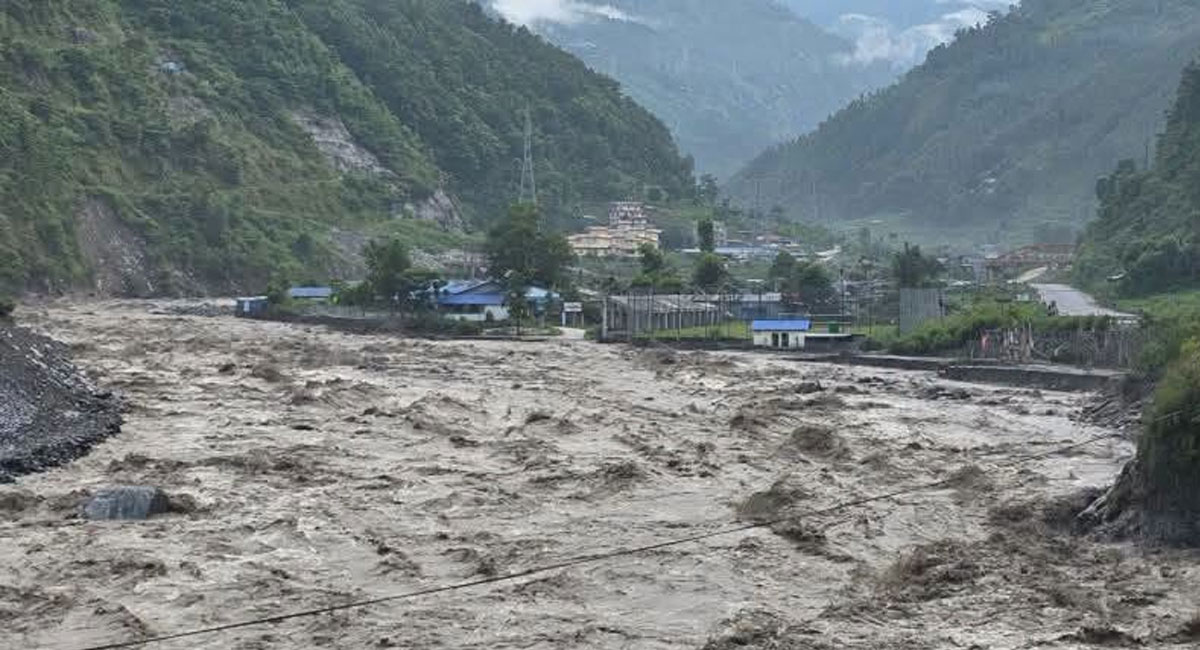
In view of the massive Bhotekoshi flash flood and the mass suffering due to the heavy loss of life and property, a country like Nepal situated in such a precarious position has been compelled to ask itself if Nepal can afford to rebuild everything there in the same place, in the same way, while carrying the same risks?
As an ordinary citizen, I cannot help but feel that this disaster may be nature’s warning to Nepal—a message urging us to rethink how we develop settlements, build infrastructure and use our enormous water resources.
The fact that this idea does not come from an expert or planner should not be a reason to dismiss it. The value of an idea should be judged by its logic, merit and feasibility—not by the identity of the person who presents it.
Therefore, this proposal deserves serious study and open public debate, keeping Nepal’s long-term national interest at the centre.
The central idea is simple: if a scientifically suitable mega dam and reservoir can be constructed in the disaster-affected area, a single multipurpose project could generate enormous amounts of hydroelectricity.
At the same time, regulated water flow could provide major benefits in irrigation, flood control, drinking-water supply, fisheries and tourism. If such a system is technically and environmentally feasible, Nepal would no longer have to live in constant fear of glacial lakes suddenly bursting.
Instead, modern technology could allow water from such lakes to be monitored and, where appropriate, released in a controlled manner to regulate and augment the flow into the proposed project. In other words, we could explore how to turn a potential risk into a national resource.
Developed countries have been building and operating large dams for decades and have gained enormous benefits from hydropower and regulated water management. Their history also shows that such projects once involved tremendous technical and social challenges.
But today, Nepal has access to far more advanced technology, engineering knowledge, monitoring systems and risk-management tools. If scientific assessment concludes that the disaster-affected area should no longer be used for rebuilding the same settlements and infrastructure, then we must seriously examine whether a large reservoir and dam could offer a better long-term alternative.
Unlike some countries where major dam projects displaced enormous populations and had to confront the massive force of very large rivers, Nepal may have a different situation in certain locations. If the required relocation is minimal or manageable and the engineering conditions are favorable, the country has a unique opportunity to think differently.
What we need now is political courage and a willingness to think beyond conventional solutions.
If developed countries have historically extracted enormous amounts of natural resources and contributed significantly to global climate change, while countries like Nepal are now facing some of its harshest consequences, why should Nepal hesitate to raise this issue on the international stage?
Nepal should seek international climate finance, loss-and-damage support and adaptation funding—and, where justified, argue that such resources should help finance transformative climate-resilient infrastructure and water-resource projects.
We should not be afraid to speak about the losses we are suffering. The more we fear, the more we are ignored. A country must be able to speak clearly and confidently for its own interests.
If climate change has contributed to the increasing risks Nepal faces, then Nepal should have the courage to demand meaningful international support to build infrastructure capable of managing those risks. Such a demand would not necessarily be unreasonable or out of place.
We simply need the courage to make it.
If we fail to embrace bold thinking now, we may find it increasingly difficult to imagine major hydropower projects in Nepal. If the fear of glacial-lake outbursts continues to grow, not only will new projects face greater difficulty, but existing projects may also remain under constant risk.
Likewise, Insurance companies and financial institutions will inevitably pay greater attention to the location and climate-related risks of major infrastructure projects when deciding whether to insure or finance them. And if rebuilding the same settlements and infrastructure in the same risky locations are no longer a sensible option, then we must look seriously at alternatives.
One such alternative could be a large, multipurpose reservoir protected by a properly designed mega dam—but only after rigorous scientific, environmental, geological, seismic and engineering studies confirm its feasibility and safety.
So, the question before Nepal is clear:
Will we have the courage to build a mega dam and turn water-related risks into national opportunities—or will we continue building small, risky “water mills” and remain satisfied with fragmented benefits?
A government with a two-thirds majority has a rare opportunity to think boldly, study this proposal seriously and make a decision in the larger national interest.
Nepal does not need to rebuild exactly what nature has just destroyed. Perhaps this is the moment to rebuild smarter.