It has been over a year since Pakistan suspended trade with Afghanistan and over eight months since Pakistan launched Operation Ghazab Lil Haq, aimed at targeting terrorists and their support networks in Afghanistan. Since third-party-mediated talks between the two capitals have not succeeded so far, security analysts are trying to figure out whether Pakistan’s current hard approach towards the Taliban government of Afghanistan is going to achieve its desired results in reducing terrorist violence in Pakistan and whether a continuation of this approach would be feasible in the longer run.
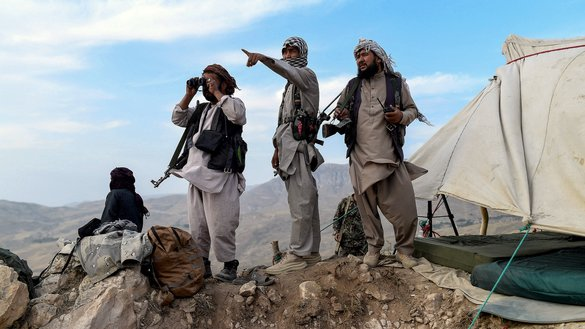
For a start, let us put the Taliban regime’s denials about their abetment of terrorism in Pakistan to rest. Even if one would treat Pakistani officials’ claims about over 60 terrorist training camps in Afghanistan as biased, the presence of terrorist safe havens on Afghan soil under the Taliban regime is well documented in various reports of the Sanctions Monitoring Committee of the UN Security Council. Pakistani security forces claim that they have killed 260 terrorists with established Afghan origins in addition to the numerous unidentified terrorists killed in security forces operations across the country whose Pakistani identities cannot be ascertained. On one occasion, a son of the Taliban’s deputy governor of the western Badghis province was also reportedly killed in one of Pakistani security forces operations in D.I. Khan in January 2025.
Secondly, as I’ve argued elsewhere, kinetic operations inside Afghanistan were never Pakistan’s default go-to option with regard to terrorism emanating out of Afghanistan. Soon after trade was suspended between Pakistan and Afghanistan as a consequence of the first major military escalation between the two countries in October last year, Pakistan’s Defence Minister, Khawaja Asif, shared in a post on X that, up to that point, Pakistani foreign minister had visited Kabul four times, defence minister and the ISI chief had visited twice, the special representative and foreign secretaries had carried out five visits each, and the national security adviser had visited Kabul once to address the matter amicably. He also mentioned the 225 border flag meetings, as well as the 836 protests notes and 13 demarches delivered to Kabul further. So, Pakistan’s continued reliance on kinetic military response across the border in Afghanistan needs to be seen as an outcome of the failure of Islamabad’s bilateral, trilateral, and multilateral diplomatic overtures towards Kabul, and as the second-best option for eliminating the terrorist safe havens across the border in the given circumstances.
An important question to ask, however, is whether Islamabad’s kinetic operations inside Afghanistan have yielded the desired results for Pakistan in terms of reducing the numbers of terrorist attacks and casualties from such attacks. Table 1 below gives a comparison of South Asia Terrorism Portal’s year-on-year figures of the combined deaths of civilians and security forces personnel resulting from terrorist incidents all across the country from March to October 2025 and the corresponding months for 2026.
Table 1: Year-on-Year Combined Civilian and Security Forces Casualties in Pakistan
| Y 2025 | Y 2026 | |
| March | 183 | 155 |
| April | 93 | 134 |
| May | 148 | 244 |
| June | 142 | 217 |
| July | 192 | 324 |
| August | 139 | 157 |
| September | 206 | 179 |
| October | 177 | 145 |
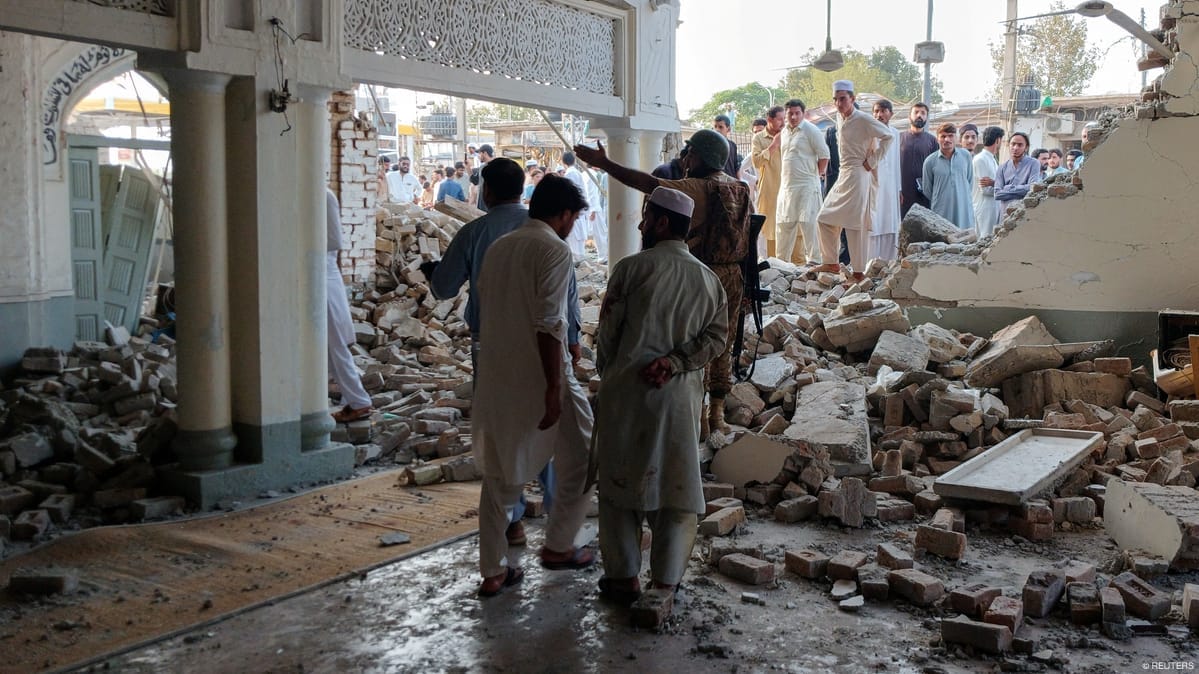
The data presented in Table 1 above reveals that while fatalities from terrorism in Pakistan were going up until August 2026 as compared to the corresponding months the previous year, September and October are showing much decreased fatalities from terrorism incidents. The upward trajectory in the previous months could be attributed to the hectic efforts of the terrorists to settle scores with Pakistan as their safe havens came under consistent Pakistani threat. But as the real impact of Pakistan’s kinetic operations on terrorist infrastructure across the border became more pronounced, terrorist violence on the Pakistani side of the border started to subside from its peak.
In a news conference at the start of this year, the Director General of the Inter-Service Public Relations of Pakistan’s armed forces shared that Pakistani security forces conducted over 75,000 intelligence-based operation (IBOs), averaging at 206 IBOs per day, in 2025 alone. He added that close to 2,600 terrorists were killed in those operations, which alludes to a significant presence of various terrorist groups inside Pakistan. Since the terrorist fatalities in Pakistan have considerably increased year-on-year since May, as shown in Table 2 below, the Pakistani security forces seem to have considerably intensified their security operations in the border areas alongside targeted kinetic strikes across the border in Afghanistan.
Table 2: Year-on-Year Terrorist Casualties in Pakistan
| Y 2025 | Y 2026 | |
| March | 178 | 104 |
| April | 187 | 107 |
| May | 69 | 179 |
| June | 82 | 281 |
| July | 135 | 364 |
| August | 142 | 399 |
| September | 237 | 454 |
| October | 351 | 455 |
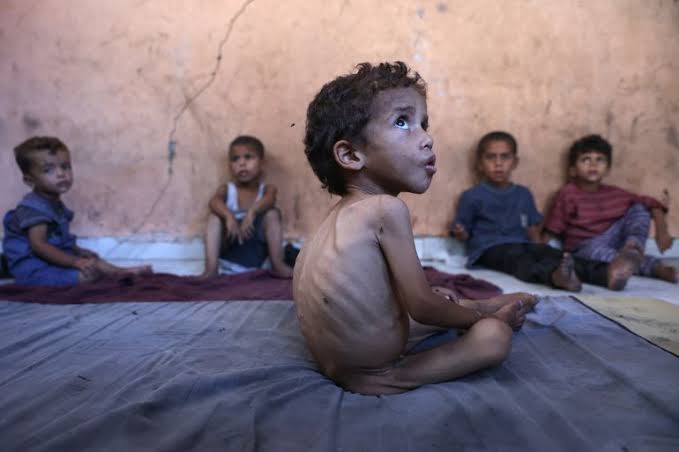
Although, as mentioned above, there is strong evidence to suggest that most of these terrorists travel back and forth between Pakistan and Afghanistan, it is also likely that a considerable proportion of them are homegrown in some of the most socioeconomically vulnerable districts of Pakistan. Human development has only marginally increased in the provinces and regions bordering Afghanistan since 1990. Unemployment rates in Balochistan and Khyber Pakhtunkwa provinces, bordering Afghanistan, remain higher than the national average. Therefore, a more balanced approach will have to incorporate responses to the internal challenges of the border areas besides addressing border management issues. One would hope that improved coordination between the federal government and the provincial governments would result not only in more effective border management, law enforcement, and kinetic operations but also better service delivery to alleviate the human condition in the border areas.

Aarish U. Khan
Aarish U. Khan is a Research Analyst at the Institute of Regional Studies, Islamabad, Pakistan.