Failed states and terrorism are among the most prominent terms in International Relations and International Security discourse because they generate diverse debates. Explaining the serious nature of a failed state, Rotberg pictures failed states as conflictual, dangerous and violent, where opposing sides rebel against the government.
On the other hand, the lack of a universally accepted definition for terrorism gives rise to many interpretations. For instance, Laqueur defines terrorism as an effort to weaken democratic societies and to show that their governments are fragile. harm and violence to people to achieve political, religious and ideological targets.
Since there is an ambiguity in the definitions of these two concepts, it creates a space to explore and identify the synergies between the two, as there could be many interconnections. The argument that is presented here is that failed states are strongly linked to terrorism through two mechanisms, but the link is not universal; thus, not every failed state produces terrorism, and not all terrorism originates in failed states.
Mary Kaldor has clearly explained this, as she introduces the ‘new war thesis’ into the discourse, where she explains several linkages between failed states and terrorism in her book titled New & Old Wars: Organised Violence in a Global Era (2001).
She has stated that the ‘old wars’ have transformed into ‘new wars’ due to globalisation and draws a distinction from the past/old wars, countries displaying a fragile governance and losing its control, terrorism as a new war tactic, failed states creating breeding grounds and safe havens for various non-state actors and has described it as ‘black holes’ or ‘no-go areas’ making it vulnerable to conflict; and a mixture of political violence and prolonged conflicts are some of the features that have been described by her.
Kaldor’s theory can be applied to see the synergy between failed states and terrorism. Terrorism is being used as a tactic in new wars that are most likely to occur in failed states due to the fragile governance and environment. Hence, this could lead to two arguments.
Firstly, failed states create a vacuum for non-state actors such as terrorists, and secondly, failed states are breeding grounds for terrorism and exporting terrorism. In the first argument, as cited by Pašagić he mentions why failed states pose a terrorist threat, listing poverty, unemployment, failure of the government to provide basic needs, corruption, weak law enforcement and internal conflicts as the reasons. This can be demonstrated by the 2025 States of Fragility Report which presented data displaying that conflicts and wars have increased in states that have a high and extreme fragility rate.
Additionally, Meierrieks and Auer show how corruption exacerbates terrorism by studying a sample of 175 countries between 1970 and 2018. Holding a similar view to the above, Mlambo has taken the example of African states in the context of post-independence.
One of the case studies he presents is in Somalia. According to the Institute for Economics & Peace, Somalia ranks seventh in the list of 10 countries that are most impacted by terrorism and has mentioned Al-Shabaab as the main terrorist group that is responsible for more than 90 per cent of the terrorist attacks in Somalia.
However, despite assistance being given to Somalia to battle out this existential crisis, the country has failed to defeat this terrorist organisation because the state has not proved to be capable enough to deliver essential needs and services and govern its people and their land (O’Brien, 2022, cited in Mlambo, 2023). This has ultimately enabled Al-Shabaab to hold the authority of the country.
All these examples showcase that when the government of a state fails to provide the basic needs of the people, it creates a vacuum for the non-state actors to step in and provide the needs for the people in order for them to implement their own agenda.
Once these entities create authority over the legitimate government of that particular state, the entity would utilise terror against the civilians to fulfil their needs and also to continue their authority.
In the argument which is that Failed states as breeding grounds for terrorism and exporting terrorism, it can be stated that failed states not only cultivate terrorism in their own country but also create a breeding ground for terrorism by cultivating and exporting terrorism beyond borders.
Failed states undergoing internal conflict can also serve as testing grounds for new terrorist tactics and provide on-the-job training for local terrorists (Pašagić, 2020). This shows that a failed state would be laying the foundation for terrorist organisations to breed.
Supporting this debate, Huria states that after the World Trade Centre was attacked by al-Qaeda, the U.S. recognised failed states, including Afghanistan, that support terrorist organisations, citing reasons such as “settings for training and indoctrination, access to weapons and equipment, financial resources and pools of recruits”.
Al Qaeda, for example, enjoyed the hospitality of Sudan and Afghanistan, where it built training camps and enlisted new members (Takeyh and Gvosdev, 2002, as cited in Patrick, 2006), which proves the statement of Pašagić. This can be further demonstrated by the data that has been shown by the Global Terrorism Index for the year 2024.
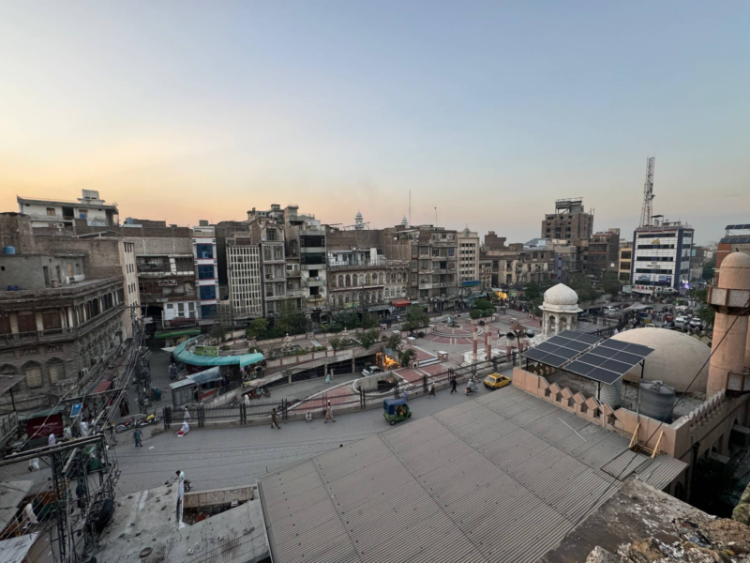
The report states that Sweden, Australia, Finland, the Netherlands, Denmark and Switzerland recorded their first terrorist attacks in more than five years, with Germany the worst performing in Europe. This supports the argument that failed states export terrorism to developed nations. Another case study that could be examined is Pakistan, which ranks 27th out of 179 countries (The Fund for Peace, 2024). Sharma, in her article, discusses how Pakistan can be viewed as a breeding ground and how it exports terrorism.
She emphasises several factors indicating Pakistan as a base/ hub for terrorist groups that are sponsored by the state, describing it as a ‘two-faced strategy on terrorism’. This exemplifies the ‘new war’ that has been highlighted by Kaldor and Sharma, adding that the unwillingness to dismantle terrorist infrastructure and the legitimisation of funds were due to state involvement.
However, another viewpoint on the above analysis would be that terrorism breeds and is exported not only from failed states and many examples could be taken to prove it. Indeed, the attacks in Western countries discussed above occurred in stable, well-governed states, which shows that state failure is not a necessary factor for terrorism to breed. Nonetheless, failed states that have many structural deficiencies are most likely to be a haven for terrorists to breed and expand their connections.
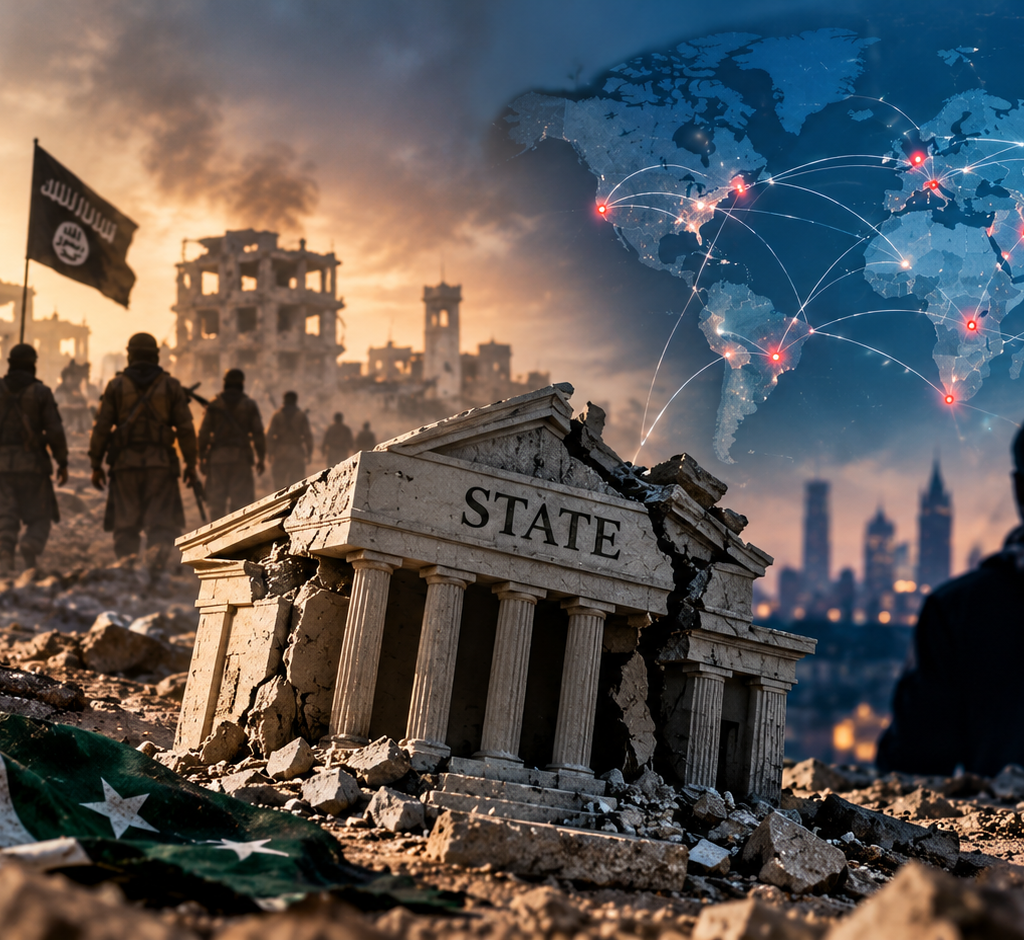
Overall, it shows how state failure can contribute to the rise of non-state actors, especially terrorists and how failed states can act as a breeding ground for terrorism or hubs that support terrorism, which operates both domestically and internationally. The link is not universal, as there is evidence that not all failed states originate terrorism. However, the argument for weak and failed states providing the conditions to breed terrorism remains strong.

Nishali Ranasinghe
Nishali Ranasinghe is a former Assistant Lecturer at the Department of International Relations, University of Colombo, Sri Lanka, and an Attorney-at-Law by profession. Her research areas are Religion, Foreign Policy and People with Disabilities.