Amidst Imran Khan’s Imprisonment, Supporters Rally for Release

Supporters rally for Imran Khan’s release, highlighting Imran Khan’s imprisonment and the ongoing political tensions.

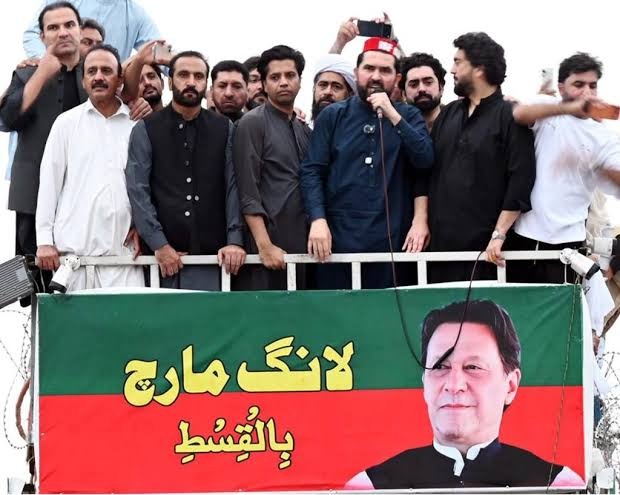
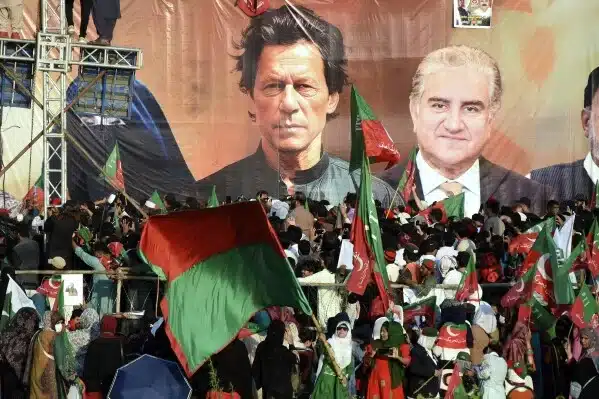
ISLAMABAD (AP) — Thousands of supporters of Pakistan’s imprisoned former Prime Minister Imran Khan rallied on the outskirts of the capital, Islamabad, on Sunday. They demanded his release. Imran Khan’s imprisonment has continued for more than a year. This imprisonment relates to over 150 police cases. Many view these cases as attempts to stifle political dissent, which fuels widespread discontent among Khan’s supporters.

Khan, the main rival of current Prime Minister Shehbaz Sharif, remains popular despite these cases. Critics and his party claim that politicians have motivated these cases. The parliament ousted him in 2022 through a no-confidence vote. Khan’s leadership style and policies had garnered significant support, which remains evident in the passionate demonstrations held by his followers.

Protests Intensify Over Imran Khan’s Imprisonment

On Sunday, Khan’s Pakistan Tehreek-e-Insaf opposition party, or PTI, held one of the biggest rallies this year peacefully, though police briefly clashed with some activists. The demonstration featured speeches from key PTI leaders and included a march through the city, underscoring the scale of the protest.

Khan’s spokesman Zulfi Bukhari denounced the police action against his “peaceful” supporters, in a statement. He emphasized that the rally’s peaceful nature contrasted sharply with the aggressive measures taken by authorities.

Earlier, authorities had blocked key roads by putting shipping containers to prevent his supporters from attending the rally. Authorities took this measure to deliberately disrupt the mobilization of Khan’s supporters and limit their visibility.

“God willing, we will secure the release of Imran Khan soon,” said Ali Amin, the top elected official in the northwestern Khyber Pakhtunkhwa province, addressing the rally. Amin’s words echoed the sentiments of many in the crowd, who were hopeful yet impatient for a resolution.

He gave an ultimatum of two weeks to the government for his leader’s release. The deadline reflects the increasing pressure on the current administration and the high stakes involved in resolving Imran Khan’s imprisonment.

Since 2023, authorities have imprisoned Imran Khan after sentencing him in a graft case. His continued incarceration remains a major point of contention in Pakistani politics, with ongoing debates about the fairness of his trial and the implications for democratic processes in the country.

This news is sourced from AP News and is intended for informational purposes only.

News Desk

Your trusted source for insightful journalism. Stay informed with our compelling coverage of global affairs, business, technology, and more.


Recent

The Taliban’s Broken Promises: Time for a New U.S. Strategy in Afghanistan

The Taliban’s Broken Promises: Time for a New U.S. Strategy in Afghanistan

Since the Taliban’s return to power, Afghanistan has once again become a hub for militant activity despite their promises under the 2020 Doha Accord. UN and SIGAR reports reveal that Afghan soil now shelters TTP, Al-Qaeda, and ISIS-K operatives involved in cross-border attacks, particularly against Pakistan. The Taliban’s failure to uphold intra-Afghan dialogue, misuse of international aid, human rights abuses, and deception in regional agreements have eroded trust globally. With terror networks thriving under their protection, it is time for the U.S. and international community to adopt a new, accountable strategy toward Afghanistan’s Taliban regime.

Read More »
Instability as Strategy: How India Benefits from the Afghan-Pakistan Breakdown

Instability as Strategy: How India Benefits from the Afghan-Pakistan Breakdown

The escalating tensions between Pakistan and Afghanistan’s Taliban-led regime have reignited South Asia’s most volatile frontier. As cross-border attacks intensify and the Taliban refuses to dismantle the Tehreek-e-Taliban Pakistan (TTP), Islamabad faces mounting security and sovereignty challenges. Yet, amid this chaos, India emerges as the silent beneficiary, leveraging regional instability to weaken Pakistan strategically while maintaining its image as a victim of terrorism. This calculated exploitation threatens to entrench South Asia in a new cycle of proxy conflict.

Read More »
Five years after the Doha Accord, the Taliban break commitments, harbor terrorists, exclude women and minorities, and defy international agreements.

Broken Promises, Renewed Threats: Time to Hold TTA Accountable

Five years after the Doha Accord, the Taliban have broken key commitments: 5,000 released prisoners returned to combat, 89% of government posts are held by Pashtuns, and women remain barred from education and work. Afghan soil hosts 6,000–6,500 TTP and Al-Qaeda fighters, with TTP chief Noor Wali Mehsud receiving $43,000/month. Pakistan has neutralized 267 Afghan terrorists in 2025, while 58 terrorist camps operate under Taliban knowledge. Despite the US aid, compliance is minimal. International recognition and support must now be tied to verifiable reforms to prevent further regional instability.

Read More »
The Istanbul dialogue between Pakistan and the Afghan Taliban collapsed over the TTP issue, exposing the limits of regional diplomacy and mediation.

The Istanbul Dialogue: How the Taliban’s Intransigence Doomed Diplomacy

The highly anticipated Istanbul dialogue, facilitated by Turkey and Qatar, has ended in deadlock. The Taliban’s refusal to act against the Tehrik-e-Taliban Pakistan (TTP) and their introduction of provocative counter-demands have effectively derailed the diplomatic process, underscoring the ideological rigidity driving Kabul’s foreign policy.

Read More »
Centralized Power and the Core–Periphery Divide in Afghanistan

Centralized Power and the Core–Periphery Divide in Afghanistan

The Islamic Emirate of Afghanistan’s return in 2021 brought rapid consolidation of power, but also the revival of a historical flaw. By concentrating authority in the hands of southern Pashtun elites, the Taliban have recreated the core–periphery divide that has destabilized every Afghan regime since the 19th century. This hyper-centralization, rooted in ethnic exclusivity and Kandahar dominance, risks a repeat of past collapses as non-Pashtun regions turn toward functional autonomy.

Read More »