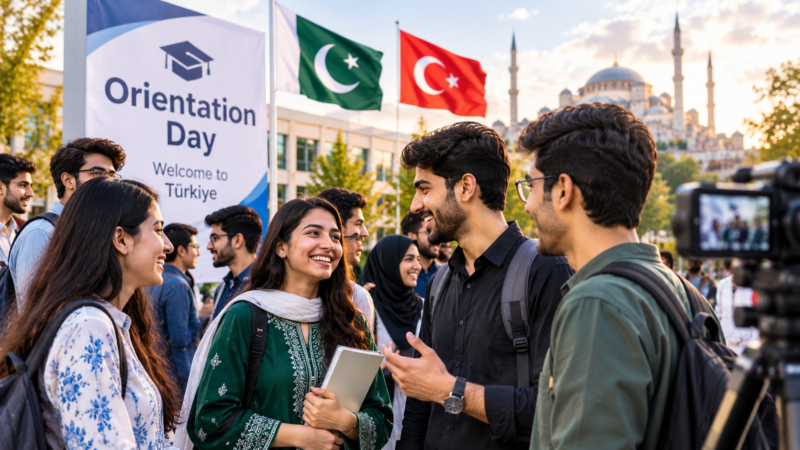
An orientation day can be a beautiful picture. Students gather, speakers offer encouragement, friendships begin, and a camera records the promise of a new academic chapter. South Asia Times recently reported on an orientation organized in Türkiye for newly arrived Pakistani students. Such gatherings matter because leaving one country to study in another can combine extraordinary hope with unsettling loneliness. But the most important measure of welcome may come after the chairs are put away and the photograph has been posted.
On the following Monday, a student still needs to find the right classroom, understand a housing contract, navigate a bus route, and ask questions without feeling foolish. A young person who looked confident in the group picture might be afraid to explain that a bank account is not working or that a family back home is struggling. Another may have strong grades but no idea whom to call when sick. Institutions often do a good job celebrating arrival. The harder work is making sure a newcomer can continue belonging.
That is not a problem unique to Pakistani students or to Türkiye. Across South Asia and beyond, migration for education is often treated as a tale of ambition, and ambition is real. Yet it can also be a tale of private sacrifices. Families save, siblings adjust, parents stay awake across time zones, and students learn how to perform independence while missing people who know them well. A practical community of welcome respects both the aspiration and the vulnerability.
The most useful programme may be less dramatic than a large annual ceremony. Imagine a modest peer-support arrangement in which every newly arrived student has one named, willing contact who checks in after the first week, the first month, and the first difficult assessment. The contact would not become a supervisor or a replacement parent. Their role would be to help a person locate truthful information and understand the ordinary systems that insiders take for granted.
It also matters how guidance is offered. Students deserve clear explanations of tuition deadlines, health-care access, university procedures, and housing rights without being made to feel indebted for learning what they should know. A mentor should be able to say, “I do not know, but I can help you find the right office.” That sentence is more trustworthy than a confident answer that turns out to be wrong. Welcome depends on truthfulness as much as warmth.
Faith traditions across the region have long taught duties toward the guest and the stranger. In the Christian story of the Good Samaritan, compassion is not exhausted by stopping beside an injured traveler. The Samaritan also arranges continuing care. The image suggests that goodness must survive beyond the first generous gesture. For people of other faiths or none, the same practical challenge remains: will our welcome still matter when the visitor needs help on an ordinary weekday?
An international student should also be regarded as a contributor, not simply a beneficiary. Pakistani student communities in Türkiye carry knowledge, languages, professional interests, and cultural experience that can enrich their hosts. A good orientation makes space for newcomers to describe the skills they bring and to help shape future gatherings. This prevents solidarity from becoming a performance in which established members speak while new students only listen.
Finally, care must leave room for privacy and dignity. Not every student wants their financial difficulty explained in a public group. Not every anxious newcomer wants a photograph with the person who helped them. Assistance should be available without turning vulnerability into a story for promotion. The most convincing evidence of a good community may never appear online: a quiet message answered, a document translated, a safe ride arranged, or a question treated seriously.
The orientation in Türkiye offers a welcome opportunity to think about what student associations can become. The first day says, “You have arrived.” A sustained network says, “You have not been left alone.” For young people building bridges between Pakistan, Türkiye, and the wider world, that difference is not sentimental. It can shape whether they thrive, whether they trust others, and whether they will one day offer the same patient welcome to someone new.

Douglas Vandergraph
Douglas Vandergraph is an independent Christian writer and teacher based in Fort Collins, Colorado, United States. As a podcaster and digital creator, his work focuses community development, spiritual growth, and practical encouragement.