Afghanistan’s security environment has implications beyond its borders, particularly for countries facing the threat of militant networks operating across the region. Pakistan continues to face attacks by the Tehreek-e-Taliban Pakistan (TTP), while Russia remains concerned about the expansion of transnational extremist networks and their potential reach into Central Asia.
The presence of these groups has made Afghanistan an important subject of regional security discussions. Pakistan and Russia have increasingly found common ground on the need to address these threats, although their security priorities are not identical. This article examines the basis of their counterterrorism convergence, the mechanisms available for cooperation, and the challenges that could limit a coordinated response.
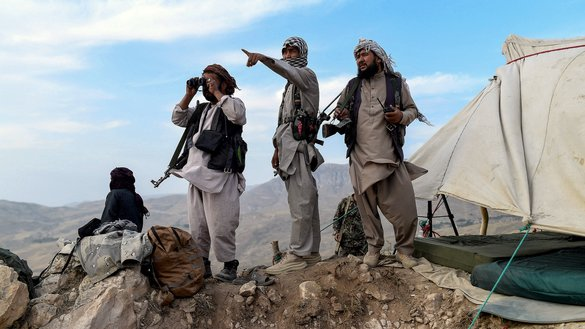
For Pakistan, Afghanistan’s security environment is directly connected to its internal security situation. Islamabad has repeatedly raised concerns over the presence of TTP militants on Afghan territory and their involvement in attacks inside Pakistan.
The United Nations’ August 2026 report on ISIL and Al-Qaida also identified TTP attacks originating from Afghanistan and described the resulting cross-border confrontation as a growing regional security concern. The consequences extend beyond casualties among security personnel and civilians.
Persistent militancy also complicates border management, disrupts bilateral trade and places additional pressure on Pakistan’s efforts to establish reliable economic links with Afghanistan and Central Asia. The relationship between border security and regional connectivity is therefore difficult to separate.
Russia approaches Afghanistan through a wider Eurasian security perspective. The presence of ISKP and other militant organisations raises concerns about instability spreading towards Central Asian states, where Russia maintains significant security and strategic interests.
The same UN report identifies Afghanistan as a continuing source of terrorist threats to neighbouring countries and the Central Asian region, with ISKP retaining the capacity to conduct high-profile attacks despite counterterrorism operations.
For Moscow, the concern is not limited to Afghanistan’s domestic political situation. The movement of militants, recruitment networks and the possibility of cross-border attacks create security challenges that could affect the wider Eurasian neighbourhood.
The convergence between Pakistan and Russia is particularly relevant because both countries have an interest in preventing Afghanistan from becoming a base for militant activity directed beyond its borders. Their concerns, however, emerge from different security calculations. Pakistan faces an immediate threat from TTP attacks, while Russia’s concerns are more closely connected to ISKP’s regional reach and the security of Central Asia.
Treating these threats as interchangeable would overlook important differences in their organisational structures, operational objectives and geographical reach. Cooperation would be more effective if it addressed these distinctions through specific threat assessments rather than a generalised approach to extremism.
There are institutions present for counter terrorism. The 12th meeting of the Pakistan–Russia Joint Working Group to Counter International Terrorism was held in Islamabad on 23 June 2026. During the meeting, discussions focused on terrorist threats emanating from Afghanistan, their implications for neighbouring states, and emerging methods of terrorist financing and recruitment.
Both sides also discussed expanding cooperation through the United Nations and the Shanghai Cooperation Organization (SCO). This meeting is significant because it demonstrates that Afghanistan-related security concerns have already entered the formal bilateral counterterrorism agenda.
The SCO provides another platform for regional coordination. Its Regional Anti-Terrorist Structure (RATS), established as a permanent body in 2002, facilitates cooperation between the competent agencies of member states on terrorism, separatism and extremism.
Its functions include information exchange, maintaining relevant databases, supporting joint activities and assisting member states in developing counterterrorism responses. For Pakistan and Russia, this framework offers an avenue to exchange information on militant organisations, recruitment patterns and financing networks while coordinating their threat assessments with other regional states.
Its value lies in providing an established institutional channel, although the effectiveness of cooperation still depends on the quality and willingness of member states to share information.
The two countries have also continued their joint military exercises under the Druzhba series, which include counterterrorism training and professional exchanges. The ninth edition, Druzhba-IX, commenced at Cherat on 22 September 2026, bringing together personnel from the Pakistani and Russian armies to refine counterterrorism drills and improve interoperability.
These exercises help maintain military contacts and provide opportunities to exchange operational experience. However, their contribution should be assessed within its actual scope. Joint training can improve professional familiarity and tactical coordination, but it cannot independently address the intelligence, political and diplomatic dimensions of cross-border militancy.
The practical areas for further cooperation extend beyond military exercises, including Intelligence-sharing on militant movements, information exchange on recruitment and financing, and coordinated regional threat assessments.
These could help both countries identify developments before they translate into wider security challenges. The June 2026 Joint Working Group discussions already included terrorist financing and recruitment methods, providing a basis for more focused engagement in these areas. Cooperation through the SCO could further support these efforts by bringing together the security agencies of states that face overlapping threats from Afghanistan-based networks.
Nevertheless, shared concerns do not guarantee a common regional security policy. Afghanistan’s political uncertainty and the Taliban authorities’ approach towards militant groups remain major obstacles. The UN’s August 2026 assessment noted that TTP continued to conduct attacks against Pakistan while ISKP retained the capacity to carry out high-impact operations.
These developments illustrate the difficulty of relying on political assurances without verifiable action against militant networks. Pakistan and Russia may agree on the need for regional stability, but their ability to influence developments inside Afghanistan remains limited. Differences in national priorities and the sensitivity of intelligence-sharing arrangements could also restrict the depth of their cooperation.
But still, Pakistan and Russia have a practical reason to strengthen counterterrorism engagement: the shared Afghanistan threat. Their bilateral working group, participation in the SCO and military exercises under the Druzhba series provide existing channels for cooperation. The next step should be to make these mechanisms more responsive to specific threats through credible intelligence exchange, institutional coordination and sustained regional engagement.
Counterterrorism could become one of the more substantive areas of Pakistan–Russia cooperation, but its effectiveness will depend on whether shared threat perceptions produce measurable security coordination rather than remaining at the level of diplomatic statements.

Sherzimah Akbar
Sherzimah Akbar is a Research Officer at the South Asia Times and graduated from International Islamic University, Islamabad. Her research interests include Indian defense and military modernization, maritime strategy, South Asian security, India–Pakistan relations, and the Indo-Pacific.