Pakistan’s debate on new provinces asks whether units should be created on ethnic grounds, administrative need or revenue capacity. The answer cannot be binary. A province exists to represent people, deliver services and strengthen the federation. Any proposal must balance identity, administrative efficiency, economic viability and national cohesion.
The case is compelling. Pakistan has approximately 252 million people, according to the Pakistan Economic Survey 2025-26, but only four constitutional provinces. Provincial capitals remain distant from peripheral districts. Smaller provinces could improve representation, responsiveness, oversight and attention to neglected regions.
But new lines on the map will not automatically improve governance. Modern governance demands agility. It requires compact teams, clear mandates, rapid decisions, digital systems and measurable outcomes. It cannot be built around expanding cabinets, overlapping portfolios and layers of advisers, coordinators and special assistants.
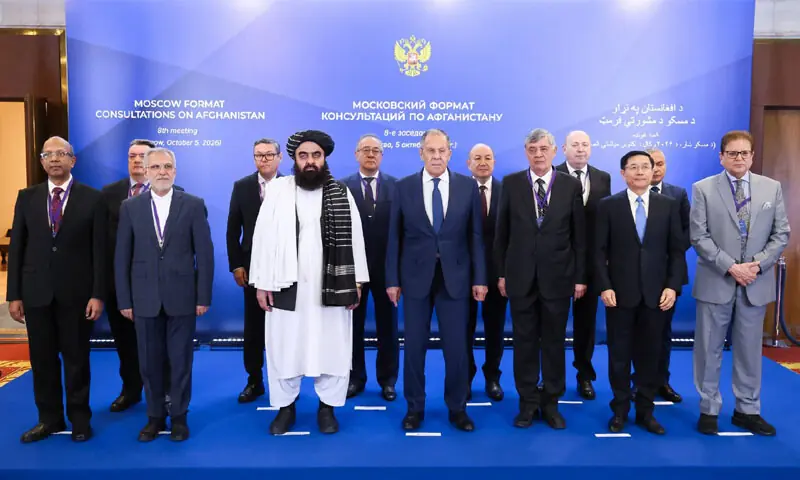
The picture presented by Prime Minister Shehbaz Sharif’s cabinet and wider official structure reflects an older model: large, layered and influenced by political accommodation. Coalition management may explain it, but it should not become the template for future provinces. Reproducing oversized cabinets and sprawling secretariats would multiply existing inefficiencies.
Provincial reorganisation requires administrative redesign. New units need lean cabinets, consolidated ministries, digital secretariats and outcome-based budgets. Related departments should be combined and technical services shared. Performance must reflect service quality and cost, not the number of ministries.
Pakistan should therefore establish a Provincial Viability Index before drawing boundaries. An independent commission could score each proposed unit out of 100 across five dimensions: economic viability (30 per cent), administrative capacity (25 per cent), social viability (20 per cent), political and constitutional acceptability (15 per cent), and environmental resilience (10 per cent).
Indicators should include revenue potential, employment, population, distance from the proposed capital, institutional readiness, poverty, education, healthcare, minority protection, public support, climate exposure and disaster-management capacity.
A score above 75 could indicate strong viability, while 65 to 74 would require a funded transition plan. No unit should qualify if it fails minimum safeguards for fiscal planning, minority rights, public consent or administrative capacity. The index must measure future potential as well as present conditions, ensuring that historically neglected regions are not permanently penalised for inherited underdevelopment.
Scores should be calculated from district-level data and independently audited before parliamentary consideration. They should be published with assumptions, transition costs and sensitivity analysis so citizens can see how boundary choices change outcomes. Periodic review would then test whether a new unit is meeting promised improvements in revenue, services, resilience, inclusion and administrative efficiency.
Michael Porter’s ideas on governance reform and shared value offer a useful perspective. In a Harvard Magazine interview, he argues that political dysfunction damages society and the business environment. Weak education denies companies skilled workers. Poor healthcare reduces productivity. Deficient infrastructure constrains markets. Governance failure therefore becomes an economic disadvantage.
Applied to Pakistan, a province should not merely distribute offices and budgets. It should improve lives while expanding productive capacity. Schools should develop industry-relevant skills. Healthcare should strengthen workforce participation. Transport should connect producers with markets. Digital government should reduce corruption and business costs.
Porter traces a progression from philanthropy to corporate responsibility, corporate purpose and shared-value strategy. Training workers, improving education or serving excluded consumers can strengthen communities while making enterprises more productive. New provinces should engage business in skills, affordable housing, technology, logistics and local enterprise.
Yet partnership must not become corporate capture. Porter warns that lobbying, political funding, and opaque influence can lead companies to defend special interests. Provinces should require disclosure of lobbying, political contributions and public contracts. Business must support fair rules, not privileged access.
Scalability also matters. Initiatives dependent indefinitely on donations remain limited. Sustainable operating models can reach more people while improving efficiency. Public-private collaboration can scale services, but government must retain regulation, accountability and responsibility for universal access.
Boundaries remain critical. Language, culture and historical experience shape representation. India’s States Reorganisation Act of 1956 accommodated linguistic identities within its federation. Pakistan should learn without copying mechanically.
Exclusively ethnic provinces could intensify identity politics and create new minorities. No proposed unit would be culturally uniform. Minority rights, representation and equal access to public employment must therefore be protected.
Every province requires a credible economic base, tax capacity and means to finance services. Yet current revenue cannot be the sole qualification because it reflects past investment and state capacity. This would favour developed regions and penalise neglected areas that lack infrastructure, markets, and tax administration.
The test should be economic viability, not immediate self-sufficiency. Each proposal needs a ten-year plan covering revenue potential, administrative costs, infrastructure, federal transfers, poverty, geography and market access. The National Finance Commission already recognises that distribution cannot rest on population alone.
International experience supports fiscal equalisation. Switzerland’s 26 cantons differ substantially in population, size and wealth, but equalisation strengthens their autonomy while reducing disparities. Germany’s 16 Länder are also economically unequal, but shared taxes and fiscal arrangements support weaker units. Nigeria expanded from three regions at independence to 36 states by 1996 to accommodate diversity. Representation increased, but federal dependence and administrative costs remained. Additional units did not automatically produce better governance.
This is relevant for Pakistan. Each new province may demand a governor, chief minister, cabinet, assembly, secretariat, public service commission, official residences and a high court. If these reproduce the privileges and scale of existing governments, recurrent expenditure will rise sharply. If financed through deficits, borrowing or monetary expansion, this cost could intensify inflationary pressures. Citizens would then pay for administrative reform through higher prices.
Government must be proportional to each unit’s population, area and revenue. A province of six million people should not reproduce machinery designed for more than 100 million. Reform must serve citizens, not political elites.
Nor should viability be confused with isolation. Provincial interdependence is a source of national strength. Manufacturers in Faisalabad and Sialkot depend on Karachi’s ports, banks, insurers and logistics companies. Karachi depends on workers, professionals, consumers and suppliers from across Pakistan.
Universities educate students who serve throughout the federation. Specialist hospitals receive patients from every region. Telecommunications, digital payments, transport networks and national companies operate across provincial boundaries.
These connections create shared value. A company may obtain packaging from one province, software from another and customers nationwide. New boundaries must not obstruct people, goods, services, capital or knowledge. Integrated transport, common standards and interoperable systems can give every province a stake in others’ success.
Pakistan needs an independent, professionally constituted commission on provincial reorganisation. It should consult citizens, political parties, provinces, economists, constitutional experts, businesses and minority communities.
It should evaluate each proposal against transparent criteria and calculate its fiscal consequences. Under Article 239(4) of the constitution, changing a province’s boundaries also requires approval by at least two-thirds of the total membership of the affected provincial assembly.
The choice is not between ethnic and revenue provinces but between thoughtful reform and politically convenient cartography. Pakistan can create units that recognise identity, improve governance and expand opportunity. But they must be agile, credible, disciplined, empowered and connected. New provinces should create shared value by bringing the state closer to citizens and Pakistan’s regions closer together.
This article was originally published in The News

Amir Jahangir
The writer is a strategic communications expert, media executive, and policy adviser