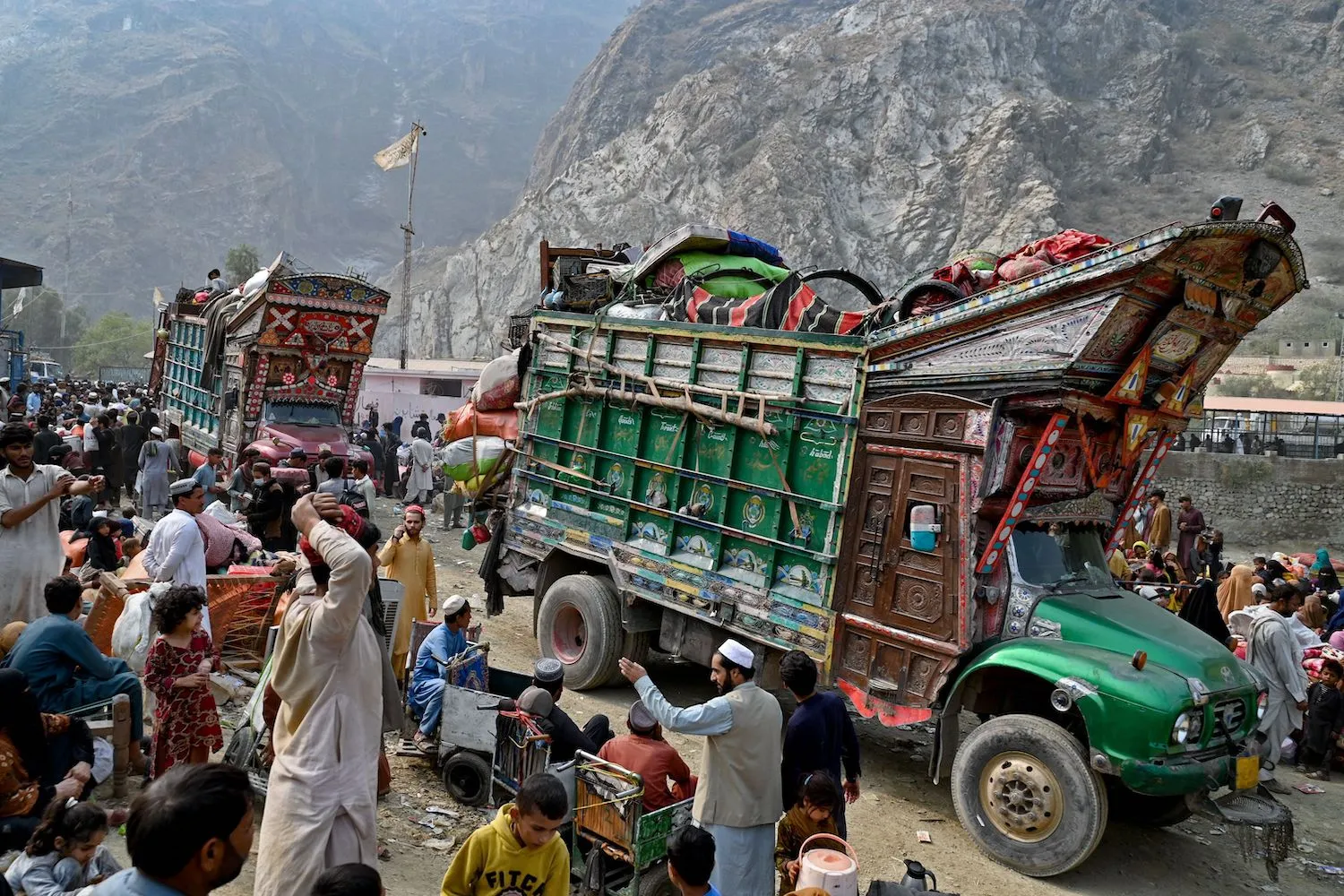
If we speak numbers, Pakistan’s this month’s ultimatum to illegal Afghan immigrants residing in the country will affect 1.73 million people, to be exact. For humanitarians across the spectrum, the announcement is inhumane, and Pakistan should adopt a softer approach towards the illegal immigrants. But the hue and cry of unjust treatment misses out the larger context that has pushed such a decision.
Deteriorating security situation and a rising graph of violent extremist attacks edged to a point where such a step was considered as the right course of action.
But there are certain complications as per micromanaging the policy. First up, the intention behind the policy must be very clear. Does the government seek to adopt and implement this measure as a long-term consistent policy or it has surfaced only as a reaction to very unfortunate suicide attacks such as the most recent one in Mastung, Balochistan?
If it’s a policy in reaction, does the government only seek to coerce and earn leverage in convincing the Interim Government of Afghanistan to hunt down and capture Tehrik e Taliban Pakistan’s (TTP) militants inside Afghanistan? The incursion of TTP in Chitral, coming from Afghanistan’s side of the border, just the last month, is a case in point here.
Also Read: Islamic Emirate of Afghanistan: No Trouble with Neighbors
As for why the Afghans inside Pakistan must bear the brunt, Caretaker Interior Minister, Sarfaraz Bugti, shared information with media that reveals involvement of 14 Afghan nationals in carrying out suicide attacks in the country, since January.
For a country living through an almost economic crisis, a bad security canvas can be too costly to bear at this point.
The decision to send back Afghans with no valid documents for stay is an attempt to ease off some burden. It should be very clear that the decision does not apply to Afghans who have lived in the country for decades now and are contributing in a healthy way to the economy. They are certainly a social and economic capital for Pakistan.
For an ideal scenario of peace to prevail in Pakistan-Afghanistan relations, reciprocated cooperation is a pre-condition. Pakistan helped Afghanistan earn a major revenue in coal exports by becoming its top export destination soon after Kabul’s takeover had left Afghanistan in a tough economic situation. But a trade that could potentially go a long way was disrupted by Afghanistan when it increased the price and added additional taxes.
Pakistan’s major import companies, then, turned to other sellers. Likewise, collecting additional taxes on Pakistan’s transit trade to Central Asia that passes through Afghanistan is another instance where Islamic Emirate of Afghanistan (IEA) deems its gains superior over mutual gains. Smuggling of dollars via Afghanistan keeps giving Pakistan the setback of currency devaluation. Such matters steal away the room for cooperation that is being pushed by one country but not reciprocated by the other.
Pakistan, with a plethora of its own issues, cannot fully foresee the process of registering massive influx of immigrants.
In the absence of support from countries where the Afghan immigrants wish to move after temporary stay in Pakistan, it is catastrophic for the latter to keep hosting them indefinitely. The only feasible way is to deport the illegal immigrants back to their country. Accepting a passport and visa as the only valid travel document from Afghanistan to Pakistan signals that the policy is here to stay. Pakistan, however, must generate acceptance for this policy by sharing its rationale with the world.

Your go-to editorial hub for policy perspectives and informed analysis on pressing regional and global issues.