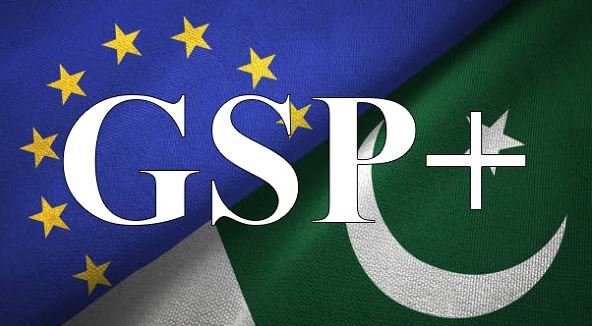
What does a brick kiln in Punjab have to do with the price of a Pakistani shirt in Europe? The connection runs through GSP+, the European Union’s trade arrangement that waives import duties on many Pakistani goods in return for action on international commitments, including the prohibition of forced labour. A kiln may never sell a brick abroad. Yet what happens when a family tries to leave a kiln where debt binds it to the owner matters to the same assessment that helps determine whether a shirt enters Europe duty-free.
The public campaign to withdraw those preferences poses a fair question. If the same abuses keep turning up in successive reviews, on what grounds should Europe keep granting tariff relief? In September 2025, the EU Today Research Desk and the European Facilitation Platform published a white paper urging the European Commission to start withdrawal proceedings. The Commission conducts its own assessment. What evidence should Pakistan put before it?
Pakistan should make the case for keeping preferences in place while agreeing with Europe on specific remedies that both sides can verify. Restoring duties on shirts could mean fewer shifts for garment workers while doing little to loosen a kiln owner’s hold over a family in debt. Pakistan’s diplomats can explain a change in the law. A worker, an inspector or a district court can establish what happened when someone invoked it.
The EU’s July 2026 assessment puts the 2024 tariff saving on Pakistani goods at €732 million. Textiles and clothing accounted for roughly three quarters of Pakistan’s exports to the bloc that year. A European buyer can negotiate a lower price, a Pakistani mill can protect its margin, or the two can share the gain. That gives businesses on both sides a reason to care about continuity, even when their governments disagree.
Consider one decision cited in the white paper. In 2025 the EU restored duties on Pakistani non-fuel ethanol. The Commission’s ruling imposed a two-year safeguard because import volumes and prices were disrupting the European ethanol market. A judgment about competition in the ethanol market tells us little about whether Pakistan enforces its labour laws.
The new EU regulation applies from 1 January 2027. Existing beneficiaries, including Pakistan, retain their status through the end of 2028, subject to their continuing obligations. To keep the preferences beyond that transition, Pakistan must reapply before 1 January 2029. A timely application preserves access while the Commission assesses it and during any period in which the European Parliament or Council can object. The framework expands from 27 conventions to 32, covering human and labour rights, the environment and good governance. Each applicant must submit an action plan identifying priorities, timelines and the institutions responsible where relevant. Two years is a reasonable period for compiling an application. It is a short one for changing what happens after a worker files a complaint.
Islamabad and Brussels already agree on some of the evidence. Pakistan ratified the International Labour Organization’s forced labour protocol in March 2025, a step the EU acknowledged. They differ over the wider record. The EU’s assessment recognised legislative progress but raised concerns about weak labour enforcement, freedom of expression and the protection of minorities. Pakistan’s Foreign Office argued that the report gave insufficient weight to its performance and reaffirmed the country’s commitment to the conventions. One way to advance that conversation is to take an issue Pakistani institutions have investigated themselves and show what has happened since.
Bonded labour offers such a case. In 2023, Pakistan’s National Commission for Human Rights documented how families working in Punjab’s kilns and on farms in Sindh could remain tied to employers by debt. It identified districts where vigilance committees were ineffective and recommended better registration of kilns and easier access to justice. The commission also proposed sending mobile identity-registration units to remote communities. An identity card gives a worker a way to deal with the state independently of an employer.
Four Punjab districts offer a lesson. The International Labour Organization reports that a project in Faisalabad, Sargodha, Bahawalpur and Gujrat helped 6,854 kiln workers obtain national identity cards between 2012 and 2020. Those cards were a tangible gain. In 2025, however, a survey of 200 kiln workers in Faisalabad and Kasur by Pakistan’s rights commission found that 90 per cent had no written contract. Without a record of wages and deductions, how does a family challenge an owner’s account of what it still owes?
Punjab could begin in those two districts. Each district could publish a quarterly account of how many kilns inspectors visited, how many wage or coercion complaints they received and what happened to those cases. Did anyone speak to workers away from the owner? When inspectors referred a case, did the family receive help, and did anyone check back? Workers’ representatives could flag discrepancies before the results go to the Treaty Implementation Cell, whose federal secretariat is housed in the Ministry of Commerce. An anonymised record would help district officials decide where to send the next inspector and help diplomats explain which cases remain unresolved.
The same approach applies to minority rights. After the 2023 attacks on Christians in Jaranwala, Pakistan’s rights commission followed up on compensation for affected families. Recording whether families could contest an award, and how officials resolved appeals, would give both sides evidence of access to justice.
In October’s meeting with the Pakistan Textile Council, the EU ambassador called for progress on urgent concerns and a plan against which future improvements could be measured. Islamabad could use the EU–Pakistan Joint Commission to agree on what evidence would resolve a disputed finding. If a province reports that inspectors lack training, for instance, European assistance could fund supervised visits. At the following meeting, the province could report how many previously unresolved cases led to workers recovering wages. Brussels would have evidence on which to judge the assistance, and Islamabad would have firmer grounds to challenge an assessment that overlooked progress.
There is a commercial dividend worth pursuing alongside the diplomatic one. The European Commission notes how heavily Pakistani sales depend on textiles and clothing. The EU has already supported small agribusinesses in Sindh and Balochistan, including date producers. Pakistan’s trade officials could bring processors from Khairpur together with European importers to identify which food-safety tests a buyer requires and whether several small suppliers could share the cost of a laboratory assessment. A first consignment followed by a repeat order would tell both sides more about the value of that assistance than attendance at a trade fair.
Pakistan’s application will carry a federal signature. Its most persuasive evidence may come from a district that can trace a complaint from the day a family reported coercion to the day it could leave a kiln safely. That is a result worth securing on Pakistan’s own terms. It is also one its diplomats could take to Europe with confidence.
Muhammad Taimur Fahad Khan
Muhammad Taimur Fahad Khan covers Europe and Russia at the Centre for Strategic Perspectives, Institute of Strategic Studies, Islamabad. His research examines Pakistan’s relations with Europe and the role of trade in its foreign policy.