The sane elements in the region have long believed that the issue of terrorism cannot simply be addressed through mutual accusations, political statements and competing national narratives. It must be based on evidence-based institutionalized counter terrorism mechanisms through which information and allegations are shared and examined, and responsibility is established.
Pakistan’s Minister Musadik Malik, who is visiting New Delhi in connection with a multilateral conference, said, in an interview with an Indian news outlet, “Our neighborhood is a complicated one, and the challenges facing this ent¬ire neighborhood need to be addressed… Rather than focusing on a single incident or bilateral discussions — where the tendency is often to point fingers at one another — it would be far better to address the problems of the entire reg¬ion through a structured mechanism and based on con¬¬crete evidence.”
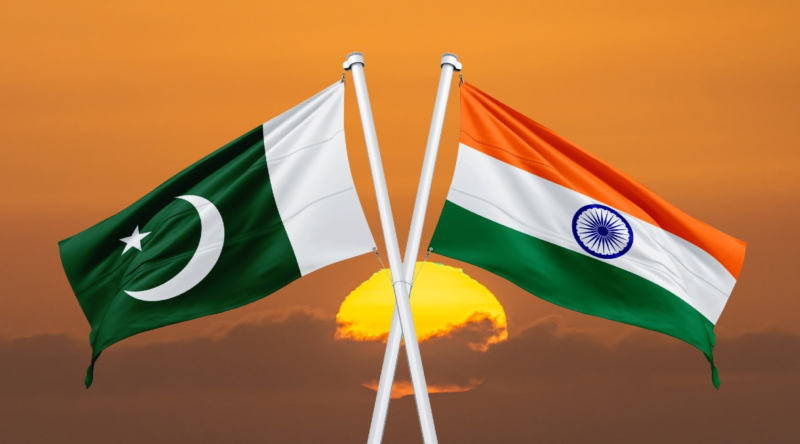
This statement provides an opportunity to both New Delhi and Islamabad to move away from the familiar pattern of blame-game whenever a terrorism incident takes place in either Pakistan or India. This statement can in fact provide a basis for answering the question as to how Pakistan and India could move towards a mechanism of mutual and meaningful cooperation on the issue of terrorism in the region.
The problem with existing patterns of dealing with issues of terrorism is that after every terrorism related incident, one country levels allegations and the other rejects it. Media and political leaders amplify competing national narratives.
In this way the issue becomes another source of confrontation between two countries. Resultantly, the challenge of terrorism is overshadowed with political confrontation and diplomatic recrimination.
Pakistan has suffered enormously because of terrorism.
There have been incidents of terrorism in other regional countries. Terrorism is a regional phenomenon and analyzing it within the boundaries of one nation-state would never lead to satisfactory conclusion or actionable intelligence information. It is highly irrational for any country to assume that terrorism is exclusively somebody else’s problem and not their’s.
The security situation that has emerged, regionally and internationally since 911, clearly indicates that it is within the realm of possibilities that networks engaged in terrorism could have cross-border linkages, ideological connections and logistic support structures. Blaming any one country for a massive network is the height of absurdity.
We don’t know whether Dr Malik will have any opportunity of bilateral exchange with Indian officialdom in New Delhi. But his remarks in his interview with an Indian news outlet contain a clear diplomatic message: terrorism is a regional problem, and it can be dealt with at the regional level with transparency and evidence-based approach.
The Indian approach is extremely immature. They start blaming Pakistan within minutes of terrorism incidents happening inside India. Before any evidence gathered or produced. Before any investigations get underway. And before anyone has claimed responsibility for the attack.
In reaction to the last such terrorist attack in Indian held Kashmir, India even launched a military strike inside Pakistani territory which led to four days of military conflict. The military conflict has a much bigger potential for destruction than any incident of terrorism. But Indian intransigence is out rightly irrational.
Pakistan and India don’t have reinvent the wheel to mutually tackle the problem of terrorism. Both these countries are members of the Shanghai Cooperation Organization which already has a Regional Anti-Terrorist Structure (SCO-RATS). This mechanism with SCO provides an institutional framework for information exchange, coordination and cooperation among states which are members of SCO.
Dr Malik is a sane voice from Pakistan. Let’s hope there are some sane voices in New Delhi as well.

Your go-to editorial hub for policy perspectives and informed analysis on pressing regional and global issues.