US Secretary of State Marco Rubio’s latest assertions on Afghanistan and terrorism are clear indication that Washington acknowledges Pakistan’s security concerns about terrorism originating from Afghan territory. Rubio, while acknowledging the severity of the security threat Pakistan is facing, has implied that the issue of terrorism emanating from Afghanistan has an international dimension. Pakistan’s concerns about cross-border terrorism originating from Afghanistan are not merely a bilateral problem. It is a legitimate international and regional security concern.
Marco Rubio’s assertions came within two months of the UN Security Council Monitoring Team’s report in which it is stated that the Taliban regime in Kabul is continuing to support Tehreek-e-Taliban Pakistan (TTP) terrorist campaign against Pakistani security forces and government installations. Both these developments imply the international dimension of the cross-border security threat Pakistan is facing.
At the conclusion of G-20 foreign ministers conference in Atlanta on November 1, 2026, Secretary of State Rubio said Pakistan was concerned about terrorist attacks that were being sponsored from the territory of Afghanistan, “They think that the Taliban has not done enough to constrain those attacks, and they’ve taken action against it. We don’t want Pakistan to be targeted by terrorism” he said.
Baluchistan and Khyber Pakhtunkhwa—Pakistan’s provinces bordering Afghanistan—have experienced a marked rise in militant violence with the banned Tehreek-e-Taliban Pakistan emerging as the deadliest terror group in the country. Islamabad-based Centre for Research and Security Studies (CRSS) recorded 1,415 violence-related fatalities in the third quarter of 2026, an 83 per cent increase over the preceding quarter. KP witnessed 173 violent incidents and 556 fatalities, while Baluchistan witnessed 186 incidents and 829 fatalities.
The latest UN Security Council Monitoring Team report issued in August 2026 states that the Taliban authorities continued to support the TTP, whose cross-border attacks on Pakistani security forces and government installations provoked Pakistan’s military response against terrorist hideouts inside Afghan territory. The assumption of governmental power brings with it responsibility as a state structure. Taliban cannot invoke the principle of sovereignty to avoid responsibility for terrorist attacks carried out from its territory.
Pakistan cannot tolerate cross-border terrorism indefinitely. The Pakistani state has a responsibility to protect its population. The Pakistani government has exhausted all possible means and diplomatic avenues to convince the Taliban regime to abandon support for TTP’s terror campaign. Several diplomatic missions were sent to Kabul to convince the Taliban regime to change course. This was followed by bilateral discussions and invoking the border mechanism. But when TTP attacks continued despite repeated assurances from Kabul, the credibility and value of diplomatic engagements came into question. Of course, diplomatic engagements cannot serve as a substitute for effective counter terrorism measures.
Pakistan’s security concerns cannot be confused with hostility towards Afghanistan. Successive Pakistan governments have expressed their interest in a stable and peaceful Afghanistan. The Pakistani government has shunned indefinite military confrontation on our western border.
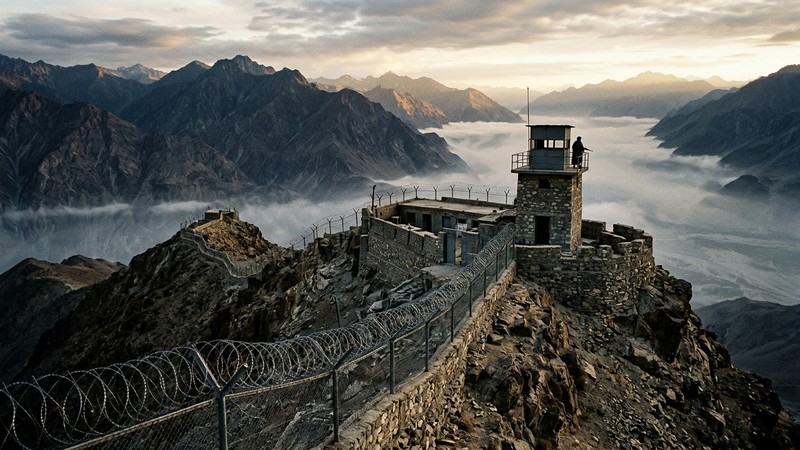
Cross border terrorism and the existence of terrorist sanctuaries on the Afghan side of the border is not simply a bilateral issue between Islamabad and the Taliban regime in Kabul. These are international security concerns. Terrorist sanctuaries threaten plans to make Afghanistan a regional connectivity hub. The security interests of countries like Russia, China, Iran and Central Asian states badly suffer. The international community has a responsibility here to devise a collective strategy to deal with the menace of terrorism emanating from Afghanistan. They should act before it is too late.
Marco Rubio’s abovementioned statement is a clear indication that a world leader recognizes the legitimacy of Pakistan’s security concerns vis-à-vis Afghanistan. Now this recognition must translate into pressure on Taliban to take verifiable measures against cross-border terrorism. Pakistan is only interested in a peaceful and stable Afghanistan. It is not interested in an indefinite military tension on its western border.

Your go-to editorial hub for policy perspectives and informed analysis on pressing regional and global issues.