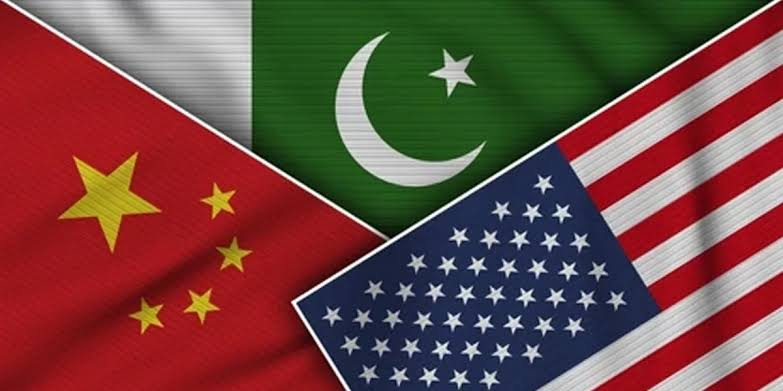
Pakistan’s parallel courting of Chinese and American capital signals not geopolitical waffling but the economic bind of a developing nation striving to convert great-power rivalry into productive capacity.
Today, Pakistan holds two wallets at once.
In one hand lies China: its longtime strategic partner, the main external driver of the China-Pakistan Economic Corridor (CPEC), and a key provider of infrastructure, investment, and financial backing. In the other lies the United States, whose renewed economic engagement could open doors to finance, technology, energy investment, and critical-mineral development.
This is frequently framed as geopolitical balancing. Yet Pakistan’s dilemma runs deeper. Economic necessity drives its two-wallet strategy.
Pakistan’s economic ties with China long predate CPEC. The China-Pakistan Free Trade Agreement was signed in 2006 and took effect in 2007. Its second phase, signed in 2019 and operational in 2020, widened tariff liberalization while tightening safeguards for Pakistani industry.
That experience laid bare a persistent weakness. Trade liberalization can deliver cheaper inputs and bigger markets, but it cannot replace domestic productive capacity. Absent competitive industries, dependable energy, technology, and export diversification, greater openness may widen trade imbalances rather than fix them.
CPEC was partly meant to tackle these structural constraints. Launched in 2013 and largely operational after 2015, its first phase focused on energy, transport, and connectivity. Pakistan’s CPEC Secretariat estimates that Phase I drew roughly $25 billion in Chinese investment and added nearly 8,000 megawatts of power-generation capacity.
CPEC 2.0 is more ambitious. Its priorities span industry, agriculture, minerals, technology, human-resource development, and business-to-business partnerships. The aim is to move past mostly government-led infrastructure toward investment that can grow Pakistan’s productive economy.
Yet the circumstances have shifted.
Pakistan continues to confront substantial external-financing needs, heavy debt-service burdens, frailties in the energy sector, and a limited export base. Access to outside capital is thus not just desirable; it stays vital for both economic stability and long-term development.
That is why there are two wallets.
The Chinese wallet is already sizable. Pakistan has fully used a 30-billion-yuan currency-swap line with China and plans to push for an expansion when it comes up for renewal.
Meanwhile, Islamabad awaits a US reply on a proposed $10 billion exchange-stabilization facility. Pakistan has likewise been talking with the US about financing and investment in other sectors.
The guiding principle is plain: robust economic ties with both Washington and Beijing need not be mutually exclusive.
Critical minerals bring in another dimension. Pakistan holds considerable copper, gold, and other mineral resources, but developing them commercially demands vast capital, infrastructure, and technical capacity. As Washington pursues more diversified critical-mineral supply chains and Beijing sharpens CPEC’s focus on minerals and industrial growth, Pakistan may gain something it has often lacked in dealings with larger powers: economic leverage.
Yet leverage counts only when used wisely.
Two sources of external financing do not amount to strategic autonomy. Pakistan could readily swap dependence on one partner for dependence on several.
Multi-alignment must not slide into multi-dependence.
So the success of Pakistan’s foreign economic ties should not be gauged by the billions announced, the memoranda signed, or the loans rolled over. The better question is what stays in Pakistan once foreign capital has been spent.
Do Chinese investments build competitive Pakistani industries and exports? Does US engagement deliver technology transfer and domestic mineral-processing capacity, rather than mere extraction? Can Gulf investment generate lasting jobs? Will new infrastructure lower manufacturing costs? Can Pakistan shift from raw material exports to higher-value production?
These questions extend well beyond Pakistan. As great-power rivalry grows, developing nations across Asia, Africa, the Middle East, and Latin America face the same challenge.
The wider lesson is simple: geopolitical options pay off only when they build domestic productive capacity.
Pakistan need not pick Washington over Beijing, or Beijing over Washington. It should leverage ties with China, the US, the Gulf, Europe, and others to boost energy security, industry, technology, human capital, and exports.
For now, Pakistan keeps balancing on a tightrope, a wallet in each hand. Its economic limits leave little choice.
But success arrives when those wallets stop being tools for emergency financing and debt rollovers and start holding wealth created inside Pakistan.
Ultimately, Pakistan’s two-wallet strategy should aim to make both wallets less and less necessary.

Qazi Zaheer Ahmad
The author is a retired BS-21 civil servant of the Government of Pakistan with over three decades of public service. He writes on geopolitics, economic strategy, and regional security, and is engaged in international trade and advisory work.