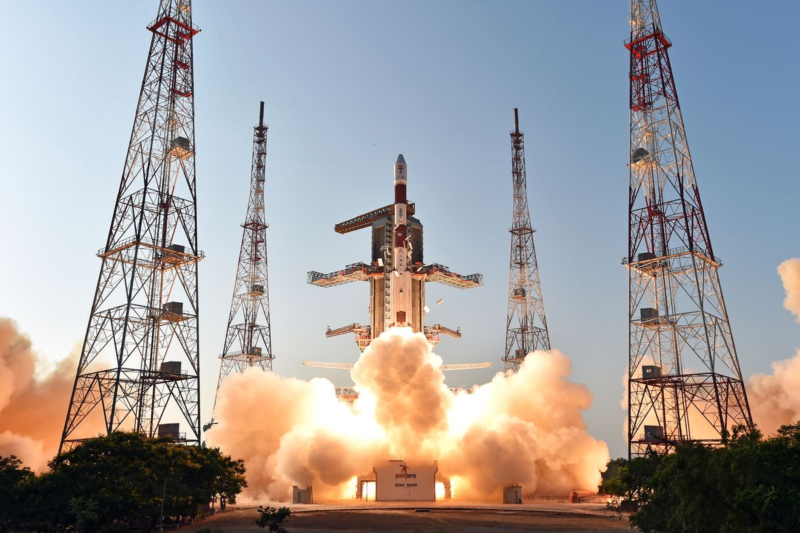
Throughout the twentieth century, outer space development was a prestige domain where States showed their technical maturity. That era is over. Now satellites are used to direct the weapons, to transmit communications, and to monitor borders, and the one that controls them enjoys a military advantage no deployment on the ground can have. India’s recent space developments and arrangements with the US have demonstrated that its intentions go beyond the peaceful exploration so often touted.
India’s developments continuously reflect this diversion. Mission Shakti, the anti-satellite test carried out in March, 2019, added debris to low Earth orbit and showcased the direct-ascent kill capability. In the same year, the Defense Space Agency was set up. Furthermore, some fifty-two surveillance satellites designed to improve reconnaissance over the region were approved in October 2024 by New Delhi. In response to the 2019 test, MOFA, Pakistan reiterated its stance that outer space is the common heritage of mankind and thus weaponization of outer space should be avoided. That remains unchanged. What has happened since just makes it more critical.
Given India’s ambitions, Washington’s involvement shifts the strategic calculus in this situation. In March 2026, the commander of US Space Command visited India, following a ten-year defense framework agreement signed in 2025. The US Space Force also concluded its first cooperative research agreement with non-American firms, both Indian start-ups. In August 2026, the India-US Civil Space Joint Working Group met in Bengaluru to continue collaboration on the TRUST initiative. The individual relationships of each step may be considered ordinary partnerships. All of them, in total, represent an armory of technology, data and doctrine channeled towards one state in the South Asian region.
For Pakistan, strategic stability is the most critical element. The two nuclear-armed neighbors share a disputed border and a history of crises that escalated within days, as was seen in the 2019 and 2025 clashes. Continuous surveillance, coupled with American systems and early-warning information, shortens the decision-making horizon. A state that thinks it can see its way to everything believes it can strike first. India’s aggressive approach in 2025 testifies this claim.
In this regard, international laws provide little reassurance. The Outer Space Treaty 1967 forbids the placement of nuclear weapons in orbit, but has no provisions regarding anti-satellite systems and no provisions regarding military surveillance. No binding instrument addresses this gap. India signed the Artemis Accords in June 2023, and the US has already advanced proposals to ease missile export restrictions to facilitate the sharing of space technology. Pakistan, however, did not sign the Accords. Because the framework is presented as civil in purpose, but in practice it is a mechanism of alignment between the two partners, and Islamabad has cause to heed when non-proliferation norms are enforced rigorously against some countries and more flexibly against other countries.
In response, Pakistan’s approach has been of restraint but is not passive. It has always shown its support for the negotiations on the prevention of an arms race in outer space, including a legally binding instrument, at the Conference on Disarmament and PAROS. SUPARCO has pursued plans for expansion of the national satellite fleet at home through cooperation with China under the umbrella of the National Space Policy of 2023. It is not the objective to compete with India satellite by satellite. It is to ensure adequate capacity for communication, remote sensing and credible monitoring.
What Pakistan and India need to and should most importantly do in this regard is to consider some practical measures. These include the provision of prelaunch notifications, agreed norms on debris, and a bilateral exchange process on space-related risk reduction, which would be low cost and could limit the potential for miscalculation. Such actions would also put India’s assertion of the long-term sustainability of outer space to the test in the region.
The capabilities of the US Space Force are real, and the collaborations will continue to grow. An architecture based on selective access and exclusion, on the other hand, offers opportunities for countermeasures rather than constraint. Durable stability in space will come from shared rules and mutual understanding, not from patrons. Until such rules exist, and as long as India and Pakistan have not developed such understandings, the international community should treat the growing space alignment between the US and India as a question of regional strategic balance, not a routine commercial arrangement.

Harsa Kakar
Ms. Harsa Kakar is working as a Research Assistant at Balochistan Think Tank Network (BTTN), at BUITEMS, Quetta, Pakistan. She is an MS International Relations Scholar at BUITEMS, Quetta, and a distinguished graduate of International Relations from the University of Balochistan. She specializes in AI, Global Politics, Diplomacy, Soft Power, and Conflict Resolution.