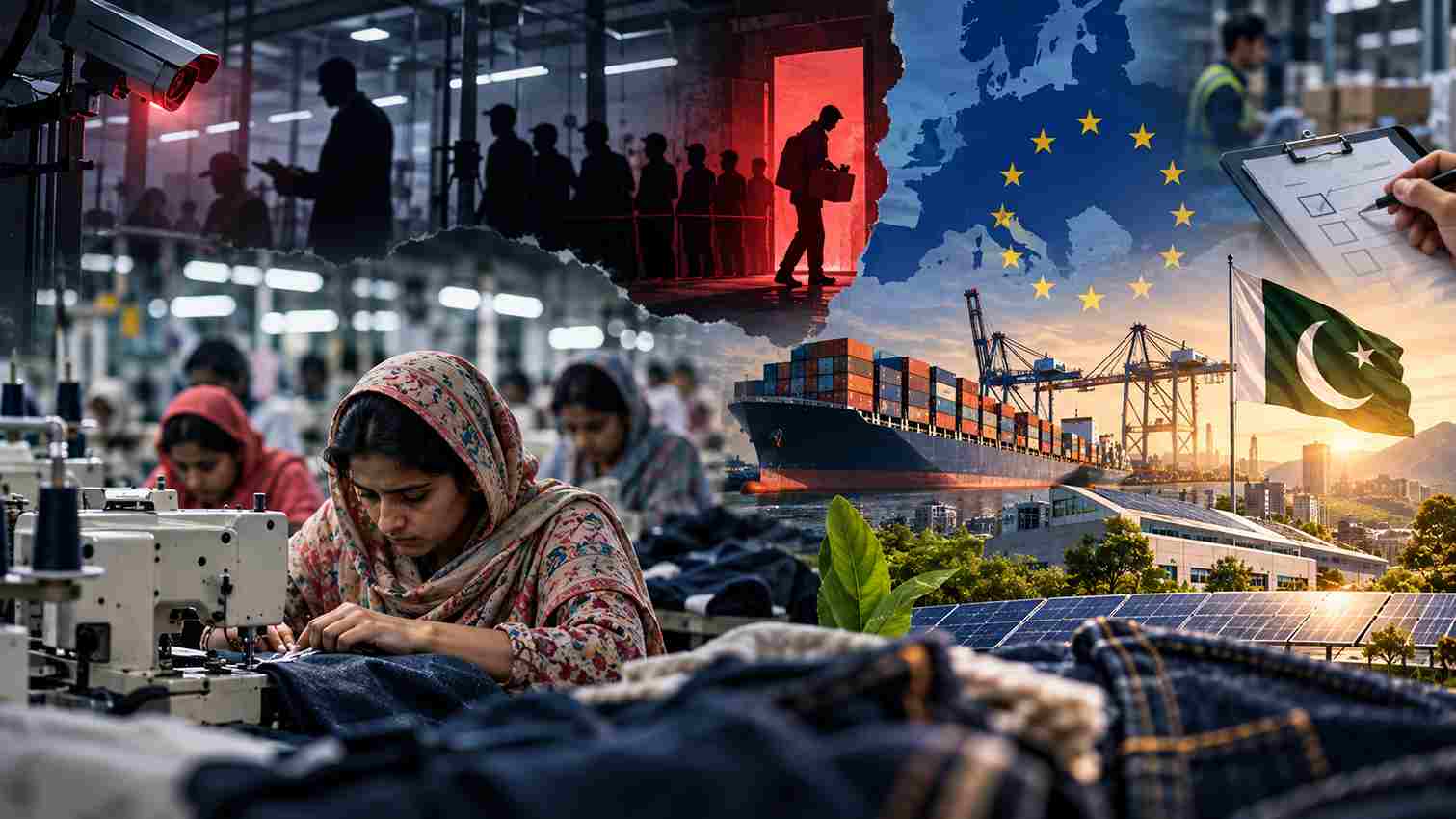
This seems to be an uncomfortable summer for Pakistan. Forced labour and weak enforcement were raised as concerns in the EU’s GSP+ monitoring report. Labour Behind the Label, a UK group, published Silenced, based on 255 interviews with workers in eight factories that make products for brands such as Levi’s, H&M and Gap. It cited the intimidation of workers, complaint boxes placed under CCTV cameras, and the dismissal of about fifty workers from a Lahore factory for voicing their concerns about unpaid bonuses.
The urge in Islamabad and in the world of industry is to describe this as a pile-on at a time when Pakistan’s influence is rising and its security ties with the Gulf states are strengthening as well. There might be some truth to that. Countries that start to matter more also start to attract more attention. But this observation should not be the entire argument. It explains the timing; it does not answer the substance.
And the substance deserves an answer, not a dismissal. There is no confusion about what “silenced” means. It names a factory. It refers to a particular termination. It is not that Pakistan has no compliance systems; it is that the audit model itself has a blind spot, which may expose wage theft and harassment, but only if these are supported by documentation and end up on a client’s desk. As reported, auditors interviewed for the report described suppliers coaching workers ahead of visits. This is a specific, serious allegation, and Pakistani exporters desiring to be taken seriously should provide specific responses—audit dates, corrective action and outcomes, not slogans—with regard to zero tolerance.
However, the overall figures do muddy the waters created by the campaigners. According to the ILO’s Better Work Pakistan synthesis, the non-compliance rates for minimum wages and overtime were 4.6 per cent and 2.3 per cent, respectively, among the factories assessed. This is a monitored, correctable minority, not the norm the reports imply. A third of surveyed international buyers say they plan to increase sourcing from Pakistan over the next two to three years, which is not the behaviour of buyers who believe the risk is uncontrollable. Some companies, such as Interloop, Soorty and Sapphire, have invested significant capital in solar power, wastewater recycling and water-use reduction.
Both things are true at once, and pretending otherwise serves no one. Pakistan’s export tier is genuinely better governed than its critics sometimes allow. And that governance still has a gap wide enough for workers to be silenced within it. An audit that never hears from the person on the line is not proof of compliance; it is proof that the system has a design flaw.
So, the honest position is not outrage, and it is not spin. It is a call for reform, argued from a position of real but incomplete progress. Brands and buyers must no longer consider a passed audit to be equivalent to due diligence, and must begin investing in independent workers’ grievance mechanisms that are not managed by the same people against whom workers are complaining. Instead of compliance-certificate logos, Pakistani exporters need to disclose factory audit reports and the timelines required to fix the issues. The government, whose own capacity to enforce standards has been questioned by the GSP+ report, must bridge the gap between the legislation it has signed and the inspections meant to enforce it.
Europe can expect Pakistan to live up to its own published standards. Pakistan deserves criticism that is specific, documented and commensurate, rather than a blanket condemnation of the entire sector. Both of these can be true in the same sentence. It is not a better argument about who may be treated unfairly by whom that would alter the story, but rather a factory floor where a worker can report wage theft without losing his or her job as a result. Until that happens, everyone’s compliance certificates will remain a description of a system, not of a workplace.
This article was originally published at The News

Faisal Ahmed
The writer is a freelance columnist who is an alumnus of QAU and FUI He can be reached at [email protected])