Pakistan’s 2023 census recorded a national population of 247,541,947 people, but the way this population is administered has barely changed since colonial times. Punjab alone has 127.7 million people, more than Japan, more than Mexico, more than any country in Europe, all nominally served by one chief minister’s secretariat in Lahore, through a deputy commissioner system inherited almost unchanged from the colonial era with unelected officials, answerable upward to the province, not outward to the citizens whose files cross their desks.
A resident of Rajanpur or Rahim Yar Khan is, administratively, further from the state than a resident of Lahore is from Islamabad, and it shows in every governance indicator that tracks distance from the provincial capital.
This is the real argument for new provinces, and it needs no embellishment.
Balochistan alone covers 347,000 square kilometers, 44 percent of Pakistan’s landmass, with a population density of 36 people per square kilometer, the lowest in the country.
Khyber Pakhtunkhwa presents the opposite problem at similar cost: 40.8 million people packed into just 101,741 square kilometers, a density of 402 people per square kilometer, with 85 percent of them living in rural areas far from Peshawar. Big and empty, or dense and rural, the state’s presence thins out either way.
The disparities inside provinces are just as telling. Lahore district’s population reached 13 million in 2023, while Harnai district in Balochistan had only 127,571, a hundredfold difference in scale, yet both are governed by the same tier of district administration. Balochistan’s largest district, Chagai, spans 44,748 square kilometers, an area larger than Denmark, administered by a handful of officials based hundreds of kilometers from most of its residents.
Pakistan’s 2023 census counted 173 districts nationwide, most still run by the same commissioner-and-deputy-commissioner structure the British left behind. Concentrating resources, planning and execution in provincial capitals was defensible when Pakistan had four provinces and a fraction of today’s population. It is harder to defend for a Punjab this size, or a Balochistan this empty of the state’s reach.
The proposed South Punjab province, comprising the Bahawalpur, Multan and Dera Ghazi Khan divisions, would carve out about 52 percent of Punjab’s total area and nearly 40 percent of its population into a separate administrative unit, a population larger than most United Nations member states, currently governed as a periphery of a periphery.
The debate is, unusually, alive right now, and not just in September. In May 2026, PPP’s Mumtaz Chang revived the call for a Saraiki province on the floor of the Punjab Assembly. In June, PPP senator Rana Mahmood-ul-Hassan reiterated the demand for a South Punjab province in the Senate. The federal planning minister then proposed as many as fifteen new provinces and called for a national conversation. The Khyber Pakhtunkhwa Assembly passed a resolution for a separate Hazara province in December. The Senate had already passed a South Punjab bill back in January 2022. On paper, Pakistan’s political class agrees the current map underserves its own citizens.
On paper is exactly where it stays. The same parties that vote for devolution in one province vote against it in their own. The PPP’s own lawmakers have pressed for a South Punjab province for years, while the Sindh Assembly, under the same party, unanimously rejected any division of Sindh just this month, calling the province’s existing boundaries a “civilizational and constitutional entity.” PML-N introduced a constitutional amendment for South Punjab and Bahawalpur in 2019; since coming to office in Punjab, it has not moved the bill an inch. PTI promised a South Punjab province within its first hundred days in 2018 and, six years on, its main legacy is a civil secretariat in Multan that had its departments quietly narrowed back within a year of being set up.
None of this reads like principled disagreement over administrative design. It reads like parties treating provincial boundaries as an extension of their own electoral map. Champions of devolution wherever it costs a rival seats, defenders of the status quo wherever it costs them their own. What should be a governance question keeps collapsing into a constituency question, and a party-arithmetic question, and the underlying disconnect between citizen and state survives every election cycle intact.
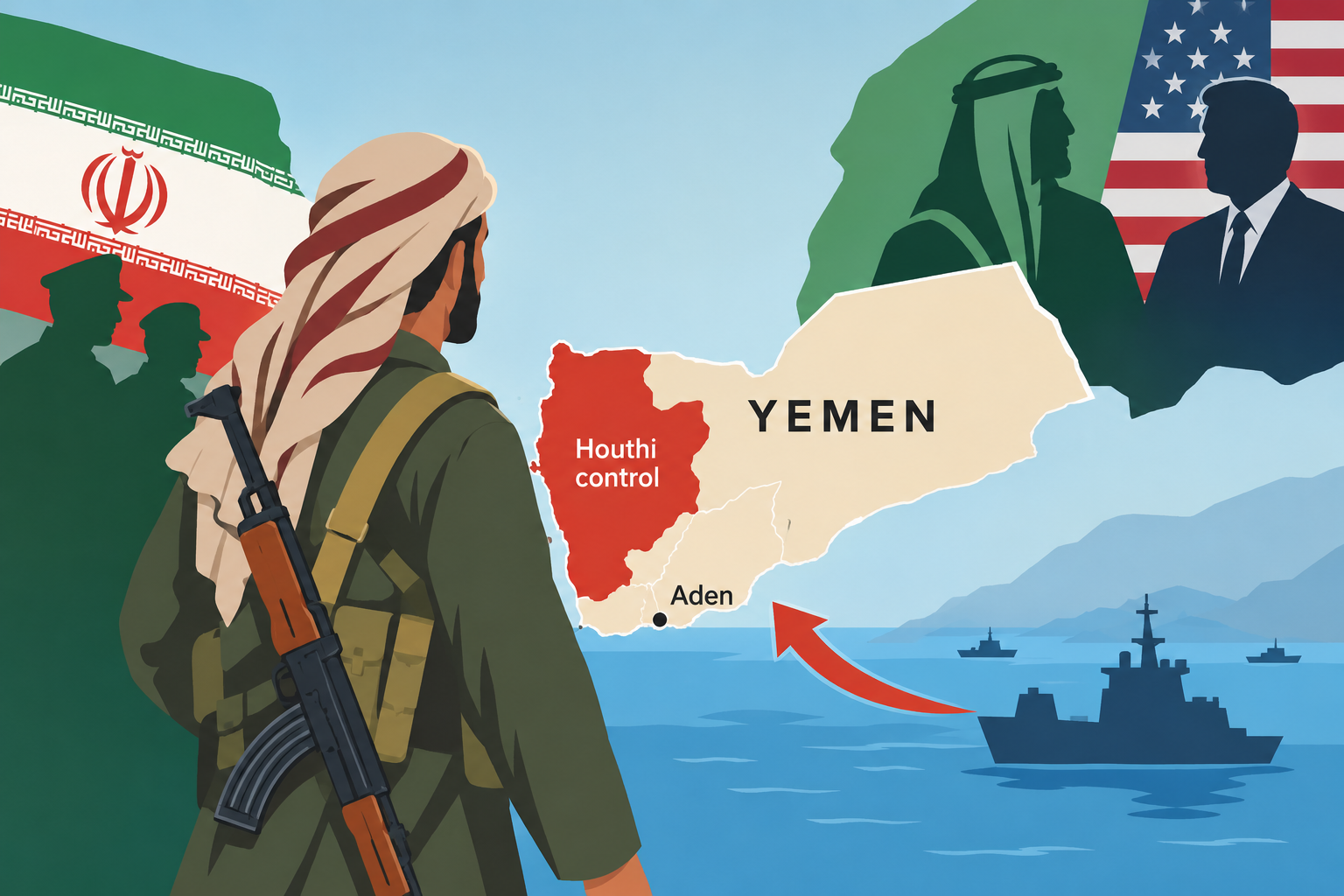
That disconnect is not a merely domestic inconvenience. It is exactly the kind of gap I have traced across other countries, where a state’s absence, not its presence, is what militants, separatists, and hostile propaganda actually exploit. Under-governed peripheries are where local grievance is easiest to reframe as someone else’s grievance, and where a hostile narrative finds an audience already convinced that Islamabad, or Lahore, or Peshawar, does not answer its calls. A citizen who has never seen an elected official with real authority over his own district has little reason to trust the state’s account of anything else, including who is responsible when trouble finally arrives in his district.
Pakistan does not need to invent this literature; its own security establishment has spent two decades relearning it in the peripheries where the writ of the state runs thinnest, and every commission that has studied militancy or separatism in this country has arrived, eventually, at some version of the same finding that distance from government is rarely the whole explanation, but it is almost never absent from one.
Pakistan does not lack the population or the economic weight to sustain more administrative units. Khyber Pakhtunkhwa’s economy alone was valued at $38 billion in nominal terms in 2022, comparable to several small countries. What it lacks is the political consensus, since a constitutional amendment requires a two-thirds majority that no single coalition currently commands, to translate demographic reality into administrative design.
None of that means fifteen new provinces, or even three, is automatically the right fix. Critics are right that a new provincial capital can centralize power just as easily as an old one, and South Punjab’s own secretariat is proof that a title without real fiscal and administrative authority changes very little. But the parties currently trading resolutions for headlines are not actually having that harder argument. They have an easier one, about whose vote bank gains and whose shrinks. Until that changes, the new-provinces debate will keep doing exactly what it has done for fifteen years, that is, pass in one house, stall in another, and leave the citizen it was supposed to serve exactly where the debate found him – governed, administered, and taxed, but never quite reached.

Haleema Khalid is a research and strategic communications professional specializing in policy research, knowledge management, and analytical writing. With an interdisciplinary background spanning linguistics, security studies, and regional affairs, her work focuses on translating complex research into accessible outputs for policy and stakeholder audiences. She is a published researcher in corpus linguistics and political communication and is currently pursuing an MPhil in Intelligence & Security Studies, with a growing focus on Pak-Afghan affairs, regional security, and South Asian dynamics.