Years of reading situation reporting on Afghanistan teach you to distrust the loud claim and pay attention to the quiet one. Not the casualty count a group puts out within hours, that number is always a negotiating position, aimed as much at donors and diaspora audiences as at the enemy. What I trust is the silence that follows: who stops talking, whose phones go dead, which spokesman is suddenly unreachable. This week, that silence belonged to Badakhshan’s mobile towers, switched off in the Topkhana highlands within hours of a Taliban border commander’s death. I have never once seen a government that was winning bother to do that.
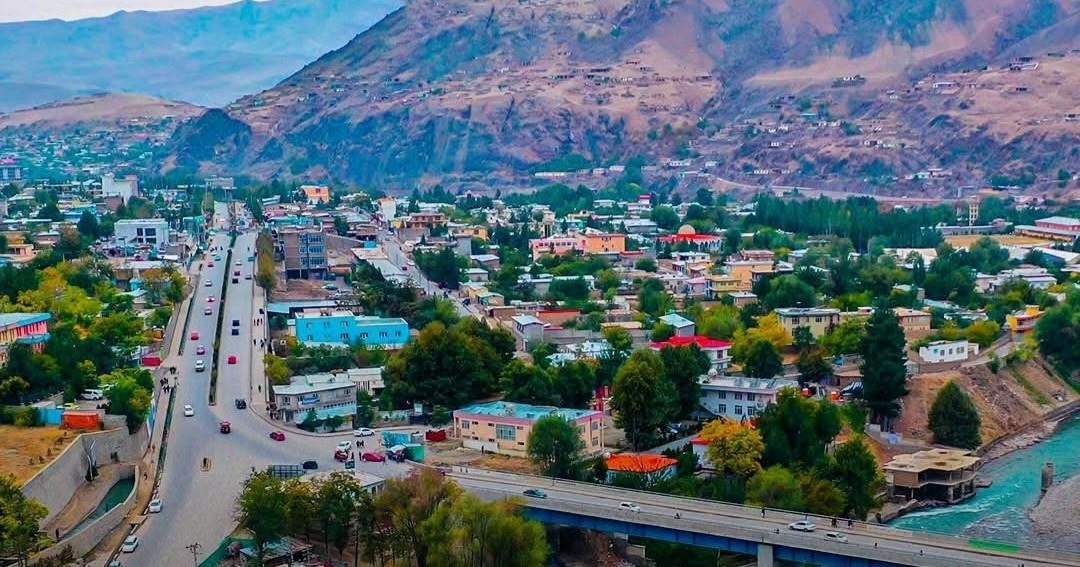
That commander was Faridullah Wahdat, killed when the Afghanistan Freedom Front (AFF) launched what it calls one of its largest coordinated offensives since forming in 2022, fighting that opened on 23 July in Zebak (Zibak) district and was still running two days later. The AFF’s own figures are steep: 21 Taliban fighters killed, several of them commanders, 37 wounded, hilltops and border posts taken, one AFF fighter lost.
Local reporting narrows the commander toll to three confirmed dead. Rockets reportedly met Taliban helicopters attempting to reinforce from Faizabad; the night before, AFF rockets had already struck Taliban headquarters in Darayim. None of that is unusual for a resistance statement. What is unusual is that the Taliban’s own spokesman for the 219th Omar-e-Salis Division felt the need to answer it at all, insisting the fighters had crossed from Pakistan’s Chitral by the Shah Salim route, and counting five dead on the other side while saying nothing of his own losses. A regime confident in its periphery does not usually bother contesting a battle it claims to have won so easily.
Two Claims That Cannot Both Be True
My training is in triangulating exactly this kind of contradiction, and Badakhshan has been generous with material this month. Ten days before Zebak, on 17 July, an unfamiliar name, Sepahiyan-e Mihan, “Soldiers of the Homeland”, surfaced after fighters hit three districts before dawn: Yaftali Sufla, Kishm, and Yawan.
In Yaftali Sufla they walked into the district headquarters, disarmed the police and intelligence staff inside, and raised their own flag, something no opposition group had managed since the Republic fell in 2021. What told me this rattled Kabul more than any statement could was who showed up next: Taliban army chief Fasihuddin Fitrat, in person, rather than a press release from a district spokesman. The group’s commander, Abdul Qayum Malang, said to have once served in Afghan special forces, was reported captured within days along with a dozen of his roughly twenty men. Then, five days on, a recording surfaced of a voice claiming to be his, insisting the front was intact. Two accounts, still uncorrected, still contradicting each other, and I have learned that in Afghan conflict reporting, an unresolved contradiction usually means the truth is closer to the version the government would rather you not believe.
Neither incident happened in isolation. Rocket fire around Darayim, disputes over the province’s gold deposits, friction inside the Taliban’s own command, and tension over anti-narcotics enforcement all sit beneath the surface, less a single insurgency than several separate grievances now moving in the same direction at once.
Why I No Longer Trust the Old Verdict
I don’t take any armed group’s own bookkeeping at face value, and the AFF’s claims, 109 operations in its first year, 361 killed by its own count, another 231 the following year, drawn from a leadership rooted in the old republic’s general staff under Yasin Zia, deserve the same scepticism I’d apply to any actor with an incentive to inflate. What changed my read wasn’t the AFF’s arithmetic. It was the UN’s. The Secretary-General’s most recent report on the November-to-January quarter confirmed 14 of 36 attacks jointly claimed by the AFF and allied resistance fronts, a confirmation rate too high to dismiss as propaganda.
More telling still is what the UN said about the quarter before that. Back in late November, the AFF claimed a rocket strike on Fayzabad’s own Seventh Security District, killing three; in mid-December, another strike near the provincial governor’s office killed three more, while Ahmad Massoud’s National Resistance Front hit separate targets in Kunduz. Covering that window, the UN counted 41 claimed attacks from six fronts and concluded none of it added up to a significant challenge to Taliban rule. I read that assessment at the time and had no reason to argue with it. I would argue with it now. Eight months on, an army chief is deploying personally to contested districts, and even a Taliban field commander, Amanuddin Mansoor, has admitted publicly that villagers ask him outright how much longer his side can hold.
A Regime Distracted, A Region Rewritten
None of this is unfolding in a vacuum, and I’d be doing my own training a disservice if I pretended it was. Iran has spent the better part of five months absorbing a war that began with the assassination of its supreme leader in February and has since dragged on through a collapsed ceasefire, a naval blockade, oil past $100 a barrel, and a bombing campaign now well into its second week of consecutive nights. Kabul has not stayed quiet on it. The Taliban have a history of denouncing Israeli and United States strikes on Iranian soil, a rare instance of a Sunni movement speaking up for a Shia neighbour, rooted in decades of quiet Iranian patronage that outlasted their sectarian differences. But sympathy is not the same as capacity, and Tehran’s capacity to manage its own eastern frontier, the drug routes, the refugee flows, the periodic deportations back into Afghanistan, is exactly what a leadership crisis and a live war erode fastest. A Taliban government absorbing pressure from Badakhshan in the northeast cannot assume a stable buffer on its western border either.
Islamabad, for its part, is being pulled in both directions at once: hosting Iran’s interior minister for security coordination even as it watches its own western frontier destabilise alongside Afghanistan’s northeast. And the wider neighbourhood is paying closer attention than the headlines suggest. Russia’s foreign ministry has confirmed that Afghanistan featured on the agenda when Shanghai Cooperation Organisation (SCO) foreign ministers met in Kyrgyzstan this month, a sign that Moscow, Beijing, and the Central Asian states are already weighing what a weakened Taliban, distracted on two fronts of its own neighbourhood’s making, might mean for a region already absorbing the shockwaves of a Middle Eastern war.
The Pattern I Keep Seeing
Every government that has tried to rule Afghanistan from Kabul has eventually discovered the same thing in Badakhshan. The terrain answers to no one for long. What’s different now is coordination. Two separate fronts, ten days apart, forcing the regime’s most senior general into the field rather than a spokesman onto a microphone. I won’t pretend to know whether this becomes a real northern front or burns out as a string of isolated flashpoints; fragmented command and thin resources argue for caution before anyone calls this a turning point. But I’ve studied enough insurgencies against enough governments to recognise the early shape of one when it starts repeating itself, and a province once dismissed as a governance afterthought is now dictating where the Taliban’s top soldier spends his week. That, on its own, is a verdict worth sitting with.
The views and opinions expressed in this article are solely those of the author and do not necessarily reflect the editorial position of South Asia Times.
Haleema Khalid is a research and strategic communications professional specializing in policy research, knowledge management, and analytical writing. With an interdisciplinary background spanning linguistics, security studies, and regional affairs, her work focuses on translating complex research into accessible outputs for policy and stakeholder audiences. She is a published researcher in corpus linguistics and political communication and is currently pursuing an MPhil in Intelligence & Security Studies, with a growing focus on Pak-Afghan affairs, regional security, and South Asian dynamics.