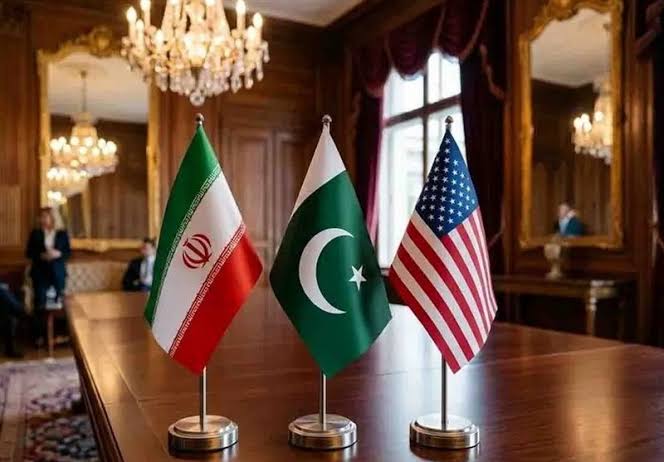
The latest breakdown between Iran and the United States should settle an argument that has gone on for too long. Coercion does not work. Sanctions, military pressure, and the threat of force can buy time, but they cannot buy peace.
Every time this crisis flares up again, it proves the same point: without a real political settlement, ceasefires are just pauses between rounds. This is what the record shows.
Decades of pressure on Iran have not produced the outcome Washington wanted. Decades of confrontation have not made the region safer. What they have produced is a Gulf that lurches from crisis to crisis, at real cost to ordinary people and to the global economy that depends on this region’s stability.
While others reached for pressure, Pakistan reached for the phone. Its leadership stayed in constant contact with Tehran through the crisis with visits, calls, meetings, quiet consultations, to keep a door open that others seemed ready to slam shut. Iran engaged back, seriously, through its own ministerial channels. That reciprocity shows the effort was real on both sides.
This is who Pakistan has chosen to be in its region: not a power that forces outcomes, but one that makes outcomes possible. From the Gulf to Afghanistan, Islamabad’s influence has come from being trusted by all sides, not feared by any of them. That is a harder position to build than military strength, and a more valuable one.
Though the ideal outcome wasn’t acheived, it would be a mistake to call the collapse of talks a failure of diplomacy. Pakistan cannot make Iran and the United States keep their word to each other. What Pakistan could do, and succesfully did, was to keep the door open long enough for both sides to walk back through it if they choose to.
The responsibility now sites with the two capitals. Continuing this standoff serves neither Iran nor the United States. It only serves the argument that confrontation is inevitable, and that argument is wrong.
Iran does not need another cycle of pressure to prove its resilience. What it needs now is to convert that resilience into something durable: sanctions relief, trade, and the investment that comes from being a stable partner rather than a permanent risk.
Iran sits on some of the largest oil and gas reserves on earth, at the crossroads of the Gulf, South Asia, Central Asia, and the Caucasus. That geography is worth more as a bridge than as a chokepoint.
The United States, too, has more to gain from a settled Gulf than from another decade of managing crises there. Washington has said for years that its long-term priority lies in the Indo-Pacific.
Yet every Gulf flare-up drags American military resources back to a region it says it wants to leave behind. A stable Gulf is not a distraction from that strategy is the condition that makes the strategy possible.
Moreover, we do not have to guess what the alternative looks like. The wider Middle East has already lived it: trillions of dollars spent, millions of lives disrupted, and two decades of resources pulled away from schools, hospitals, and growth to pay for conflict instead. That is the region’s recent history.
All parties must realize that coercion has failed, dialogue has kept the door open, and both Iran and the United States now have clear reasons to choose it. Pakistan has done its part. The next move belongs to Tehran and Washington.

Your go-to editorial hub for policy perspectives and informed analysis on pressing regional and global issues.