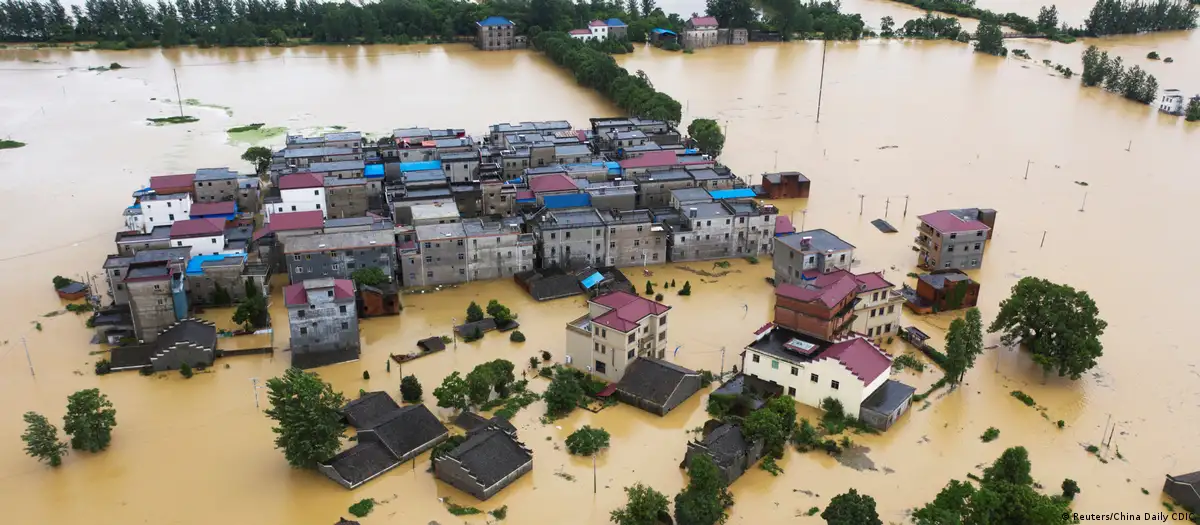
Flooding in China’s Yangtze River basin has ravaged China, leaving a trail of destruction in their wake. In a cruel twist of fate, these floods coincide with severe drought conditions plaguing other regions of China. This is a stark illustration of the growing threat of extreme weather events linked to climate change. South Asia’s annual monsoon season is underway. Fears are mounting that a similar scenario of intensified flooding could unfold across the region.
Torrential rains in Guangdong province have resulted in 47 deaths. Thousands have been displaced, and extensive damage has been reported. Some areas have experienced “once-in-a-century” flooding in China. Simultaneously, eight northern provinces grapple with their worst drought on record, threatening crops and exacerbating water scarcity.
These concurrent events align with a broader global trend, according to the World Meteorological Organization (WMO). Asia bears the brunt of climate change-induced weather hazards. Rising temperatures, averaging nearly 2 degrees Celsius above the 1961-90 average, accelerate Himalayan glacier melt. This disruption of water resources increases flood risks, similar to those seen in China. It jeopardizes the water security of 12 million people in the Tarim basin, who rely on glacial meltwater for 40% of their needs.
Also See: Melting Glaciers: A Threat to South Asian Topography
Crisis Spreads to South Asia
The crisis has already reached South Asia. Severe flooding in Bangladesh has displaced 260,000 people and claimed 10 lives in Sylhet Division alone. This flooding threatens nearly a million Rohingya refugees in Cox’s Bazar. In India’s Assam state, over 1.6 million people have been affected, with 56 deaths reported. This echoes the devastation witnessed in China.
Both countries have seen increased flood frequency and intensity. Northeastern Bangladesh experienced a second wave within a month, stranding 1.8 million. Last year’s Assam floods displaced over four million and claimed 45 lives, mirroring the struggles faced due to flooding in China.
The outlook is troubling. Heavy pre-monsoon showers in Hyderabad, India, resulting in over 51 mm of rainfall and localized flooding, underscore the widespread impact of climate change. Nepal has also suffered, with 35 lives lost to landslides, floods, and lightning strikes since mid-June, reminiscent of events triggered by flooding in China. In Malika village, a landslide tragically claimed the lives of five family members, including two children.
The upcoming monsoon season in South Asia is predicted to bring above-normal rainfall to many regions, including eastern Pakistan. This raises concerns about further flooding and landslides, particularly in vulnerable areas, potentially echoing the challenges seen during flooding in China.
The situation in China and South Asia serves as a stark reminder of the urgency of addressing climate change. While immediate disaster relief and mitigation efforts are crucial, long-term solutions must focus on reducing greenhouse gas emissions, adapting to changing weather patterns, and strengthening infrastructure to withstand extreme events. Only through a concerted global effort can we hope to mitigate the growing threat of climate-induced disasters and protect vulnerable communities around the world.

Najam Ul Hassan Naqvi is an International Relations Researcher affiliated with the National Defence University, Islamabad. Currently a Research Intern at the South Asia Times, his areas of interest include emerging and disruptive technologies, climate change and environmental degradation, and far-right extremism. He can be reached at najamulhassan.ir@gmail.com for inquiries or collaboration opportunities.