Today marks twenty-five years since the attacks on New York and Washington. For Americans, September 11 is mostly a day of memory. For South Asia, it has been something closer to a quarter century of consequence, because the response to that morning fell hardest on this region, not on the one that was attacked.
Afghanistan absorbed the invasion, the two decades of occupation, and finally the collapse of the republic in August 2021.
Pakistan became the logistics corridor, the recruiting ground, the neighbor dragged into someone else’s war, and eventually a target in its own right. Between the two countries, the war on terror produced hundreds of thousands of casualties, the overwhelming majority of them Pakistani and Afghan, not American.
The anniversary forces an uncomfortable question. Twenty-five years after the Taliban sheltered the men who planned 9/11 and refused to hand over Osama bin Laden, the Taliban govern Kabul again. And by the United Nations’ own accounting, the alliance that made 9/11 possible was never actually dissolved. It was rehoused.
Successive reports from the UN Security Council’s sanctions monitoring team describe a relationship between the Taliban and Al Qaeda that remains close and functional, with two Taliban provincial governors and the deputy chief of the intelligence directorate holding direct ties to the group, monthly payments flowing to Al Qaeda-linked fighters, and personal relationships and intermarriages binding the two movements together.
Al Qaeda in the Indian Subcontinent operates openly out of Afghanistan, in territory the Taliban control, with the United States still offering millions of dollars for its leaders.
This is not a historical footnote sitting in an archive somewhere. Over the past year, Al Qaeda’s own media arm broke with precedent and issued a public statement backing the Pakistani Taliban’s campaign against Islamabad, its first direct endorsement of that kind.
UN monitors have also documented Al Qaeda instructors training militants from the Baloch Liberation Army alongside the Pakistani Taliban inside Afghanistan. The results have been visible and bloody: a sharp rise in cross-border attacks through 2025, a short but genuine war between Pakistan and Afghanistan in February 2026 that saw Pakistani jets strike targets in Kabul and Kandahar, and a ceasefire that has broken down more than once since.
Twenty-five years on, Afghan soil is once again functioning as a rear base for groups that kill people across the border.
None of this means the whole Taliban movement should be treated as one indistinguishable bloc, because it plainly is not. UN reporting and independent analysts both describe real friction between the hardline circle around Supreme Leader Hibatullah Akhundzada, who governs from Kandahar, and the more pragmatic ministers running daily affairs from Kabul.
Akhundzada has issued sweeping edicts on women, education, and governance, often without consulting his own cabinet, and there are signs some senior figures now see the Pakistani Taliban as more liability than asset. That split is the opening the world should be using.
Pressure aimed indiscriminately at the entire regime gives the hardliners a common enemy to rally the movement around. Pressure aimed specifically at Kandahar, where the decision to keep sheltering Al Qaeda actually gets made, gives the pragmatists in Kabul room to argue for a different course. A quarter century of watching Afghanistan should have taught the world at least that much.
The trouble is that this is no longer where global attention sits. In the months after 9/11, the world declared repeatedly that it would not let terrorist sanctuaries exist again, and for a while it more or less meant it. That resolve has faded.
Washington’s foreign policy bandwidth is consumed by Iran, by an increasingly assertive China, and by a European war that has dragged on for years with no clean end in sight. Counterterrorism has not vanished from the agenda entirely, Pakistan’s army chief has been publicly praised in Washington for helping capture the man accused of planning the Abbey Gate bombing, but it has become one item on a long list rather than the organizing priority it once was.
A quarter century of distraction is exactly how a dismantled safe haven rebuilds itself. That is precisely why this anniversary matters. Round numbers do not change facts on the ground by themselves, but they concentrate attention, and attention is what the fight against terrorism in Afghanistan has been losing for years.
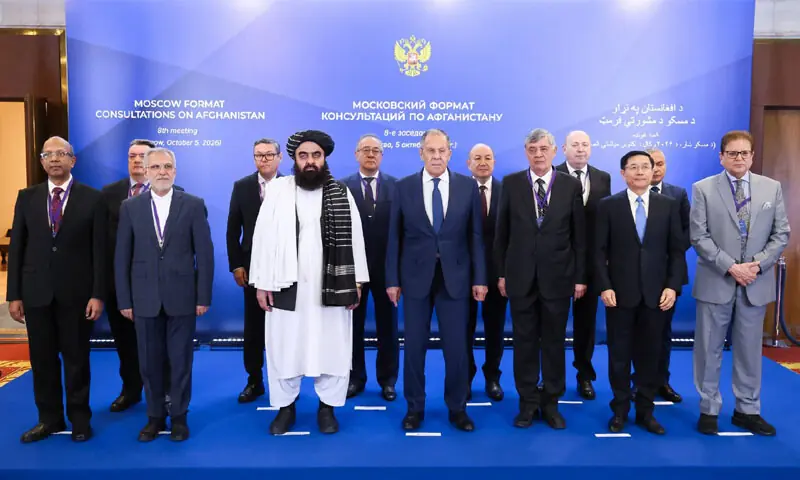
If the twenty-fifth anniversary is going to be more than a ceremony, it should be used to put Kandahar back on the agenda at the UN Security Council, in Washington, in the Gulf capitals still weighing formal recognition of the Taliban, and in Beijing, which has its own reasons to worry about fighters training near its borders.
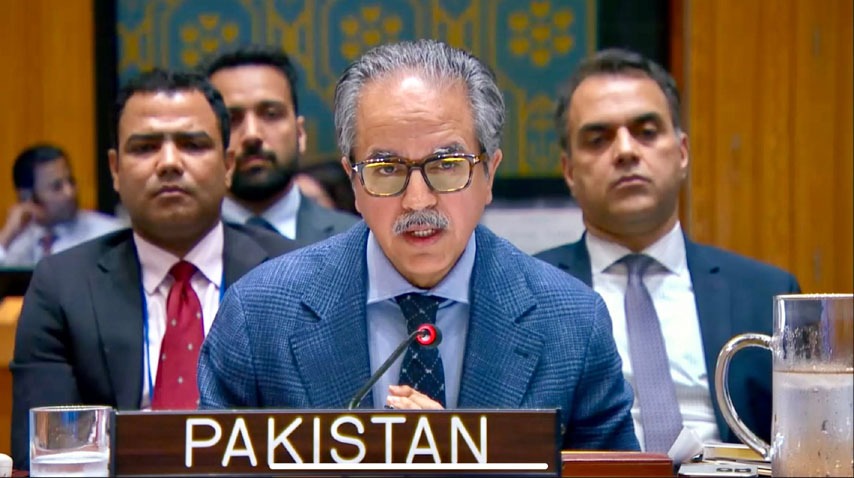
Pakistan has a claim to be heard first in that conversation, because it paid for this war before almost anyone else did and kept paying long after the rest of the world moved on. Since 2001, tens of thousands of Pakistani civilians and several thousand soldiers and police officers have been killed fighting militancy that grew directly out of the Afghan sanctuary.
Islamabad was the partner that helped hunt down Al Qaeda’s leadership on its own territory, including the operation that finally found bin Laden in Abbottabad. It was a frontline state when that phrase still carried weight, and it absorbed costs, in blood and in its own internal stability, that its Western partners largely did not share.
That history is part of why the US-Pakistan relationship looks the way it does today. The two governments are cooperating again across a wide range of fronts, minerals, energy, trade, and counterterrorism among them, and the tone coming out of Washington toward Islamabad’s military leadership is warmer than it has been in years.
But warmth in Washington does not by itself secure Pakistan’s own border. The war that broke out with Afghanistan in February 2026, the strikes on Kandahar and Kabul, the ceasefires that kept collapsing within weeks of being signed, all of it happened because the threat from Afghan soil is current, not historical. Pakistani soldiers are still dying in Khyber Pakhtunkhwa and Balochistan in attacks planned and supported from across a border that has never functioned as one.
Twenty-five years ago, South Asia paid for 9/11 with two decades of war. Today the same country shelters much of the same alliance, adjusted for a new generation of fighters. An anniversary is an odd kind of leverage, but it is the leverage that is available. The world found the will to act after 9/11 once. What it has not found since is the will to finish that job before Kandahar gives it a reason to start all over again.

Your go-to editorial hub for policy perspectives and informed analysis on pressing regional and global issues.