Afghanistan is no longer under a Taliban government but a Taliban-Al Qaeda hybrid regime that has transformed the country into a major hub of terrorism. Nearly every Muslim terrorist organization in the world now has a presence in Afghanistan, and an organized network has been established in which Al-Qaeda, acting as both mentor and umbrella organization, is organizing them as a single-command military force.
For the first time in history, this network is operating as a formal state, using the identity, authority, resources, and national identity for illegitimate purposes. Interestingly, under the Haibatullah regime, the Taliban’s shura and cabinet have been excluded from the decision-making process, and Mullah Haibatullah is making policy decisions in consultation with Al-Qaeda members.
As a result, Al-Qaeda participates as a governing authority in the Afghan government’s policy-making and implementation process. Consequently, the world now faces the prospect of attacks far larger than 9/11 and a far more dangerous situation. The lack of international attention to this rising security threat further complicates the already volatile political environment, especially in South Asia.
Going beyond the reports of international organizations so far, I have reached this conclusion based on personal sources and decades-old relationships inside Afghanistan, particularly among the Afghan Taliban, that today’s Afghanistan has become the greatest threat to the world.
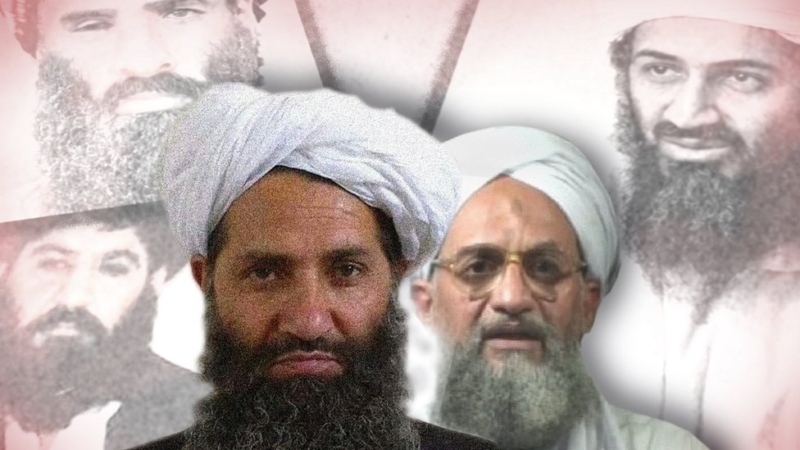
The basis for such a significant claim is that during the Taliban’s first period of rule, Al-Qaeda was Mullah Omar’s guest and ally, not a power partner. Even in Mullah Omar’s time, Al-Qaeda was not involved in any state-level activity anywhere in the country; rather, Osama bin Laden and Al-Qaeda were subordinate to and bound by the Taliban, that is, by Mullah Omar. I can testify from my personal experience that I had to go to Kandahar in July 1999 to meet Osama bin Laden for a media interview. At that time, he was residing behind Kandahar airport.
We were stopped in Kandahar for three days before the meeting, in a friendly environment by the orders of mullah omer. When permission for the meeting was granted, Osama bin Laden, in the presence of Abu Hafs(killed in kandhar 2001), showed us Mullah Omar’s written order and apologized, saying, “I have been confined to the house and forbidden from speaking to the media and meeting foreigners.”
This is also confirmed in declassified U.S. records contained in the National Security Archive Electronic Briefing Book 97 under the name “Taliban Files.” It contains details of a secret meeting held in Washington in December 1997 between Mullah Muttaqi, other members of a Taliban delegation, and U.S. Under Secretary Karl Frederick Inderfurth , in which it was revealed that “Muttaqi assured that ‘we (the Taliban) have imposed restrictions on “Bin Laden”, preventing him from giving interviews and contacting his people in Iran/Iraq.”
The question is: if Al-Qaeda, despite such restrictions, could succeed in carrying out an operation as complex and dangerous as 9/11, then today, when it now has such freedom and access to state resources under the Afghan state and the Taliban, what will it not be able to do?
The second point is that at that time Al-Qaeda operated as a single organization.
Now, under Al-Qaeda’s umbrella, a wide range of terrorist organizations from around the world has opened up. There is Al-Qaeda in the Indian Subcontinent, ETIM, IMU, Jaish ul-Adl, TTP, Jabha -tul-Mubazireen al-Mardumi, Jamaat Ansarullah under its new name Tehreek-e-Taliban Tajikistan (TTT), al-Shabaab, and countless other terrorist groups from all over the world present there with complete freedom and operating. The consequences of such terrorist engagements are not difficult to comprehend.
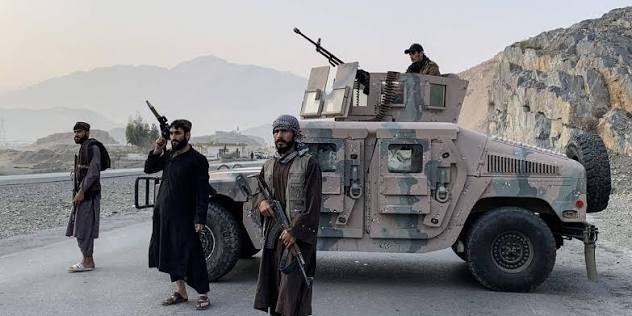
Based on my repeated visits to Afghanistan and information obtained from sources, I can state that these terrorist groups are not merely sitting there after obtaining sanctuary. They have a formal military-style structure. Al-Qaeda has established a system of ideological and military training in Kabul and at least 14 provinces across Pashtun Afghanistan. Similarly, in the northern regions, a training network of ETIM and other organizations operates along similar lines. In Nimroz and adjoining provinces, Jaish al-Adl and BLA are also part of Al-Qaeda’s network, where training is continuously underway in drone manufacturing, electronic jamming and operation, as well as in other aspects of electronic warfare.
Haibatullah’s personal autocracy is a hybrid regime in which Al-Qaeda serves as the fundamental pillar, not merely in planning and policy-making but also in the formal enforcement apparatus and administration. Members of its shura hold important positions in the Taliban government; they are more empowered than their counterparts and, in some situations, even autonomous.
While no minister, not even the army chief, has direct access to Mullah Haibatullah, these Al-Qaeda-linked figures have direct access to Mullah Haibatullah and the authority to take decisions without his approval or permission. In the secretariat of the Taliban intelligence agency GDI, the Ministry of Defense, and the Ministry of Finance, technocrats affiliated with Al-Qaeda and its allied groups are operating under Afghan identities. A few are very prominent in decision-making circles, and their affiliation with Al-Qaeda is no secret.
The list includes GDI Deputy Head Taj Mir Jawad, who in practice exercises the chief’s authority; Panjshir Governor Agha Hakim; Kandahar’s police chief mullah Abdul Ahad Talib, the unofficial head of Haibatullah’s personal force, (the Badri Corps), Kapisa Governor Qari Baryal; and several others. Among Al-Qaeda’s senior figures, there are reports of the presence and movement of Saif al-Adl and Hamza bin Laden; their network is active in Herat and Kabul. The head of Al-Qaeda’s CBRN program and biochemist Yazid Siffat (Malaysian) has been provided safe hideouts in Nangarhar, Kunar and Khost. The head of Al-Qaeda’s covert operations and deputy commander of Ansar -u-Sharia Libya, Abdul Azim Ali Musa bin Ali (Libyan citizen), is active in Khost and Paktia. Mahdi Arsalan, head of Jamaat Ansarullah Tajikistan (Tajik), is also present in Takhar. The entire leadership of the Tehreek-e-Taliban Pakistan is present in Afghanistan. TTP chief Mufti Noor Wali Mehsud and the other major TTP figures and terrorists reside in Kabul.
Hafiz Gul Bahadur is based in Khost and Kabul. Among Central Asian and Uzbek networks, IMU deputy chief Syed Ajmal Yuldashev is in Kunduz and Jowzjan, while military deputy Usman al-Uzbeki is also in Jowzjan. The head of the Uyghur organization TIP, Abdul Haq Turkistani, is based in Kabul and Baghlan and has close relations with the Taliban leadership. Its operational chief Haji Furqan, is in Badakhshan.
Abu Abdullah (of Syrian origin), former head of the HTS Sharia Council, is in Herat, Osama Mahmood, the leader of Al-Qaeda in the Indian Subcontinent (AQIS), is frequently sighted in Kabul and Nangarhar; his training and command center is reported to be located in the Dara-e-Noor area of Nangarhar.
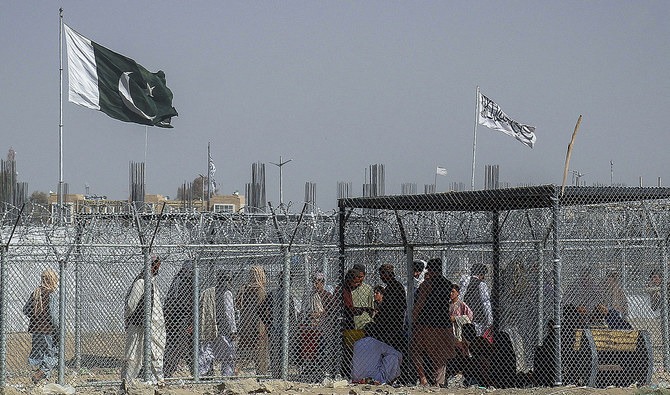
Along with these leaders, terrorists numbering in the thousands are also present on Afghan soil. They have been placed in Afghanistan across provinces including Zabul, Kabul, Panjshir, Helmand, Herat, Nangarhar, Kunar, Kandahar, Badakhshan, Balkh, Nimroz and Samangan; indeed, Aybak district of Samangan is emerging as a new center of terrorism. All these foreign terrorists have been provided with official residences, separate safe hideouts, training facilities, and secure routes of movement. Several individuals enjoy direct patronage by senior Taliban commanders, which indicates that this is not merely the granting of a sanctuary but an organized settlement.
The matter is not limited to this. Under a policy known as “Ummah Wahidah,” all of these groups have been invited and settled in Afghanistan according to a plan. The most dangerous aspect is the issuance of Afghanistan’s legal travel documents and biometric identity cards (TAZKIRA) to the most dangerous terrorists.
These people, under new names and identities as Afghan citizens, are ready to travel worldwide. The details are contained in an inquiry report of “Cell 08” of the GDI.This very report was declared secret by mullah haibatullah, and the inquiry was halted in relation to this particular matter. In the order dated 27 February 2024 terminating this inquiry, Mullah Haibatullah also ordered that in the future, any inquiry related to passports and tazkira (identity cards) would take place only with the approval of Mullah Haibatullah’s secretariat.
According to the GDI’s estimate, around 7,000 to 10,000 Afghan passports are missing from official records. It also includes passports issued through Afghan embassies abroad. According to sources, the fundamental reason for Mullah Haibatullah’s termination of the investigation was the very fact that taliban regime issued those passports itself to provide official Afghan citizenship to the members of Al-Qaeda, ETIM, IMU, and other allied terrorist groups. The investigation was halted to prevent these individuals from being revealed. If the investigation had continued, the actual number and identities of these individuals could have come to light; therefore, the investigation was stopped.
An extremely cunning strategy was adopted for issuing passports and visas to Al-Qaeda terrorists: original passports and tazkira (identity cards) were granted , and after which their records were destroyed so that if any such individuals were caught somewhere during travel, the Afghan government could say that these documents were forged.
The United Nations also contacted the Taliban Ministry of Interior in January 2025 for information about the investigation into the fake-passport scandal, but it was neither answered nor responded to. Now the question is: when Al-Qaeda is present in the governmental system, and people linked to Al-Qaeda are also being given Afghan citizenship under the Ummah Wahidah policy, who will identify them? Who will stop them? In case some Al-Qaeda terrorist sits somewhere in any capital in the guise of a diplomat, or some other government representative, then what?
(Full details of the presence of Al-Qaeda and all other terrorists in Afghanistan, and of the “Ummah Wahidah” policy, are contained in Saifullah Khalid`s Urdu book “Taliban ka Asli Chehra”(The Real Face of the Taliban), published in July 2026.)
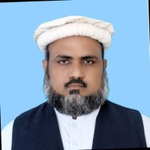
Saifullah Khalid
A senior journalist, editor, security analyst, and columnist with 35 years of experience. Since 2001, he has extensively covered political and strategic developments in Afghanistan and Central Asia since 1991. He has authored 4 books , 2 on Afghanistan. In 1994, he authored a book on Afghanistan titled Main Ne Kabul Jaltay Dekha (I Saw Kabul Burning), and in July 2026, he published his book Taliban Ka Asli Chehra (The Real Face of the Taliban) in Urdu.