Climate change is fast becoming a global issue which any country could not afford to ignore without facing serious consequences. This is also an issue which exposes the glaring contradiction in the existing international order: States and countries which are contributing only marginally to global greenhouse gas emissions are the ones most vulnerable to environmental destruction. Devastating floods, prolonged droughts and extreme heat waves have become increasingly common in developing countries which have neither the financial capacity nor historical responsibility to address these crises on their own.
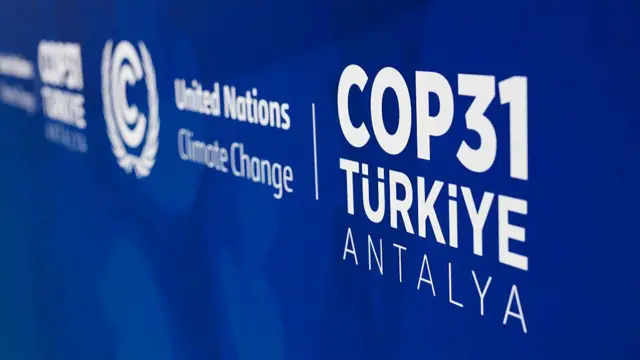
Prime Minister Shehbaz Sharif on Thursday urged grant-based financing for countries affected by climate change. Shehbaz made these remarks at the COP31 summit in the Turkish city of Antalya. COP31 is a multilateral forum where issues related to climate change and the hazards faced by humanity are collectively discussed.
“National effort cannot replace a fair and just global response when a climate disaster strikes. Vulnerable countries need timely help and finance that does not deepen their debt. We call for grant-based finance, including public-private partnerships, alongside significant enhancement of resilience and adaptation funds, which amount to survival funds, especially for struggling economies,” the Prime Minister said in his speech at the forum.
Pakistan is contributing a very small share of global greenhouse gas emissions compared to big industrial power. Yet it remains among the countries most vulnerable to climate change. Surely Pakistan has a story to tell the world when it comes to climate change and the devastating effect it is having on its society
Prime Minister Shehbaz Sharif in his speech recounted the story of a young man in Buner who was just two days away from his wedding when flash floods struck his village in August 2025. “A home preparing for celebration became a house of mourning,” he said.
Shehbaz said he had visited families who had lost their homes, livelihoods and loved ones in the floods. He said their suffering reflected the experiences of millions of people in Pakistan and across the developing world who had contributed the least to climate change but were facing its most severe consequences. Referring to the devastating floods of 2022, the prime minister said one-third of Pakistan had been submerged, affecting 33 million people.
Multiple climate catastrophes compelled Pakistan forcefully to put forward its case for climate justice at the international stage. Pakistan sought greater international support, including financial support through the Loss and Damage Fund established at COP27.
Since then, Pakistan has been advocating that climate finance should be more accessible, predictable and it should be additional to existing development assistance. International financial support to countries suffering from climate-induced losses should be in the form of grants and should not take the shape of loans.
Developed countries’ declaration of solidarity with climate vulnerable countries is not enough. The countries most vulnerable to climate change require accessible finance, modern technology and deeply meaningful cooperation from the developed world to safeguard their population and economies from the climate-induced devastations. The developed world must shoulder larger responsibility in this regard.

Your go-to editorial hub for policy perspectives and informed analysis on pressing regional and global issues.