Niamat Pashtun used to cross at Chaman every week to trade goods in Afghanistan. His auto parts and computer business brought in approximately 15,000 rupees daily, according to RFE/RL. His income has dropped to below 2,000 rupees a day. He transferred the business to Quetta, where the security situation affected sales. He now supports his family of nine with money sent by his brother from South Africa.
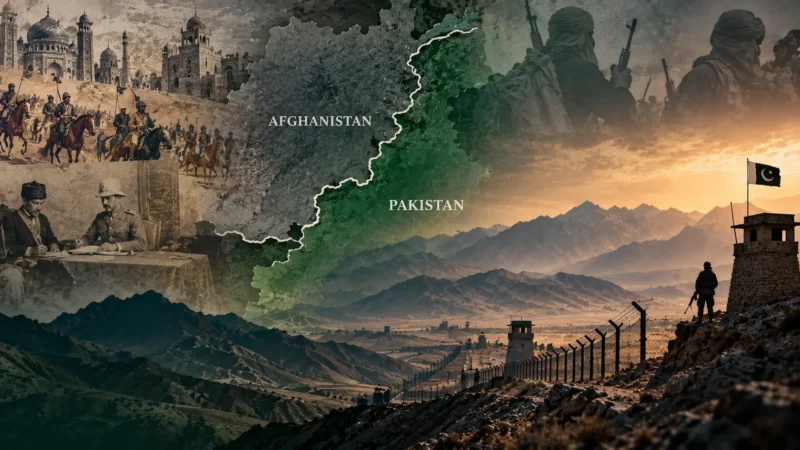
Pakistan shut down its crossings with Afghanistan in mid-October 2025 following the worst fighting between the two nations since the Taliban seized power in Kabul in 2021. Trade remains halted at all five major crossings: Torkham, Chaman, Ghulam Khan, Kharlachi, and Angoor Adda, for a year now. According to RFE/RL, it is the longest such closure between the two nations on record.
The cost is reflected in State Bank data. Pakistan’s exports to Afghanistan decreased by 68.9 percent in FY26 to $243.7 million from $783.9 million. Imports dropped 74.9 percent to $6.5 million. This loss in exports alone amounts to about $540 million. The chamber estimates Afghan transit cargo through Karachi earned about $160 million a year before the closure.
Islamabad did not do this on a whim, and there is some reasoning behind it. In November, the Foreign Office said Pakistan had separated trade from security from 2022 through mid-2025 and then reached the limit of its patience. It stated that the threat was “existential” and that it was up to the Taliban to reopen. A UN Security Council monitoring report on the second half of 2025 gives the concern weight.
It termed the TTP “one of the largest terrorist groups in Afghanistan,” estimated the group has about 6,000 fighters, and attributed that in 2025, the TTP has been responsible for more than 3,500 attacks, including more than 2,100 in the second half of 2025. The team found that the Taliban authorities provided greater liberty and support to the TTP than other groups, and as a result of this, TTP attacks in Pakistan have increased.
One year later, the shutdown hasn’t yielded the concession it sought. The talks conducted via Qatar and Turkiye have failed in 2025, and efforts at dialogue with China’s involvement this year have yielded no success. Moscow-format consultations on October 5 were unable to reach a consensus on a joint statement due to differences between the Pakistani and the Taliban teams regarding the mention of terrorist networks. In September, Pakistan carried out airstrikes in the border region, and in October, there were reports of firing by the Afghans in Kurram and near Angoor Adda from a security source. Pressure with no stated benchmark and no end date gives Kabul nothing specific to answer.
The cost is borne by the border towns. On both sides, tens of thousands are reported to be jobless, including thousands of Afghans who came across regularly for treatment. In December, traders from Chaman visited Islamabad to meet the commerce minister and the PM’s commerce coordinator.
The ministry’s announcement included financial losses, disruption of exports of perishable products, and an increase in joblessness. The minister responded that he cannot decide whether to open or close the border, but it is up to the government to consider other factors in the country. In February, the customs clearing agents of Torkham requested a special relief package. There is no indication of a relief program, and public reporting reveals officials promising to raise the issue.
Islamabad should publish the verifiable steps it wants Kabul to take against TTP presence in the listed provinces (Kunar, Nangarhar, Khost, Paktika and Paktia) to eradicate TTP activities from the region. It should state, for each verified step, which crossing is reopened. It should also try to establish a narrow, screened passage for medical cases and divided families, separate from trade. Also, it should finance a relief program for border towns. Torkham’s own agents pointed out that border policy is a federal issue; therefore, the relief must be too. Benchmarks also provide a way for mediators to carry something. The Foreign Office confirms talks with Kabul are subject to conditions and welcomes any sincere approaches by friendly countries. On October 31, Washington announced that if there is a productive role for the US to play, it will play it.
The strongest objection comes from Islamabad’s own position. To reopen without the Taliban’s action to eradicate the TTP threat is to incentivize the very behavior Pakistan desires to eliminate, and the Foreign Office has questioned if any amount of trade is worth Pakistani lives. Kabul rejects the charge. Zabihullah Mujahid, Taliban spokesman, accuses Pakistan’s wrong policies as a cause of the deadlock and states that Afghanistan is not responsible for Pakistan’s counterterrorism issues. A benchmark-based plan answers part of the objection, because nothing reopens without a verified step. If the Taliban reject all the benchmarks, the closure will continue, affecting Niamat and thousands more.

Fakeha Laique
Fakeha Laique is a bachelor’s graduate in International Relations from BUITEMS, Quetta, and a young researcher with a growing focus on international relations, regional dynamics, and security issues in South Asia.