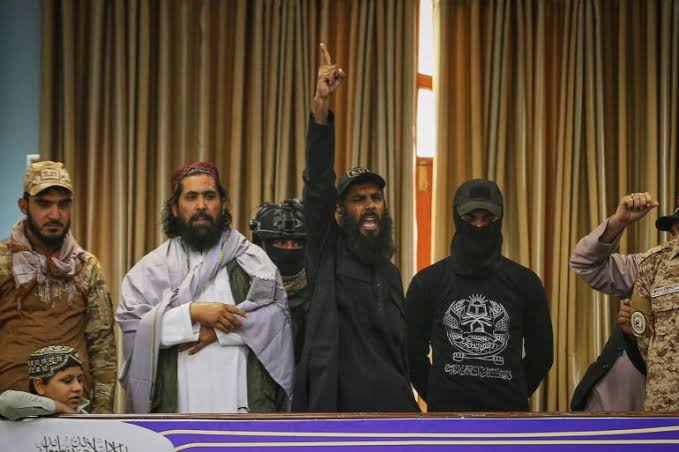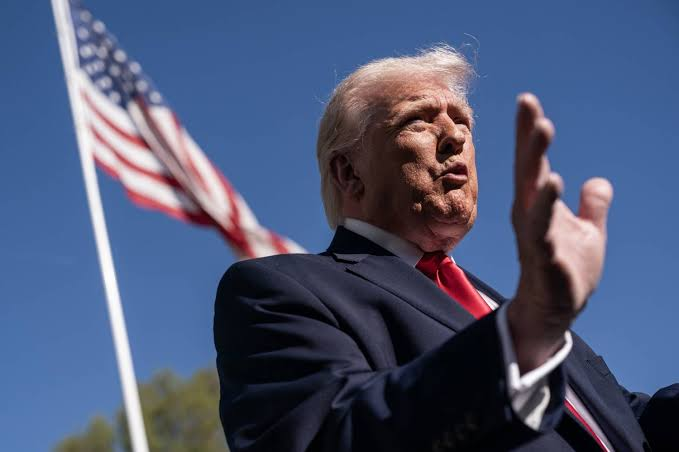
After Taliban leader Mullah Hibatullah Akhundzada declared himself Sheikh-ul-Islam, the situation is that he simultaneously claims to be both “Amir-ul-Mu’minin” and “Sheikh-ul-Islam.” In the entire history of the Muslim world, this is the first time that a single person has claimed to be both “Amir-ul-Mu’minin and Sheikh-ul-Islam.” In this capacity, whatever he says, does, or enforces will be attributed to Islam. In the coming times, the laws issued and decisions made by Mullah Hibatullah can become a major charge-sheet against the Muslim world, Islamic teachings, and the Islamic system of governance. Therefore, it is necessary at this juncture to examine whether the laws and decisions issued by Hibatullah represent Islam or not. In this regard, a sequential review of all his beliefs and laws is essential.
Background
On a cold evening in February 2026, while casually browsing social media, a news item shocked me: the Taliban had divided humans into four classes in the matter of punishment and had declared slavery permissible. Considering it routine propaganda, I ignored it, but then I looked at the attached PDF, which contained the draft of the Taliban law. In the places where the Pashto text had been translated, Clause 9, under the heading of ta’zir, divided society into four classes, giving complete exemption from punishment to the ulema and the nobility, while another clause contained laws related to women. At first, I could not believe it, because despite the Taliban’s support for terrorism, I assumed that there were many highly learned scholars among them, and Mullah Hibatullah himself prefers to be called Sheikh-ul-Hadith and Sheikh-ul-Quran, so he would not openly mock the religion in this way. For verification, I contacted a responsible person in the Taliban’s senior leadership. He not only confirmed it but also provided the original and authentic document of the Criminal Procedure Code issued by the Chief Justice’s office, which bore the secretary’s signature and seal.
The Taliban claim that this is the first Criminal Procedure Code issued and enforced by them, and that all other laws are derived from Hanafi fiqh. References to fiqh books are given throughout this Criminal Procedure Code. I was astonished: the foundation of Hanafi fiqh is also the Quran and Sunnah, so how is it possible that any book of fiqh presents this Hindu-like division in the face of the definitive texts of the Quran? Secondly, Hanafi fiqh has been implemented in various countries and regions of the world for nearly 1,100 years. Why has such a division never appeared anywhere until today, which the Taliban are claiming? Then it was said that “this law has been taken from Fatawa-e-Alamgiri (Fatawa-e-Hindiya) and Fatawa-e-Shami.”
The question is: when Emperor Aurangzeb Alamgir took so much trouble, gathered muftis and ulama from all over the world under the leadership of Mulla Nizamuddin, and had the laws of Hanafi fiqh compiled, why did he himself not implement this class system? The Mughals, including Alamgir, may have had a thousand faults, but no opponent ever accused them of such a division.
The matter is not so trivial that it can be ignored. It concerns the religion, which belongs to all of us. Rather, these Taliban laws are equivalent to slandering the religion of Islam by claiming that Islam believes in class division. Therefore, silence would be a crime. With the help of a team of muftis and scholars, a scholarly review of the Taliban laws was conducted, and the entire facade collapsed. The Taliban’s claims of scholarship and adherence to religion and Shariah were all exposed. What was proven is that the Taliban laws are completely a rebellion against the religion, and the given references are a bundle of lies.
The principled point is that the Taliban or anyone else may do whatever they want in their own country, bring whatever law they like, declare whomever they wish a sacred cow—that is their choice. But the picture they have presented with reference to Shariah is intolerable, because this is an attempt to distort the face of the religion of Islam and ruin its image. If silence is maintained at this juncture, the world will blame Islam, not the Taliban. The face of Islam will be stained, and the teachings of my Prophet, Master, and Guide, Sayyiduna Muhammad ﷺ, will be questioned. Therefore, silence is a crime.
Accountability of Taliban’s First Draft Law
Considering it a communal obligation (فرض کفایہ) along with my research team, every single clause of this Taliban Criminal Procedure Code was examined and tested against the Quran and Hadith, the decisions of the Rightly Guided Caliphate, and the principles of Hanafi fiqh. It was proven that the matter is not limited only to the Criminal Procedure Code issued by Mullah Hibatullah; the entire system of the Taliban does not conform to their claims of adherence to Shariah. It is necessary that every matter of Mullah Hibatullah, from his enthronement onward, be tested on the touchstone of Shariah, because the way the Taliban are claiming that they have implemented Shariah and that their entire system of government is perfect Shariah, if this claim is not examined, it will become a cause of defamation of Islam and, in the future, a major charge-sheet against the Islamic system of governance. It is necessary to review this entire system and tell the world that this system of governance may be anything, but it absolutely does not represent Islam and Shariah.
Some of their laws and practices may indeed be in accordance with Islam, but overall they do not represent Islam; rather, their system of governance and laws are contrary to the temperament and objectives of Shariah. Their claim is that their government is the “Islamic Emirate” based on Hanafi fiqh, but the reality is completely the opposite. The Taliban government is not a genuine Islamic government in reality, but it is explicitly a rebel against Shariah. Their actions show that the name of Shariah is used only to protect their interests and usurpatory measures. Most of the laws and the system of governance are explicitly contrary to the Quran, Hadith, the consensus of the Ummah, and the Islamic principles of justice, equality, knowledge, and mercy. Scholars around the world, including Al-Azhar, Pakistan, genuine Afghan scholars, and the Muslim World League, have already declared their laws to be a distortion and rebellion against Shariah. Upon examination, every law and code that they present as the interpretation of Islam fundamentally revolves around the protection of the interests and power of a group and individuals.
Hibatullah: Amir-ul-Mu’minin or a Usurper?
Mullah Hibatullah declares himself Amir-ul-Mu’minin, whereas his government, by any standard of Shariah, is not the legitimate Islamic government of Afghanistan, let alone being acceptable to the Muslims of the entire world. On 15 August 2021, the Taliban announced the establishment of an interim government upon seizing Afghanistan for emergency circumstances and promised the international community that, in accordance with Afghan traditions, they would hold a Loya Jirga (Grand Jirga) to establish a formal government. That is why the word “interim” was used for all ministers. But in 2025, without any jirga or bay’ah (بیعت), they declared their government permanent and Mullah Hibatullah as Amir-ul-Mu’minin, whereas even the Taliban’s own people did not fully give him bay’ah. A government established by the force of the gun, in which the opinion of the public is not included, does not deserve to be called an Islamic Emirate in any way. This is a form of absolute monarchy under the cloak of religion, in which the source of all real power is the person of Mullah Hibatullah Akhundzada residing in Kandahar. This style of rule reflects a personal system instead of a traditional state order, where religion is being used merely as a justification for domination.
In Islam, the only path for the establishment of the Islamic Caliphate or a legitimate government is public bay’ah, not usurpation. The greatest proof of this is the caliphate of the first Caliph, Sayyiduna Abu Bakr (RA). Until the bay’ah was concluded, he did not assume the caliphate, and even afterward, in his first sermon, he said:
مَا أَفْعَلُ بِكُمْ إِنْ لَمْ تَرْضَوْا عَنِّي
(Translation: What shall I do with you if you are not pleased with me?)
Secondly, he said that as long as I remain firm on Shariah, obey me; otherwise, do not (Tabaqat Ibn Sa’d, Volume 3, Page 15). Whereas Hibatullah’s claim is that whether you accept me or not, I am Amir-ul-Mu’minin and Shariah will only be what suits Hibatullah’s purpose.
Legitimately, this could only have been a valid government if a general bay’ah had been held, but the fact is that the Taliban’s bay’ah to Hibatullah was the bay’ah of an organizational leader, not for the government. For that, it was necessary that he take a new bay’ah as a ruler, but since he knew this was not possible, he simply abolished the hassle of the jirga. Imam Ibn Taymiyyah (RA) stated the principle:
لَا تُقَرُّ إِمَامَةُ الْمُتَغَلِّبِ إِلَّا لِدَفْعِ افْتِرَاقِ الْكَلِمَةِ
(Translation: The imamate (rule) of a usurper (one without public opinion or bay’ah) can only be temporarily tolerated to prevent the splitting of the word; in reality, it is not legitimate. — Al-Siyasah al-Shar’iyyah, Page 29)
Similarly, Imam Nawawi’s statement is:
وَلَا يَجُوزُ أَنْ يَتَوَلَّى الْإِمَامَةَ مُتَغَلِّبٌ بِغَيْرِ بَيْعَةٍ
(It is not permissible for a usurper to assume the imamate without bay’ah. — Sharh Sahih Muslim, Kitab al-Imarah)
Imam Ibn Hajar al-Asqalani (RA) said:
مَنْ غَلَبَ بِالسَّيْفِ وَتَمَكَّنَ هُوَ غَاصِبٌ لَا إِمَام
(Translation: Whoever seizes power by the sword and establishes control is a usurper, not an imam. — Fath al-Bari, Volume 13, Page 7)
After this clear stance of the Imams of fiqh, there remains no doubt about Hibatullah being a usurper.
Taliban System of Governance and Shariah
Islam is a complete code of life. It does not accept the usurpatory autocracy of a single individual in any form. Rather, the system of governance in Islam is consultation (shura), not autocracy. In Surah Al-Imran, Verse 159, Allah the Lord of Honor commands His Prophet, Muhammad ﷺ:
وَشَاوِرْهُمْ فِي الْأَمْرِ ۖ فَإِذَا عَزَمْتَ فَتَوَكَّلْ عَلَى اللَّهِ ۚ
(O Beloved of exalted attributes! Consult with the people in important matters, and when you have made a firm decision, then put your trust in Allah. Indeed, Allah loves those who put their trust in Him. — Surah Al-Imran: 159; and in Surah Ash-Shura, Verse 38: “وَأَمْرُهُمْ شُورَىٰ بَيْنَهُمْ”)
Allah the Lord of Honor is binding even His Prophet ﷺ to consultation and this is the foundation of legitimate government and the Islamic state. Later, the jurists considered shura, and in the present era, parliament or, according to Afghan social principles, the jirga or Loya Jirga, as the equivalent of “وَأَمْرُهُمْ شُورَىٰ بَيْنَهُمْ”. But the Taliban’s system of governance explicitly indicates rebellion against this fundamental command of Islam, where shura and consultation do not exist at all. It consists entirely of the decisions of a single individual. Even the Taliban Shura, which before coming to power had the authority to all decisions, has been rendered a suspended organ by Mullah Hibatullah. Despite the fact that this Shura is not even the representative of the Afghan public, nor of the Afghan Taliban, because all members are appointed according to Mullah Hibatullah’s personal likes and dislikes, not consulting even this is evidence of Hibatullah’s illegitimate autocracy. To the extent that, through a decree in July 2024, Mullah Hibatullah has stripped even the ministers of their powers. Even local police officers and sanitation staff are appointed according to Mullah Hibatullah’s order and will, which is explicitly rebellion against the commands of the Noble Quran, the sayings of the Prophet ﷺ, and the practice of the Rightly Guided Caliphate.
The reality is that the new combination of power, religion, and law that has emerged in Afghanistan is not merely a structure of governance but appears to be a system in which state authority has become completely concentrated in the hands of a single individual.
Taliban Law and Islam
Taliban leader Mullah Hibatullah enforced the first legal draft of his government through a decree in January 2025, in which no consultation was held with the Taliban Shura, the judiciary, or the Darul Ifta. The very enforcement of this law is against Shariah. Every single clause of it is equivalent to rebellion against the Shariah of Muhammad and the defamation of Islam, and is evidence that Mullah Hibatullah is defaming the name of Islam in order to establish his personal dominance over the people. This law is not merely a code of punishments but the foundation of a personal autocracy that, while using the name of religion, consists of inhuman practices opposed to the religion of Islam and the slavery of a single individual. Under this law, society has been divided into four classes, and it is clearly evident that Hibatullah, in order to establish his dominance, has given a free pass for crimes to the influential classes of society—mullahs, traders, tribal leaders, and commanders—and all this has been done in the name of Shariah. This class hierarchy in the Taliban law is sufficient to prove that the Taliban regime is in open and declared rebellion against the verses of the Quran, the commands of the Messenger of Allah ﷺ, and the decisions of the Rightly Guided Caliphs (may Allah be pleased with them all). Allah has given clear and unequivocal commands in the Noble Quran on countless occasions that there is no distinction among human beings except on the basis of taqwa (piety). In Surah Al-Hujurat, Verse 13, it is said:
يَا أَيُّهَا النَّاسُ إِنَّا خَلَقْنَاكُم مِّن ذَكَرٍ وَأُنثَىٰ وَجَعَلْنَاكُمْ شُعُوبًا وَقَبَائِلَ لِتَعَارَفُوا ۚ إِنَّ أَكْرَمَكُمْ عِندَ اللَّهِ أَتْقَاكُمْ
(Translation: O mankind! We created you from a male and a female and made you into nations and tribes so that you may know one another. Indeed, the most noble of you in the sight of Allah is the most righteous of you.)
This verse clearly states that superiority among humans is only through taqwa, fear of Allah, and righteousness, not through lineage, color, nation, or family. Elsewhere, in Surah An-Nisa, it is said:
يَا أَيُّهَا النَّاسُ اتَّقُوا رَبَّكُمُ الَّذِي خَلَقَكُم مِّن نَّفْسٍ وَاحِدَةٍ وَخَلَقَ مِنْهَا زَوْجَهَا وَبَثَّ مِنْهُمَا رِجَالًا كَثِيرًا وَنِسَاءً
(Translation: O mankind! Fear your Lord who created you from a single soul and created from it its mate and dispersed from both of them many men and women.)
The meaning is that all humans are from a single soul (Prophet Adam, peace be upon him), therefore all are equal. In Surah Al-Isra, Verse 70, Surah Al-Hujurat, Verse 9, and several other verses, Allah the Lord of Honor has commanded the equality of humans and not to maintain any distinction among them. The division of society into four classes by the Taliban is nothing less than rebellion against the Quran.
Similarly, there are dozens of blessed hadiths of the Messenger of Allah, Prophet Muhammad ﷺ, in which the command is given to treat all humans equally and not to maintain any kind of distinction. In the Farewell Sermon, when the laws of Islam were being finally stated, the Prophet ﷺ said:
لَا فَضْلَ لِعَرَبِيٍّ عَلَى أَعْجَمِيٍّ وَلَا لِعَجَمِيٍّ عَلَى عَرَبِيٍّ وَلَا لِأَحْمَرَ عَلَى أَسْوَدَ وَلَا لِأَسْوَدَ عَلَى أَحْمَرَ إِلَّا بِالتَّقْوَى
(Translation: There is no superiority of an Arab over a non-Arab, nor of a non-Arab over an Arab, nor of a red over a black, nor of a black over a red, except through taqwa.)
The meaning is that all are equal; every kind of superiority has been completely abolished. One thing has been proven by the laws issued by Mullah Hibatullah: this regime is not bound by Shariah; it is a group of rebels against Shariah that, while taking the name of Islam, is becoming a cause of its defamation. Their issued laws are not only a cause of the destruction of Afghan society but also of the defamation and insult of Islam.
Laws Against Other Schools of Thought
According to Taliban law, propagating any fiqh other than Hanafi fiqh is a crime, and if a follower of Hanafi fiqh adopts any other fiqh, he will be punished. This is pure rebellion against Islam. Islam has not imposed any such restriction. This is merely a pretext to punish personal opponents and nothing else. If this law is accepted as a principle of Shariah, then all the Companions (RA) and all the Imams except Imam Abu Hanifah (RA) would also be declared criminals, whereas Imam Muhammad, the student of Imam Abu Hanifah and the one who gave written form to Hanafi fiqh, himself differed with Imam Abu Hanifah on countless points. From a scholarly perspective, differences among the Companions (RA) also occurred more than once, which the Prophet ﷺ never declared a crime. Rather, the exalted command of the Prophet ﷺ is: “اخْتِلَافُ أُمَّتِي رَحْمَةٌ” (Translation: The difference of my Ummah is a mercy. — Ibn Majah, Kitab al-Fitan, Hadith 4049; Sahih Ibn Hibban, Volume 8, Hadith 4485).
Actions Against Women
The greatest rebellion against Shariah by Mullah Hibatullah is the trampling of women’s rights and the enforcement of harsh laws against them. In March 2022, schools for girls above the sixth grade were closed. In December 2022, women were expelled from universities and private institutions. In 2024, a complete ban was imposed on nursing, midwifery, dental, laboratory sciences, and other medical education. In the laws issued in January 2026, further harsh measures against women were enforced. All this conduct is open rebellion against Islam. By 2025, approximately 2.2 million girls are out of school, and 1.4 million are deprived of education at the secondary level.
Women’s health facilities are affected; female doctors are not available, and permission to be treated by men is not given. Both restrictions are rebellion against Islam. The very first revelation of Islam is “Iqra,” in which there is no distinction between men and women. The clear command of Master Muhammad ﷺ is:
طَلَبُ الْعِلْمِ فَرِيضَةٌ عَلَى كُلِّ مُسْلِمٍ وَمُسْلِمَةٍ
(Seeking knowledge is obligatory upon every Muslim man and woman. — Sunan Ibn Majah)
In the Holy Quran, Allah’s command is:
وَلَهُنَّ مِثْلُ الَّذِي عَلَيْهِنَّ بِالْمَعْرُوفِ
(Translation: And women have rights similar to those against them in a reasonable manner.)
The blessed hadith states:
كُنْتُ أَتَوَكَّلُ عَلَى خَدِيجَةَ رَضِيَ اللَّهُ عَنْهَا فِي تِجَارَتِهَا
(Translation: I ﷺ fully trusted Hazrat Khadijah (RA) for my trading responsibilities. — Bukhari, Kitab al-Riqaq, Hadith 2070)
Islam has not imposed any restriction on women in education, health, or any matter, even though the incidents of female Companions going to battles are well-known.
Where hundreds of Companions (RA) narrated hadiths, hundreds of female Companions (RA) also did so. Details of eight thousand female hadith scholars are available over fourteen hundred years, and the details of these esteemed women can be seen in the book Al-Wafa bi Asma’ an-Nisa (الوفاء فی اخبار النساء). During the blessed life of the Messenger of Allah ﷺ and the era of the Rightly Guided Caliphate, eight female Companions were regular physicians and practiced medicine. Their details are present in the hadiths. Three of the Prophet’s ﷺ wives—Sayyidah Khadijah (RA), Sayyidah Zaynab bint Jahsh (RA), and Sayyidah Sawdah (RA)—and the daughter of Hazrat Abu Bakr, Sayyidah Asma bint Abu Bakr (RA), among at least 21 female Companions, were regularly engaged in large-scale trade.
How autonomous women were in Islam and what role they were playing in the field of education can be gauged from the fact that the oldest continuously operating university on the face of the earth is not Oxford or any Western university, but Al-Qarawiyyin University in Morocco, which was established by a Muslim woman, Fatima al-Fihri, in 859 CE in the city of Fez in Morocco. This institution was initially established as a mosque, but over time it became a formal educational center where fiqh, mathematics, astronomy, and other sciences began to be taught. According to UNESCO and Guinness World Records, Al-Qarawiyyin is recognized as the world’s oldest continuously operating university. Meaning, the world is accepting our coin and acknowledging that when women in Europe were considered commodities for sale and property, Muslim women were not only conducting regular trade but also establishing universities. On the other hand, this is the Taliban regime that is bent on declaring being a woman itself a crime.
Who knows which religion Hibatullah is declaring as Shariah; their laws are not Islam. The Grand Imam of Al-Azhar, Ahmed al-Tayeb, said that this restriction is against Shariah and contrary to the Quran. Saudi Arabia, UAE, Turkey, the Muslim World League, and Afghan scholars (Abdul Rahman Abid, Sheikh Faqirullah Faiq) have rejected it.
Patronage of Terrorists
In Islam, every form of terrorism and unjust killing is strictly prohibited. The Quran and Sunnah clearly declare the sanctity of human life as a fundamental right. Unjust killing, i.e., every form of terrorism and unjust murder, is haram in Islam. Hazrat Ali (RA) and Hazrat Umar (RA) took strict measures against terrorists and those who kill unjustly. A terrorist only spreads corruption, and the commands of Shariah against him are unequivocal. In Surah Al-Ma’idah, Verse 32:
مَن قَتَلَ نَفْسًا بِغَيْرِ نَفْسٍ أَوْ فَسَادٍ فِي الْأَرْضِ فَكَأَنَّمَا قَتَلَ النَّاسَ جَمِيعًا
(Translation: Whoever kills a person without right or for spreading corruption on the earth, it is as if he has killed all of mankind.)
This same command appears in several other verses. Similarly, the blessed hadith is:
مَنْ قَتَلَ نَفْسًا مُسْلِمًا لَا يَسْتَحِلُّهَا إِلَّا بِحَقٍّ فَكَأَنَّمَا قَتَلَ النَّاسَ جَمِيعًا
(Translation: Whoever kills a Muslim soul without right, it is as if he has killed all of mankind. — Sahih Bukhari, Kitab al-Hudud, Hadith 6875)
مَنْ قَتَلَ نَفْسًا أَبَرًّا بِغَيْرِ حَقٍّ فَلَهُ النَّارُ
(Translation: Whoever takes the life of an innocent person without right, for him is the Fire. — Sahih Muslim, Kitab al-Hudud, Hadith 90)
The Messenger ﷺ even forbade killing a disbeliever without legal justification:
لَا تَقْتُلُوا أَهْلَ الْكُفْرِ وَالْمُسْلِمِينَ بِغَيْرِ حَقٍّ
(Translation: Do not kill the people of disbelief or the Muslims without right. — Tirmidhi, Kitab al-Jihad, Hadith 1327)
Above all and most clearly, Allah’s Quran says:
إِنَّمَا جَزَاءُ الَّذِينَ يُحَارِبُونَ اللَّهَ وَرَسُولَهُ وَيَسْعَوْنَ فِي الْأَرْضِ فَسَادًا أَن يُقَتَّلُوا أَوْ يُصَلَّبُوا أَوْ تُقَطَّعَ أَيْدِيهِمْ وَأَرْجُلُهُم مِّنْ خِلَافٍ أَوْ يُنفَوْا مِنَ الْأَرْضِ ۚ ذَٰلِكَ لَهُمْ خِزْيٌ فِي الدُّنْيَا ۖ وَلَهُمْ فِي الْآخِرَةِ عَذَابٌ عَظِيمٌ
(Translation: The recompense of those who wage war against Allah and His Messenger and strive to spread corruption on the earth is that they be killed, or crucified, or their hands and feet be cut off on opposite sides, or they be banished from the land. That is a disgrace for them in this world, and for them in the Hereafter is a great punishment.)
In this verse, not only those who commit “corruption on the earth” themselves, but in Islamic law, aiding, sheltering, or facilitating such people is also considered a serious crime. According to the jurists, if a group commits murder, spreads terror, or carries out armed operations, and another party provides them shelter or support, this act also falls under the category of “corruption.” Despite these clear and unequivocal warnings of the Quran and Hadith, the Taliban’s patronage of terrorists is open rebellion against Shariah, rebellion against the Quran and Hadith.
(To be continued)
- Part 1 (Current): Hibatullah’s Laws: A Manifest Rebellion Against the Sharia
- Part 2: Hibatullah’s Triple Confession — New Deception Ahead
Saifullah Khalid
A senior journalist, editor, security analyst, and columnist with 35 years of experience. Since 2001, he has extensively covered political and strategic developments in Afghanistan and Central Asia since 1991. He has authored 4 books , 2 on Afghanistan. In 1994, he authored a book on Afghanistan titled Main Ne Kabul Jaltay Dekha (I Saw Kabul Burning), and in July 2026, he published his book Taliban Ka Asli Chehra (The Real Face of the Taliban) in Urdu.