The security dynamics of South Asia are in a continuous flux, especially in the aftermath of last year’s military stand-off (May 2025 Indo-Pak conflict).
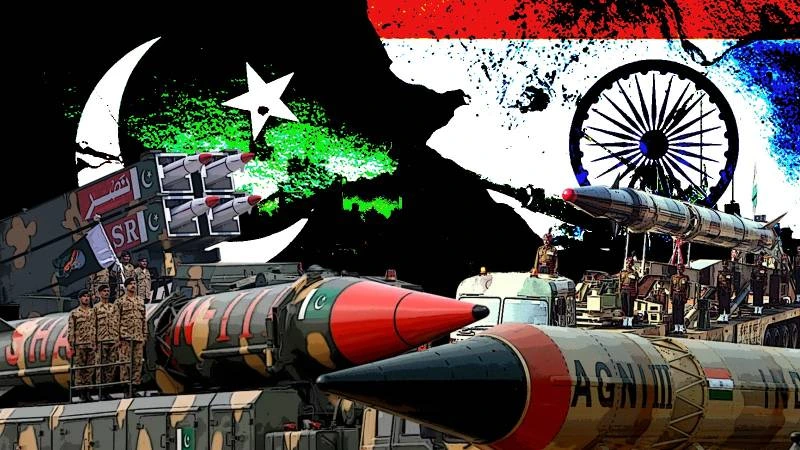
The four-day intense conflict, despite Indian aspirations to wage a large-scale conventional war under the nuclear overhang, was the prime example of the decisiveness of nuclear deterrence at play in calming the tense situation between the two arch-rivals in the presence of huge conventional military asymmetry.
This particular case is not the only instance; instead, since the overt nuclearization of South Asia in May 1998, nuclear deterrence has been the pivotal factor in squashing every malevolent Indian agenda at each crisis event for the past twenty-eight years.
In the last month’s International Non-Proliferation Conference 2026 (INC-26), Adviser Development to National Command Authority (AD NCA), Lt. Gen. (Retd.) Khalid Ahmed Kidwai, who was also the founding and the longest-serving head of Pakistan’s nuclear regulatory body, Strategic Plans Division (SPD), delivered a keynote address where he remarked: “For Modi, limited war against Pakistan is the continuation of domestic politics by other means” (altering the famous dictum of Carl von Clausewitz).
Gen. (Retd.) Zubair Mehmood Hayat, former CJCSC and currently an AD NCA, moulded the same famous dictum as, ‘Between nuclear-armed rivals, war is not a continuation of politics, but a collapse of politics and a descent into absurdity.’
The post-2014 India under the hard-core ultra-Hindu nationalist regime of Prime Minister Narendra Modi accelerated the anti-Pakistan drive with impunity in order to hide its misgovernance at home and fool the general Indian public.
Lt. Gen. (Retd.) Mazhar Jameel, who served as DG SPD and is currently an AD NCA, delivered a keynote address at the workshop held at the International Institute of Strategic Studies (IISS) London, in which he comprehensively elaborated India’s extended ambitions of transforming itself into a regional hegemon under the ancient classical notion of MahaBaharat or, in contemporary terms, Akhand Bharat.
Lt. Gen. Jameel linked this concept with India’s present-day malicious involvement in supporting and financing the anti-Pakistan terrorist outfits, prominent among which are, in supporting and financing the anti-Pakistan terrorist outfits in Pakistan.
The 2016 arrest of serving Indian Naval Officer Kulbhushan Yadev inside Pakistan is evidence of obnoxious Indian involvement in creating instability inside Pakistan. Yadev operated in the troubled province of Balochistan under the alias Hussain Mubarak Patel. Yadev later testified on camera of his involvement in carrying out activities against the security and stability of Balochistan.
However, apart from the above-stated cases of political and ideological nature, the era since the overt nuclearization of South Asia in 1998 to date has experienced quite contentious direct security scenarios between the two nuclear weapon states (NWSs), but at each such occasion nuclear deterrence played a decisive role in calming such situations down.
Commencing from Kargil until last year’s military stand-off, in each scenario after limited conventional escalation, the situation was settled through prudent, yet credible nuclear deterrence messaging by Pakistan, despite India’s malicious intentions to wage full-scale war. Hence, proving the stabilizing impact of Pakistan’s nuclear deterrent in the regional context vis-à-vis India.
In 2016, the Indian military’s brigade headquarters at Uri in Indian Illegally Occupied Jammu and Kashmir (IIOJ&K) came under assault from the local Kashmiri resistance outfit. I
n the aftermath of this attack, which was a comprehensive security failure, Indian Law Enforcement Agencies (LEAs) baselessly blamed Pakistan and launched a so-called surgical strike inside Azad Kashmir. This was notoriously propagated as the ‘New Normal’ under the later revealed Dynamic Response Strategy (DRS) to hit so-called terrorist targets across the border inside the nuclear-armed sovereign nation – Pakistan.
The most prominent case of nuclear signalling was the 2019 Pulwama-Balakot crisis, when India dropped an aerial payload inside Pakistan under the pretext of targeting terrorists’ hideouts, calling it another instance of the above-stated flawed concept of ‘new normal’.
In the days that followed, India received the clear message when two of its IAF fighters were downed and a pilot, Wing Commander Abhinandan Varthaman, was captured after an intense aerial dogfight under the conventional retaliatory strike strategy of Quid Pro Quo Plus (QPQ+).
Apart from that particular humiliation, the convening of the NCA meeting by Islamabad gave New Delhi a clear indication that Pakistan’s nuclear deterrent is not a verbal declaration only; instead, it would be materialized when needed.
The May 2025 conflict further bolstered the concept of nuclear deterrence in South Asia’s already hostile security dynamics, and hence proved to be the only decisive factor once again in the balancing equation between India and Pakistan in the presence of geographical and military asymmetry.
Under QPQ+ strategy, Pakistan’s defence forces conducted multi-domain counter-attack retaliatory operations during Operation Bunyan-un-Marsoos in response to India’s Operation Sindhoor. The QPQ+ once again proved to be evidently effective conventional strategy in curtailing the enemy’s senseless belligerence.
As Dr. Zafar Khan, South Asian nuclear expert, author and academician, said, ‘Pakistan demonstrates a great military restraint, modesty and diplomatic posturing, but these imperatives should not be taken for granted as a signal of weakness.’
The new normal that India has been propagating since 2016 is flawed. Instead, as Lt. Gen. Kidwai stated in his keynote address at INC-26, the new normal is what Pakistan Air Force (PAF) established after humiliating not once but twice the IAF in both aerial combats (in 2019 and again in 2025).
He further warned that the dominance gap between IAF and PAF would likely widen with the induction of new technologies in the near future. A few days later, on November 3, the PAF conducted a successful test of the indigenously manufactured Fa’az air-to-air missile system.
Nuclear deterrence has been the decisive factor in the bilateral security relationship between India and Pakistan, even though Indian politico-military leadership has attempted to check or challenge the nuclear threshold through the notion of a so-called limited military campaign conducted under the nuclear overhang.
Firstly, the escalation dynamic in the India-Pakistan situation could easily spiral into a nuclear exchange, if not controlled at the initial levels because of geographical proximity and time constraints. Secondly, dual-capable (nuclear and/or conventional) platforms such as BrahMos or Shaheen can be even more detrimental in future conflicts because, without bilateral communication channels, the launch of any such system could become Armageddon if misperceived.
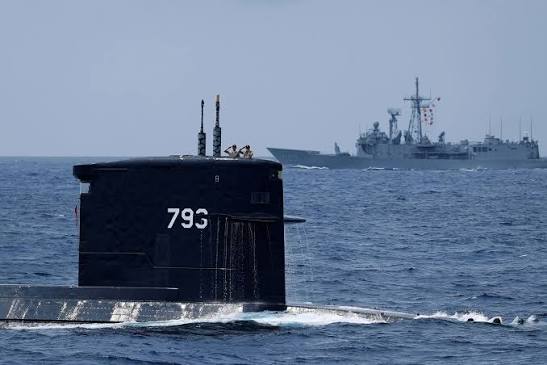
In sum, Pakistan’s deterrence, as Lt. Gen. Kidwai argues, is credible as well as comprehensive in nature, based on a nuclear triad of land, air, and sea capabilities. Therefore, any attempt to challenge this would be disastrous not only for the adversary, but also for the broader strategic stability of the region and beyond.

Muhammad Usama Khalid
Muhammad Usama Khalid is a Research officer at the Balochistan Think Tank Network (BTTN), Quetta. He can be reached at usama.khalid.uk456@gmail.com.