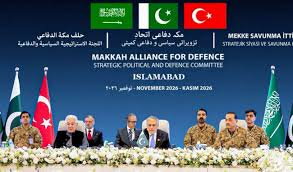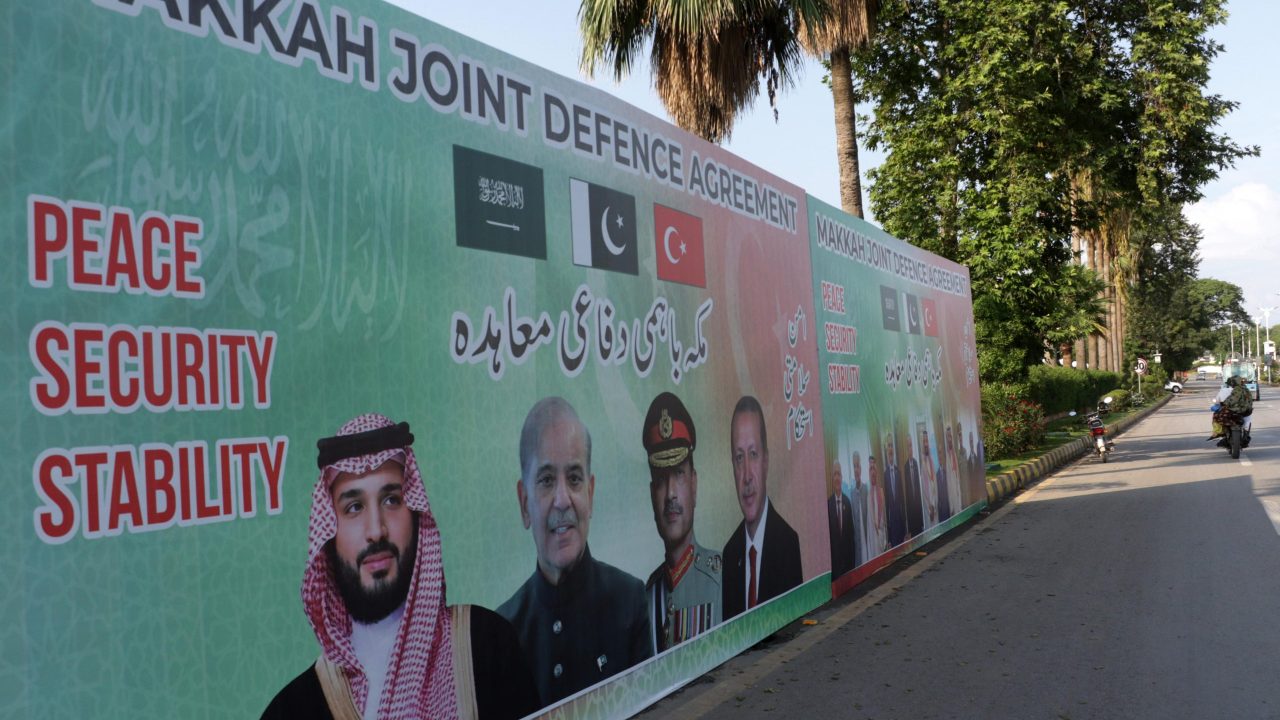
The leaders of the Islamic Republic of Pakistan, the Kingdom of Saudi Arabia, and the Republic of Türkiye participated in the Second Meeting of the Strategic Political and Defense Committee (S-PDC) of the Makkah Alliance for Defense in Islamabad on 27 November 2026. There are clear indications that the alliance is moving beyond mere political statements. While the three meetings in Riyadh, Istanbul, and now Islamabad within a short span of time demonstrate sustained political engagement, focus within the organization is shifting towards institutionalization, coordination, and practical implementation. The alliance has started to assume an institutional basis necessary for the functioning of a collective defense agreement.
The progress in the direction of operationalization of the collective security arrangements demonstrates that the three countries are serious about putting in place permanent and durable defense arrangements. As is obvious, any effective collective defense architecture requires a permanent institutional base. In this regard, the Secretariat established in Riyadh will provide continuity, coordination, and an institutionalized mechanism for implementing decisions.
The Committee reiterated its strong condemnation of persistent and heinous attacks by the Houthi militia targeting civilians and civilian infrastructure in the Kingdom of Saudi Arabia and reaffirmed their collective resolve to continue exerting and accelerating efforts to support the Kingdom in safeguarding its security, in accordance with the collective defense provisions of the Agreement.
The Parties reaffirmed their commitment to strengthening cooperation in defense industries, joint technological development, training, and capacity-building, with a view to enhancing the collective capabilities and cohesion of their armed forces, in order to address mutual security concerns and contribute to peace and security in the region.
This is significant because the statement explicitly connects a threatening security scenario to the operational provisions of the defense arrangement. The credibility of any security alliance ultimately depends on how its members respond to the actual threats each partner confronts in its immediate neighborhood.
The defense alliance opens up critical avenues for joint defense industrial cooperation, joint technological development, combined military training, and greater interoperability between their armed forces. “The Parties reaffirmed their commitment to strengthening cooperation in defence industries, joint technological development, training and capacity-building, with a view to enhancing the collective capabilities and cohesion of their armed forces, in order to address mutual security concerns and contribute to peace and security in the region,” reads the joint statement.
The Islamabad meeting of the alliance represents an important milestone. But the real test of the alliance will be its ability to establish a viable and responsive collective security mechanism. Crucially, all three nations have underscored that the alliance exists strictly for a defensive role, rather than confrontation.

Your go-to editorial hub for policy perspectives and informed analysis on pressing regional and global issues.