The Case for Pakistan’s GSP+ Status
Can a decade of economic partnership, institutional reform and shared prosperity be reduced to a catalogue of shortcomings? As the European Union (EU) moves to a new Generalised Scheme of Preferences (GSP) framework from 1 January 2027, this brief makes the case for continuity and constructive engagement rather than punitive disengagement.
Executive Summary
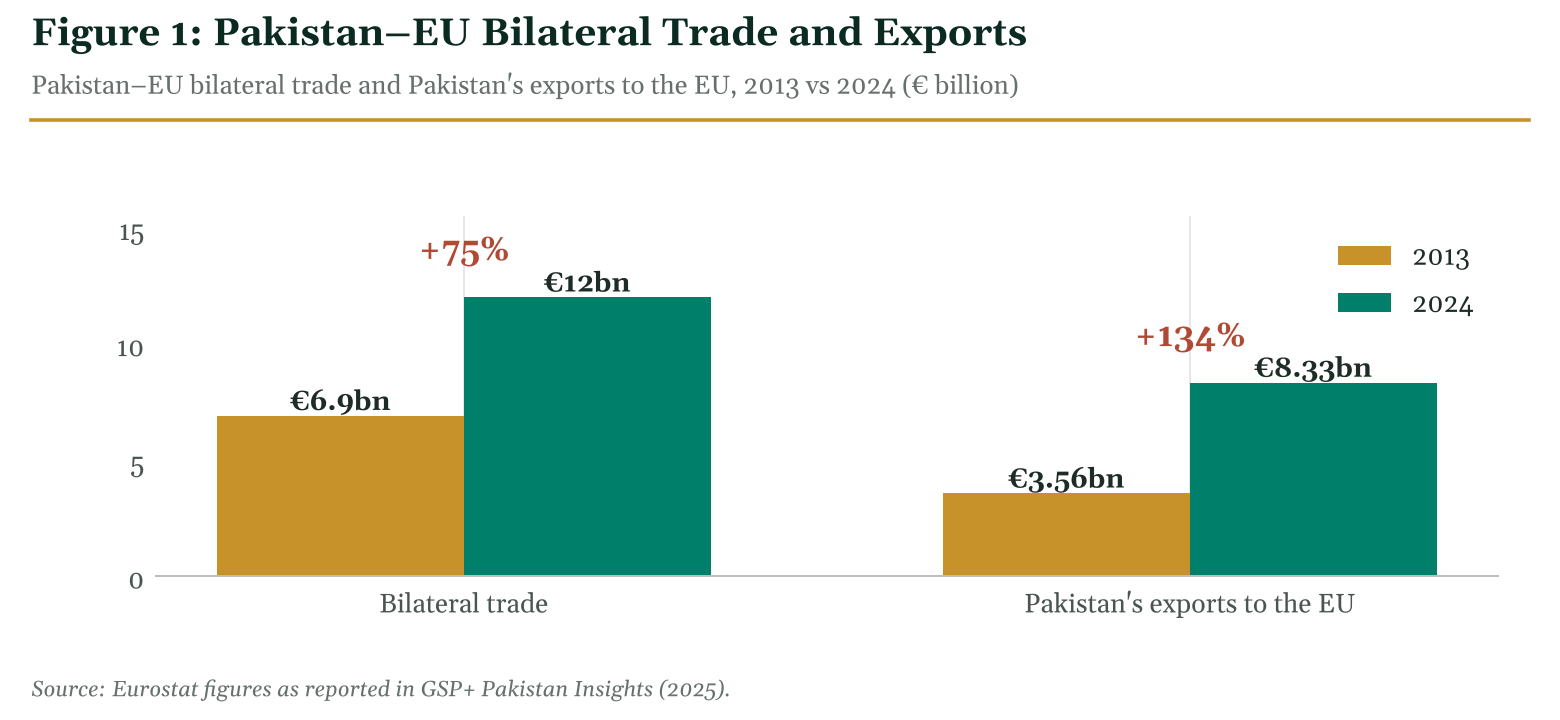
- Since Pakistan became a GSP+ beneficiary on 1 January 2014, its exports to the EU have grown from €3.56 billion to €8.33 billion (+134 percent), and bilateral trade from €6.9 billion to €12 billion (+75 percent).
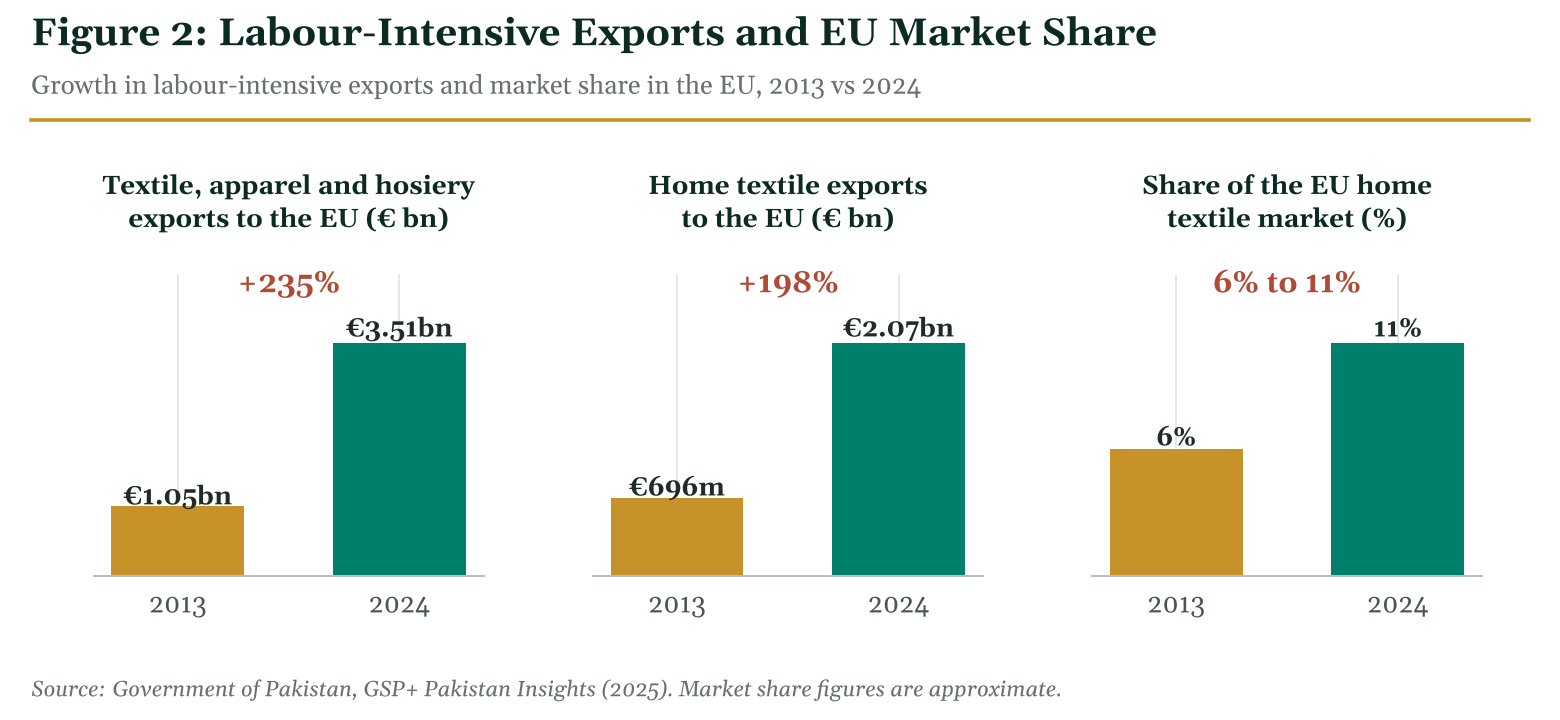
- The gains are concentrated in labour-intensive sectors. Textile, apparel and hosiery exports rose 235 percent, and home textile exports 198 percent. A withdrawal of preferences would hit the workers and households with the least influence over institutional shortcomings.
- Pakistan has built a compliance architecture around the Treaty Implementation Cell and documented reforms in human rights, labour, governance and climate. The brief sets out five priorities for the transition period through the end of 2028.
Introduction
The EU’s GSP+ links preferential market access to the implementation of 27 international conventions on human rights, labour standards, environmental protection and good governance. With calls in some European policy and advocacy circles for the suspension of Pakistan’s status, Azhar Zeeshan argues that the question is not whether Pakistan has achieved perfection, but whether the progress made and reforms underway warrant continuity. Pakistan’s case, he writes, “is not a plea for preferential treatment or an assertion that its reform journey is complete.”
What has GSP+ delivered?
According to Eurostat-derived figures in the Government of Pakistan’s GSP+ Pakistan Insights (2025), bilateral trade grew from €6.9 billion in 2013 to €12 billion in 2024. Pakistan’s exports to the EU grew from €3.56 billion to €8.33 billion over the same period. European businesses have also benefited, from an expanding market for their goods, services and industrial inputs.
Who benefits?
Pakistan’s exports to Europe are concentrated in textiles, garments, hosiery and home textiles. These sectors employ women workers, skilled and semi-skilled labour, and small and medium-sized enterprises. Textile, apparel and hosiery exports to the EU rose from €1.05 billion to €3.51 billion, and Pakistan’s share of the EU home textile market rose from about 6 percent to 11 percent.
What has Pakistan done to comply?
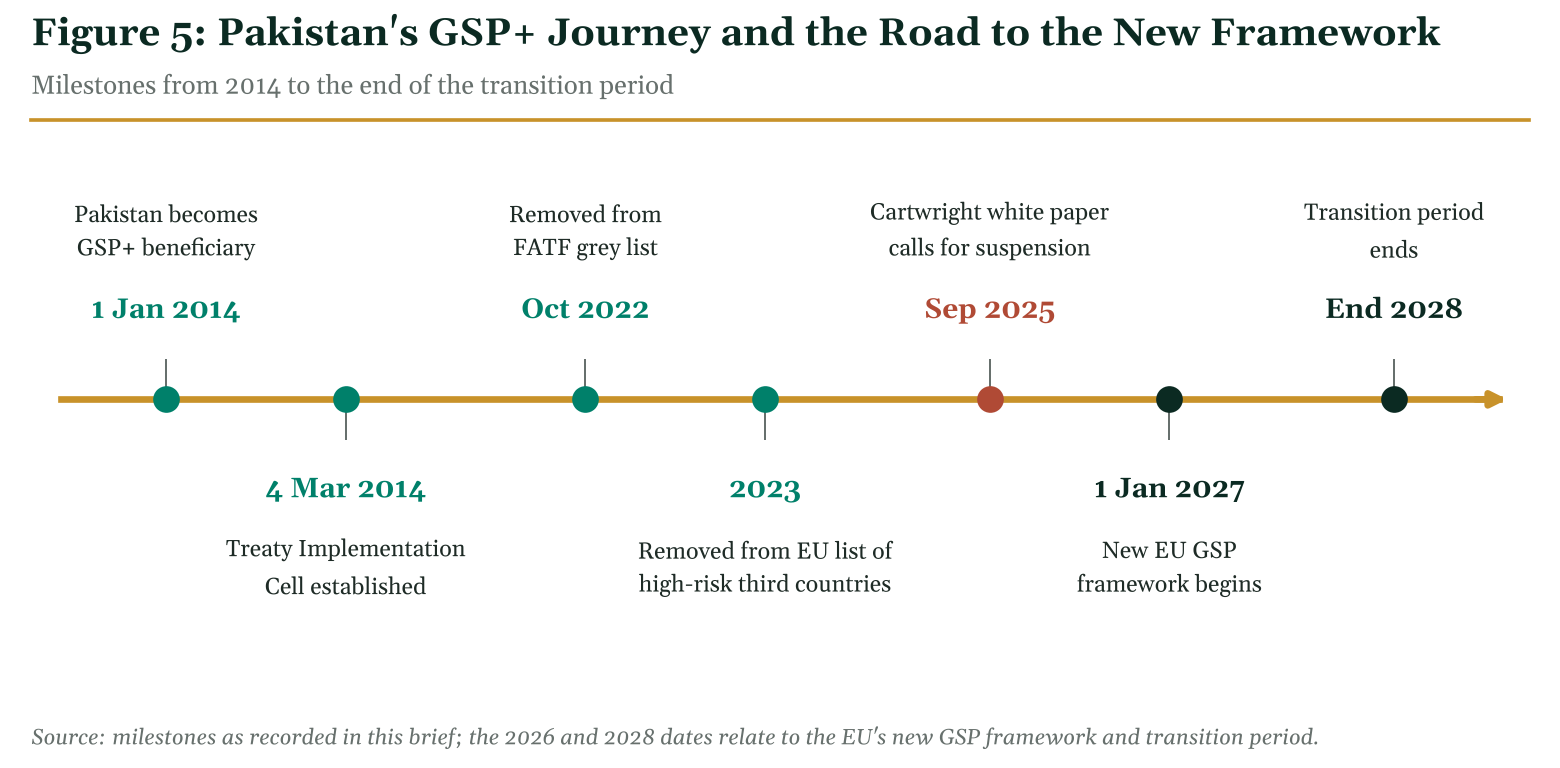
The Treaty Implementation Cell, set up on 4 March 2014 with the Attorney General as Convener, brings together federal ministries, the provinces, the National Commission for Human Rights, the International Labour Organization (ILO), UN Women and the Pakistan Workers Federation. The brief documents several reforms:
The National Commission for Human Rights has GANHRI A-status accreditation.
Child labour surveys have been completed across jurisdictions.
Industrial relations law now applies in Export Processing Zones, after an exemption was withdrawn.
Pakistan was removed from the Financial Action Task Force (FATF) grey list in 2022 and from the EU’s list of high-risk third countries in 2023.
A National Adaptation Plan was adopted in 2023.
Is scrutiny consistent?
The brief accepts the EU’s right to set conditions. It asks that comparable standards of scrutiny apply across the EU’s external economic relationships, including its expanding engagement with India. “The answer is not to lower human rights standards for Pakistan or any other country. It is to apply them across the board, to all countries, not just Pakistan.”
What should Pakistan do?
The brief recommends five priorities:
Key Policy Options
- Establish a GSP+ compliance scorecard, with quarterly reports from the Treaty Implementation Cell against all 27 conventions.
- Strengthen human rights accountability, including updated statistics on enforced disappearances and stronger minority protection.
- Demonstrate labour rights through data, by publishing provincial inspection, prosecution, safety and union registration figures.
- Accelerate environmental implementation, including delivery of the National Adaptation Plan.
- Institutionalise engagement with the EU, the ILO, UN treaty bodies and civil society, with credible third-party verification.
Read the Full SAT Brief
Policy Research · 25 Pages · PDF Format
Full 25-page policy brief including charts, data audits, and policy options.
↗ Open PDF in FullscreenWrite for SAT Briefs
South Asia Times invites researchers, scholars and practitioners to write forthcoming SAT Briefs: rigorous, well-sourced policy research on consequential questions in regional and international affairs. Contributors are paid. Send a working title, a 300-word outline, and a note on your expertise to submission@southasiatimes.org. Terms are discussed after review.

Azhar Zeeshan
Azhar Zeeshan is a Reseacher at the Centre for Aerospace and Security Studies (CASS), Lahore.