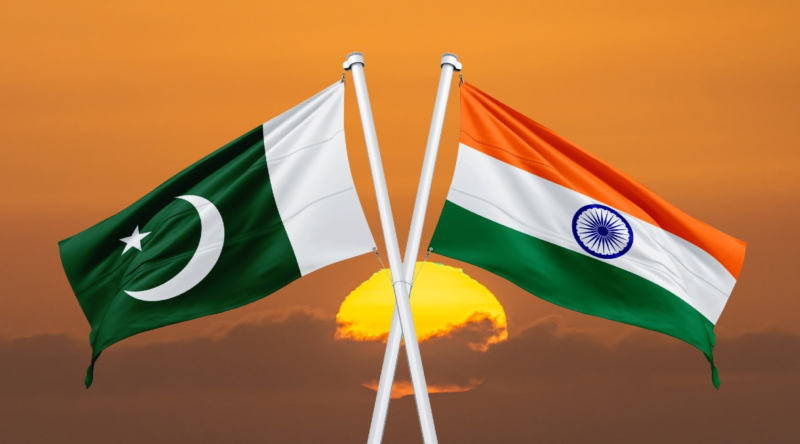
Both Pakistan and India are nuclear weapons states. India has the second largest military in the world and Pakistan has the seventh largest military in the world in terms of numbers. Yet their political leaders don’t talk to each other. The only contact between the two countries has been through Director General of Military Operations of the respective militaries. The political and diplomatic structures are not on talking terms.
Now Federal Minister for Climate Change and Environmental Coordination Dr Musadik Malik is in New Delhi to attend the SCO civilizational Dialogue Forum. His visit marks the first by a Pakistani minister since former foreign minister Bilawal Bhutto-Zardari attended the SCO meeting in the Indian state of Goa in May 2023, and two years after India’s Foreign Minister Subrahmanyam Jaishankar attended the bloc’s meeting in Islamabad in 2024. A Pakistani Foreign Office statement said that the gathering will bring together representatives from Shanghai Cooperation Organization (SCO) member states to discuss issues related to civilizational dialogue and cultural understanding. Indian Prime Minister Narendra Modi is also scheduled to address the “Civilizational Dialogue Forum” of the 10-member regional bloc.
Recent high-level interaction between Pakistan and India have largely taken place under the SCO framework; for instance, Bilawal’s visit in 2023 and Jaishankar’s in 2024. But neither visit had featured formal bilateral talks. More recently, India’s SCO National Coordinator Alok Dimri visited Islamabad in late September for a preparatory meeting ahead of the next SCO Council of Heads of State summit.
Dr Malik’s New Delhi visit may not produce an immediate diplomatic breakthrough, but it provides an opportunity to challenge the political logic of keeping the bilateral diplomatic channels closed for such a long period of time. Pakistan and India cannot afford to make absence of diplomatic and political contacts a permanent feature of their relations especially after they came to possess nuclear weapons and their latest delivery systems. This is an unhealthy situation for the two countries which have a history of wars, military crisis and political tensions.
The military-to-military contact is necessary but insufficient. To keep a stable political relation between two nuclear states with history of animosity there must be comprehensive mechanisms of contacts at the political, military and diplomatic level.
The last time two countries went to war between May 7-10, 2025, it was with the intervention of Washington that the military conflict came to an end. This in other words means that the two countries don’t have any diplomatic structures in place to de-escalate military and political tensions in future.
The visit of Pakistan’s Federal Minister to New Delhi is unlikely to translate into resumption of bilateral dialogue. As a similar visit by the then Foreign Minister, Bilawal Bhutto to India didn’t produce positive results.
India’s diplomatically irrational and militarily jingoistic behavior is certainly an obstacle in the way of normalization of relations between two nuclear armed states. This editorial doesn’t take the position that Pakistan and India should become friends with a plethora of outstanding conflicts and issues still pending.
But the demand of political realism is that two heavily armed countries should maintain structures of diplomatic, military and political relations or contact to avert inadvertent political or military crisis and to ensure that South Asia doesn’t become region where large scale human catastrophic takes place.

Your go-to editorial hub for policy perspectives and informed analysis on pressing regional and global issues.