The chief commander of Iran’s IRGC, Major General Ahmad Vahidi has warned that even the slightest act of aggression against Iran will be met with devastating and painful strikes. Iran is not the only one which is using this kind of aggressive rhetoric.
“In one day, their bridges are gone. And in one day, their manufacturing capability is gone. It would only take me three days. One day each” said President Trump in the second week of November. Public language on both sides suggest that both Washington and Tehran are preparing their population, political establishment and the institution of military for a final confrontation.
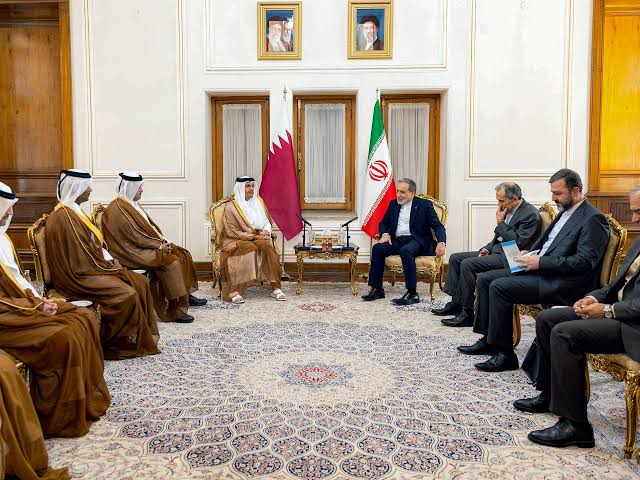
On the other hand, there is ample evidence that the two sides are using dual track policy as they mix aggressive military signaling with behind-the-scenes diplomacy. The Qatari Foreign Ministry is facilitating indirect contact between Washington and Tehran.
Iranian Foreign Minister, Abbas Araghchi has indicated that a diplomatic solution to the conflict remains possible. US Secretary of State Marco Rubio has time and again suggested that there have been ongoing diplomatic contacts between the two countries. President Trump has also left the room open for negotiated settlement.
The situation, however, is not straightforward. Some of the Iranian officials have issued statements which imply that they don’t consider the indirect contact as diplomatic contact. In the highly uncertain political situation, we can conclude that diplomacy has ended but the space available for it is increasingly reduced.
It seems aggressive military posturing has become part of the policy on both sides to improve their respective bargaining positions. Iran wants to convey to the other side in the conflict that another attack on Iran would carry unacceptable military costs.
Washington on the other hand, wants to convey to Iranian leadership that refusing its demand would have consequences. Aggressive military posturing also indicates that both sides don’t want to appear weak in front of their local populations and regional allies.
We can conclude that both sides would try to avoid a situation where either side would have to take a rational decision to go to war. War might start with an incident which neither side would want to escalate to a full-scale war. This incident could take the shape of a limited strike, Israeli military action that could drag Iran and Washington into a full-scale war.
An attack on a Naval ship or commercial shipping. Or any other type of miscalculation to a military movement on either side. A situation might arise in which the step taken by either side would have consequences far beyond two countries. Geographically the war is taking place in areas where vital interests of other regional countries are involved.
The events of the past nine months have made it clear that neither side could safely assume that their military action could produce a political settlement favorable to either side. A military action could be extremely devastating and yet it would not resolve the underlying dispute or disagreement between the two sides.
Both sides should realize that negotiated settlement is the best possible way forward.
Aggressive military posturing is a good way to show resolve to your domestic population and regional allies. But threatening a devastating war is not good statesmanship. The ability to prevent a war is the good test of statesmanship.

Your go-to editorial hub for policy perspectives and informed analysis on pressing regional and global issues.