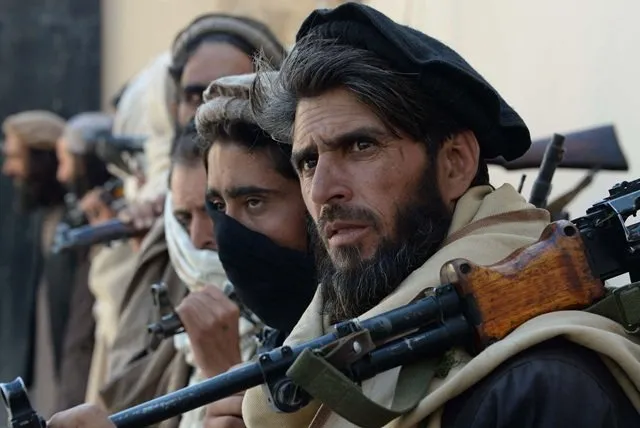
Afghanistan’s Taliban government is gaining international legitimacy while militant threats associated with its territory remain unresolved. Russia has formally recognised Kabul’s rulers, China is pursuing economic cooperation, and regional powers continue discussing connectivity projects. Yet a fundamental question remains: what verifiable counterterrorism commitments have the Taliban delivered in exchange for their growing diplomatic acceptance?
The eighth Moscow Format consultations on October 5, 2026, exposed this contradiction. The meeting ended without a joint statement after Taliban representatives objected to language associating Afghanistan with terrorism. Russian envoy Zamir Kabulov acknowledged the disagreement between Kabul and Islamabad.
Pakistan’s Special Representative Mohammad Sadiq placed terrorism at the centre of Afghanistan’s regional challenges, arguing that Islamabad’s diplomatic efforts had not prevented further attacks from Afghan territory.
The failure to agree even on diplomatic language revealed the deeper difficulty of obtaining enforceable security guarantees.
Recognition without security guarantees
Russia removed the Taliban from its list of banned terrorist organisations in April 2025 and formally recognised their government in July. Moscow’s calculations reflect concerns about Islamic State–Khorasan Province (IS-K), Central Asian security and renewed American military influence.
China’s priorities centre on regional stability, economic connectivity, mineral resources and threats affecting its western security environment.
However, diplomatic recognition has not demonstrably produced corresponding progress against organisations threatening Pakistan.
Islamabad maintains that Kabul has offered assurances without delivering sufficiently verifiable action against militant sanctuaries. Pakistan also alleges that training facilities, staging areas and logistical networks remain operational inside Afghanistan.
The United Nations sanctions-monitoring team’s December 2025 report provides independent grounds for concern about militant organisations operating from Afghan territory.
Meanwhile, the Taliban continue maintaining diplomatic contacts with Washington despite opposing renewed American military involvement. Their ability to engage competing powers provides opportunities to resist external pressure.
Recognition may provide diplomatic access, but access alone does not establish meaningful influence over Kabul’s security policies.
Pakistan’s diplomacy and continuing insecurity
Pakistan has repeatedly pursued political and diplomatic channels to address cross-border militancy.
Islamabad has engaged Kabul through ministerial visits, special representatives, border consultations and mediation initiatives involving regional partners.
Despite these efforts, the central dispute remains unresolved.
The principal threat is the Thereek-e-Taliban Pakistan (TTP), which has conducted repeated attacks against Pakistani security personnel and civilians.
United Nations monitoring assessments have documented the TTP’s presence in Afghanistan, its cross-border operations and concerns about support from elements within the Taliban establishment.
Kabul denies harbouring organisations responsible for attacks against Pakistan and argues that Islamabad must address its internal security challenges.
Nevertheless, Pakistan’s concerns cannot be dismissed as merely a bilateral disagreement when militant activity has wider regional consequences.
The problem is no longer simply whether the Taliban will offer assurances. It is whether those commitments can be independently assessed and translated into measurable reductions in violence.
The militant threat extends beyond Pakistan
Russia’s counterterrorism priorities have largely centred on IS-K, whose external operations threaten Russian security and Central Asian states.
Yet Moscow’s own assessments recognise a broader militant landscape.
In May 2026, Russian Security Council Secretary Sergei Shoigu estimated that between 18,000 and 23,000 militants belonging to more than 20 extremist organisations were operating in Afghanistan.
Although these figures are intelligence estimates rather than independently verified totals, they demonstrate the breadth of the threat identified by Russian officials.
Central Asian militant organisations, including Jamaat Ansarullah and networks associated with the Islamic Movement of Uzbekistan, remain subjects of regional security concern.
In November 2025, three Chinese nationals were killed in Tajikistan in an attack that Tajik authorities said originated from Afghan territory.
Such incidents demonstrate why a counterterrorism strategy focused primarily on threats to one country cannot guarantee regional stability.
Organisations operating across Afghanistan’s borders may threaten different states, but their activities collectively undermine the security environment on which regional cooperation depends.
Financial assistance and the accountability gap
Afghanistan’s financial dependence introduces another dimension to diplomatic normalisation.
According to the Kabul Institute’s October 2026 Afghanistan Aid Tracker, international donors confirmed approximately $8 billion in humanitarian payments for Afghanistan since August 2021.
The United States accounted for $1.64 billion, followed by the United Kingdom with $1.03 billion, Germany with $645.9 million and Japan with $499 million. Multilateral institutions also provided substantial assistance.
The more significant finding concerns transparency.
Only 9% of confirmed humanitarian payments could be traced beyond the first recipient through publicly available records. The remaining 91% became difficult to follow after the initial transfer.
The institute also identified $12.04 billion in development finance commitments without corresponding payment information in the sources examined.
These disclosure gaps do not establish that assistance was stolen, diverted or transferred to militant organisations. They do, however, expose serious limitations in public financial accountability.
Afghanistan’s economic position raises further questions.
According to 2025 trade figures reported by Reuters, Afghanistan imported approximately $12.1 billion in goods while exporting around $1.8 billion, leaving a merchandise trade deficit exceeding $10 billion.
The deficit alone cannot establish how particular financial flows are used. Nevertheless, Afghanistan’s dependence on external economic relationships highlights the importance of transparent reporting and financial oversight.
Humanitarian assistance remains indispensable for millions of vulnerable Afghans and must not become a political bargaining instrument. However, commercial agreements and development financing require credible safeguards against corruption, diversion and exploitation by armed networks. (the last line is partly cut off at the bottom of your screenshot)
Connectivity cannot advance without security
Regional powers envision Afghanistan as a bridge between Central and South Asia.
The proposed Uzbekistan-Afghanistan-Pakistan railway, CASA-1000 electricity project and Turkmenistan-Afghanistan-Pakistan-India gas pipeline depend on secure transport corridors and cooperation among neighbouring governments.
Pakistan’s geographical position and access to Arabian Sea ports make it central to several regional connectivity ambitions.
Yet militant violence, border tensions and deteriorating relations between Kabul and Islamabad threaten investment confidence and infrastructure security.
China cannot fully realise its regional economic ambitions if insecurity undermines Pakistan. Russia likewise cannot build a stable Eurasian security environment through cooperation that addresses only selected militant threats.
Counterterrorism is therefore a foundation for sustainable connectivity, not an alternative to economic engagement.
From diplomatic assurances to accountability
The Moscow Format and other regional platforms must move beyond declarations towards measurable security commitments.
A credible framework would include undertakings against militant sanctuaries, intelligence-sharing arrangements, procedures for investigating cross-border incidents and periodic assessments of compliance.
Russia and China could facilitate structured engagement between Kabul and Islamabad, while United Nations monitoring findings could provide an independent evidentiary reference point.
Any additional inspection mechanism would require an agreed mandate and cooperation from participating governments.
Preventing military escalation also requires credible action against cross-border militancy, sustained diplomatic dialogue and protection of civilians on both sides.
Diplomatic engagement should remain open, but discretionary political and commercial benefits should be accompanied by transparent security expectations.
The real measure of the Taliban’s diplomatic progress is not how many governments engage with Kabul, but whether Afghanistan becomes less dangerous for its neighbours.
Without verifiable action against militant networks, diplomatic normalisation may advance while the foundations of regional stability remain dangerously fragile.

Saima Afzal
Saima Afzal is a researcher specializing in South Asian security, counterterrorism, and broader geopolitical dynamics across the Middle East, Afghanistan, and the Indo-Pacific. Her work examines strategic affairs and evolving patterns of regional conflict. She is currently a Research Scholar at Justus Liebig University, Germany.