Originally published by The News. Featured by South Asia Times (SAT) for informational purposes, with attribution to the original author and publisher.
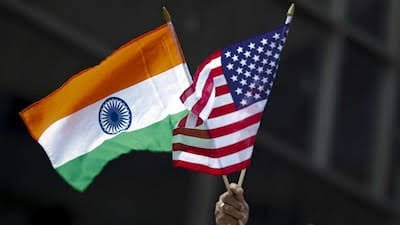
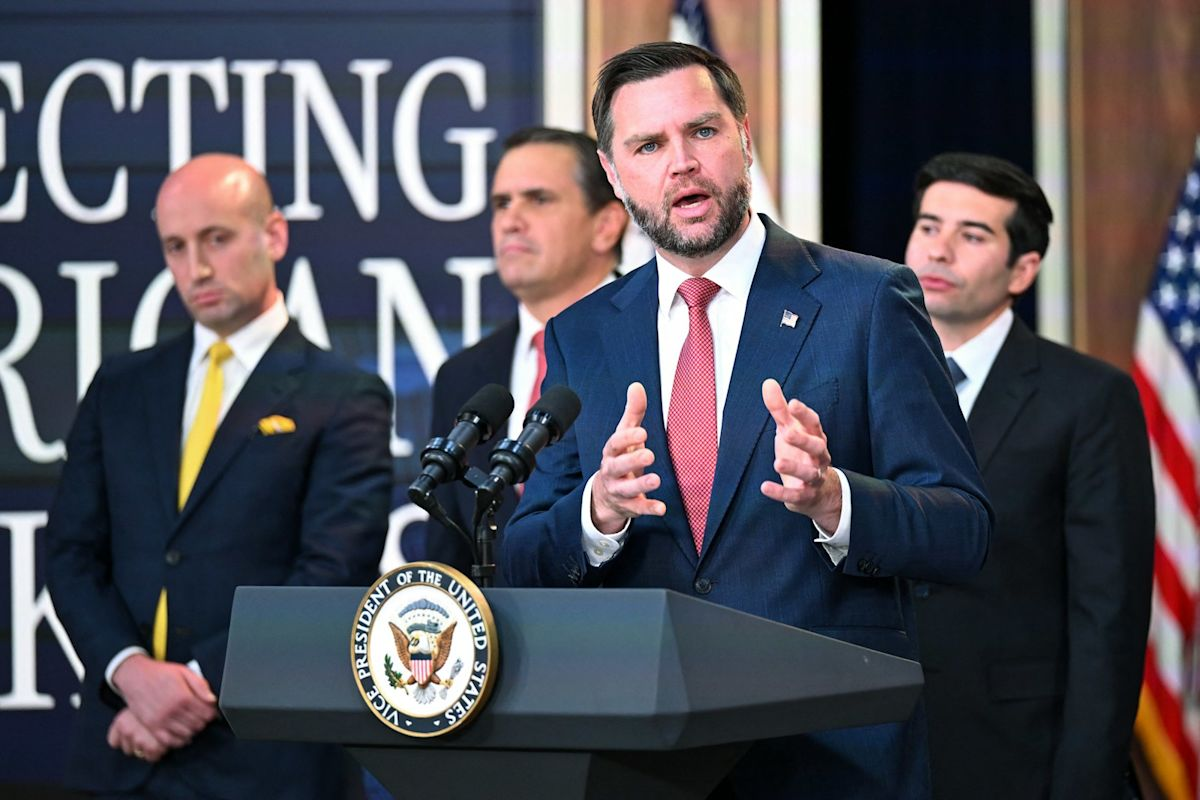
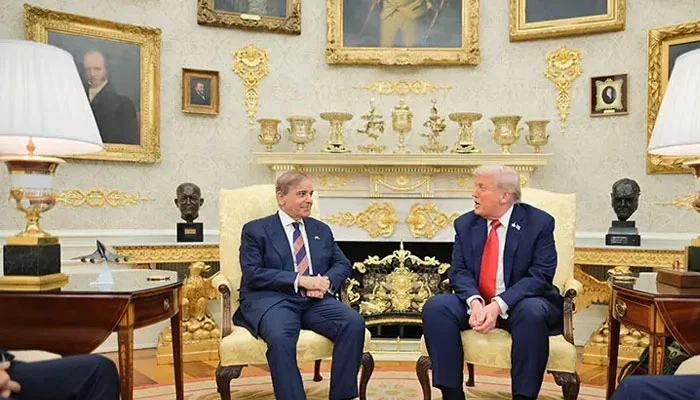
US President Donald Trump’s recent remarks about Prime Minister Shehbaz Sharif, calling him a terrific man” at the United Nations General Assembly, have once again brought Pakistan-US relations into the international spotlight.
These remarks are part of a broader pattern of engagement in which the Pakistani leadership has received public recognition from President Trump, who had also publicly praised CDF-COAS Field Marshal Asim Munir. Such exchanges are significant because they indicate that Washington’s view of Pakistan is acquiring renewed strategic importance.
The relationship between Pakistan and the US has historically passed through periods of close cooperation and considerable distance. Yet the current phase appears shaped by a different set of strategic calculations.
Since Trump returned to the White House in January 2025, developments in South Asia, the wider Middle East and the global competition for strategic resources have created fresh areas of convergence between Washington and Islamabad.
Four factors are particularly important in understanding this renewed interest. Pakistan’s resolve during the May 2025 confrontation with India is the first. The military confrontation between the two nuclear-armed neighbours demonstrated the importance of political and military decision-making in a highly sensitive environment.
Pakistan’s response, as presented by its leadership, emphasised calibrated action, the use of available technological and military capabilities and an effort to prevent the confrontation from developing into a wider conflict.
For Pakistan, the episode also showed strategic confidence. For the US, however, the larger lesson was the continuing importance of Pakistan in maintaining stability in a region where escalation between two nuclear-armed states carries consequences far beyond their borders.
The episode also reinforced the argument that Pakistan cannot be treated merely as a peripheral player in South Asian affairs. Its military capabilities, geographical position and relationship with major regional actors make its decisions consequential for the broader regional security environment.
The second factor is Pakistan’s unique geostrategic location. Geography remains one of the country’s greatest strategic assets. Pakistan sits at the intersection of South Asia, Central Asia, China and the Middle East. It has access to the Arabian Sea and lies close to some of the world’s most important economic and security corridors.
This geography gives Pakistan relevance in discussions about trade, energy connectivity, maritime security and regional integration. The China-Pakistan Economic Corridor (CPEC) has further strengthened the country’s importance as a potential bridge between western China and the Arabian Sea.
For Washington, which is increasingly focused on competition and connectivity across the Asia-Pacific and beyond, Pakistan’s geographical position cannot be ignored. Islamabad, meanwhile, has an opportunity to translate geography into economic value by improving infrastructure, strengthening trade links and developing itself as a regional transit and logistics hub.
The third factor is critical minerals. In an increasingly competitive global economy, access to minerals required for advanced technologies, renewable energy systems, defence industries and manufacturing has become strategically important for major powers.
Pakistan possesses considerable mineral potential, including deposits of copper, gold and other resources. Baluchistan, in particular, has attracted attention because of its mineral wealth. Washington views Pakistan’s vast mineral wealth as an alternative source to reduce reliance on Chinese-processed critical materials.
With the world’s fifth-largest copper reserves and massive gold reserves, Pakistan’s significance has increased for the US in recent years. In September 2025, American firm US Strategic Metals (USSM) signed a $500 million investment framework with Pakistan’s Frontier Works Organisation (FWO) to explore, mine and refine critical minerals.
Amid the accelerating global competition for critical minerals, Pakistan should place greater strategic emphasis on developing its mineral resources. A well-governed and sustainable approach to mineral development could not only reshape Pakistan’s economic profile and international image but also create new opportunities for engagement with the US and other Western economies.
The fourth and perhaps most politically significant factor is Pakistan’s emerging role as a mediator in the aftermath of the February 2026 US-Iran war. Pakistan’s relationships with both Iran and the US give it diplomatic channels that can occasionally help reduce tensions.
Pakistan’s good relations with Iran, links with the Muslim world and historic engagement with the US provide Islamabad with diplomatic space that many countries do not possess. The goodwill generated through recent high-level contacts could potentially strengthen Pakistan’s ability to contribute to peace in the Gulf.
Pakistan’s strategic resilience, geography, mineral potential and diplomatic outreach have combined to give it renewed relevance in US foreign policy calculus under President Trump. On top of that, mutual praise by political leaders is creating goodwill that never existed before in US-Pakistan relations.
However, durable relations are ultimately built on shared interests and sustained institutional engagement. Counterterrorism, regional stability, trade, investment, minerals, technology and diplomatic cooperation can provide a broader foundation than personality-driven diplomacy alone.
Islamabad’s task now is to turn that relevance into sustainable national advantage through economic development, responsible resource management, regional stability and a foreign policy capable of engaging confidently with the US.
Sadia Sulaiman
The writer is an associate professor at the Area Study Centre for Africa, North and South America, Quaid-i-Azam University, Islamabad.