Flooding wreaks havoc in India, Nepal

Nearly four million displaced, at least 189 dead, as floods in India, Nepal

Heavy monsoon rains and flooding has displaced almost four million people. Government officials in Guwahati and Kathmandu said that deaths rose to at least 189 in the northeastern state of Assam and neighboring Nepal.

Moreover, the Brahmaputra River, which flows through China’s Tibet, India, and Bangladesh, has flooded, damaging crops and triggering mudslides.

What is happening in India?

More than 2.75 million people in Assam have been displaced by three waves of floods since late May. It has claimed 79 lives so far.

“The flood situation remains critical with most of the rivers flowing menacingly above the danger mark,” Assam water resources Minister Keshab Mahanta told Reuters.

33 districts out of 25 districts in Assam remain affected after the current wave of flooding.

Furthermore, India is also grappling with the novel coronavirus, which has infected over a million people and 26,816 have died from the disease.

The situation in Nepal

In neighboring Nepal, the government asked residents along its southern plains on Sunday to remain alert. Officials in Kathmandu predicted heavy monsoon rains.  Around 100 have already died in floods and landslides since June.

Landslides and flash floods washed or swept away homes, upended roads, and bridges. Hence, displaced people are found in 26 of the country’s 77 districts. The home ministry\’s death toll expectation was to rise further as people were still missing. Landslides and flash floods are common in Nepal, India’s Assam and Bihar states during the June-September annual rainy season.

News Desk

Your trusted source for insightful journalism. Stay informed with our compelling coverage of global affairs, business, technology, and more.

Recent

Afghanistan’s Trade Boycott: Strategic Miscalculation With Fiscal Consequences

Afghanistan’s Trade Boycott: Strategic Miscalculation With Fiscal Consequences

Afghanistan’s 2025 trade boycott of Pakistan exposes a strategic miscalculation. Despite efforts to shift toward Iran and Central Asia, Kabul remains structurally dependent on Pakistan’s mature trade corridors, customs revenue, labour mobility, and logistical efficiency. Alternative routes carry higher costs, sanctions risks, and operational delays, leaving the Taliban with mounting fiscal losses and regional constraints.

Read More »
The Defund Taliban Campaign

The Defund Taliban Campaign

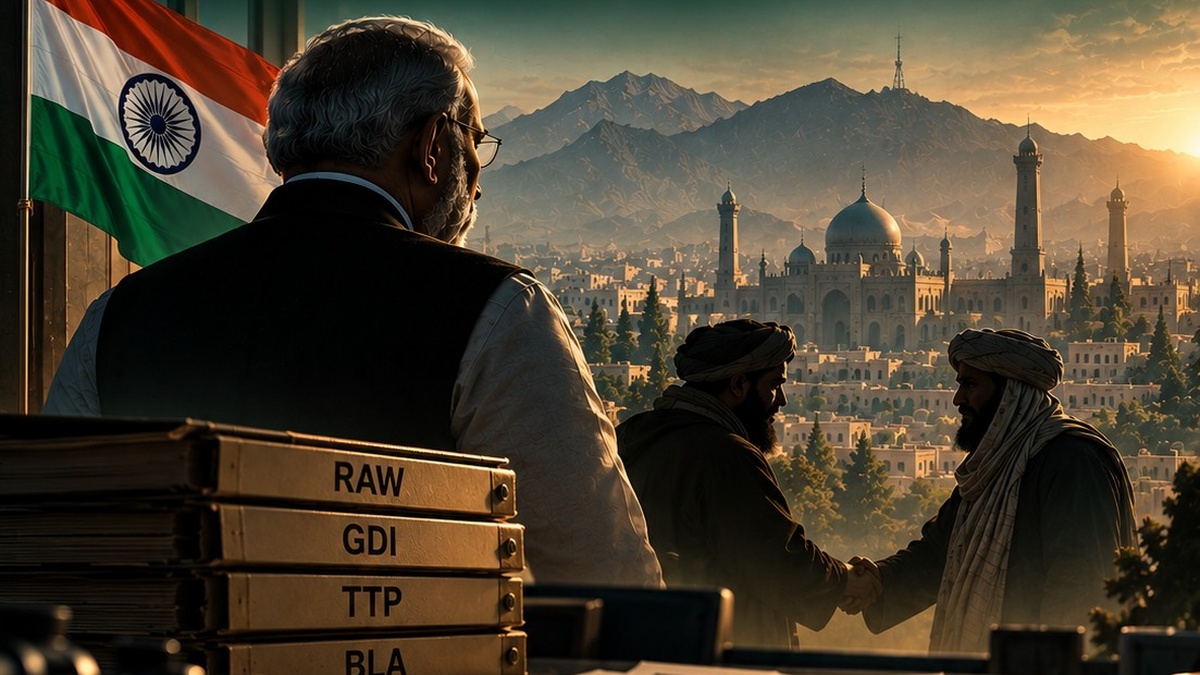
The Defund Taliban Campaign examines how indirect US funding and a $7 billion abandoned arsenal have turned the Taliban into a regional force multiplier for militant groups.

Read More »
The Taliban’s new fatwa banning foreign militancy signals a shift in doctrine, but rising regional attacks and ideological fractures raise questions about its enforceability.

Doctrine vs Reality: Can the Taliban Enforce Their Ban on Foreign Militants?

The Taliban’s new fatwa banning foreign militants has been hailed by officials in Kabul as a decisive theological shift. But rising attacks in the north, continued TTP operations, and mounting pressure from Washington expose a widening gap between doctrine and reality. As regional powers demand proof of enforcement, the decree risks becoming another symbolic gesture unless it translates into measurable action on the ground.

Read More »
Deconstructing the Pakistan-Afghanistan Economic Crisis

Deconstructing the Pakistan-Afghanistan Economic Crisis

The Pakistan-Afghanistan trade freeze is widely framed as a punitive economic move, yet its roots lie in a severe security breakdown emanating from Afghan territory. Pakistan’s transit closures are reactive, not aggressive, and Afghanistan’s deep logistical dependence on Pakistani routes exposes the crisis as geopolitical, not commercial.

Read More »
Criminalising Dissent: How New Laws and “Public Order” Politics Are Shrinking Democratic Space in India

Criminalising Dissent: How New Laws and “Public Order” Politics Are Shrinking Democratic Space in India

India is witnessing a steady erosion of democratic freedoms as broad security laws, digital surveillance, and administrative restrictions redefine dissent as a threat rather than a constitutional right. From expanded use of UAPA and IT Rules to routine protest crackdowns and shrinking academic space, the cumulative impact is a quieter and increasingly constrained civic sphere.

Read More »