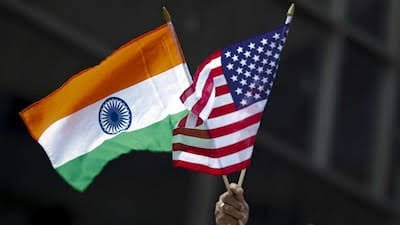
After two back-to-back high-level engagements between Nepal and India in the recent past, the two neighbors are now looking to hold a meeting.
Officials familiar with the development say the meeting will be held “very soon”. The move is significant as the two countries are still in boundary disputes.
Similarly, Nepal has proposed the meeting either in the last week of August or in September. Said two officials from the Ministry of Foreign Affairs and Department of Survey.They are awaiting India’s response, they further added.
The Boundary Working Group
A joint agency constituted by the governments of Nepal and India. Formed in 2014, it was to carry out construction, restoration and repair works of boundary pillars, clearing ‘no-man’s land’ and other tasks of the sort.
The Group so far has had six meetings.The last meeting was in August last year in Dehradun, India.
Susta and Kalpani disputes
Tensions flared up in early May after the Indian defence minister inaugurated a road link via Lipulekh to Kailash Mansarovar in the Tibet Autonomous Region of China. In response, Nepal published its political map depicting Kalapani, Lipulekh and Limpiyadhura within its territories.
Even though the group does not look into the disputes. It will provide technical inputs to higher-ups. The foreign secretary-level mechanism is tasked with resolving the disputes concerning Susta and Kalapani.
However, no meeting transpired despite both sides expressing willingness. Experts say engagements between the two countries are always welcome. Exchanges almost always aid in de-escalating tensions.
Further statements
“A telephonic conversation took plave between the prime ministers of the two countries.tThe high-level meeting between our foreign secretary and Indian ambassador helped break the ice.” said Madhuraman Acharya, former foreign secretary and ambassador.
“We can hope for bilateral engagements in the coming days.” No diplomatic dialogue between Nepal and India took place since November. After Delhi published a new map marking Kalapani within India.
“Both sides are exchanging correspondence to fix the date,” Damodar Dhakal, spokesperson for the Department of Survey, told the Kathmandu Post. “Although this time the meeting should take place in Nepal. Owing to the pandemic. It is likely to be a virtual meeting.” He added.

Your trusted source for insightful journalism. Stay informed with our compelling coverage of global affairs, business, technology, and more.