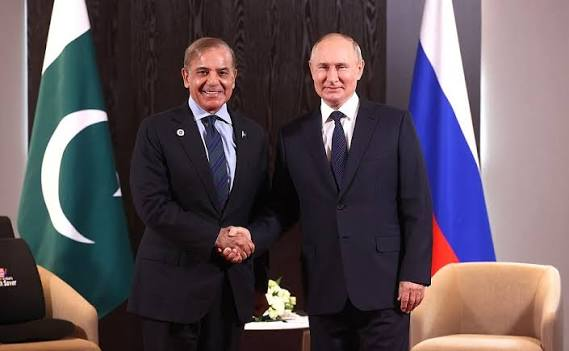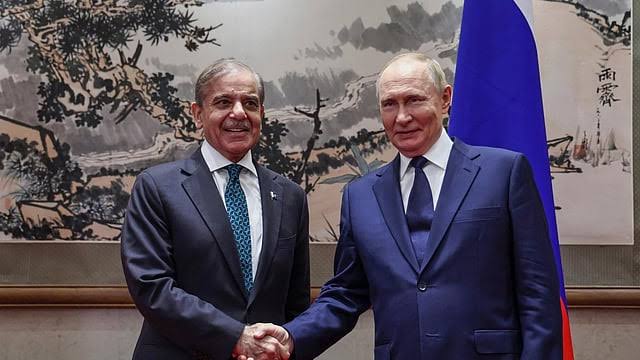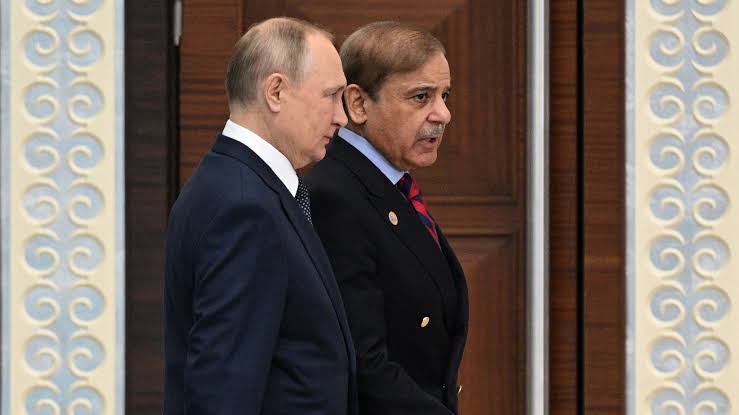
When Prime Minister Shehbaz Sharif’s planned March visit to Russia was postponed, part of Pakistan’s business delegation had already arrived in Moscow for an exhibition. Pakistan’s ambassador to Russia, Faisal Niaz Tirmizi, recalled the episode in August. The conflict in the Middle East had upset the prime minister’s plans. For the businesspeople who made the journey, the question was whether a Russian customer would give them a reason to come back.
That question belongs at the centre of Prime Minister Sharif’s expected visit, which could begin on November 30. I understand that hundreds of companies from Pakistan and Russia are expected to participate in the business forum. The Moscow Chamber of Commerce and Industry’s invitation lists sectors as varied as food, surgical instruments and logistics. The forum could be the most consequential part of the visit. A buyer who brings a specification and a supplier who can put a sample on the table have something to discuss long after the official meetings end.
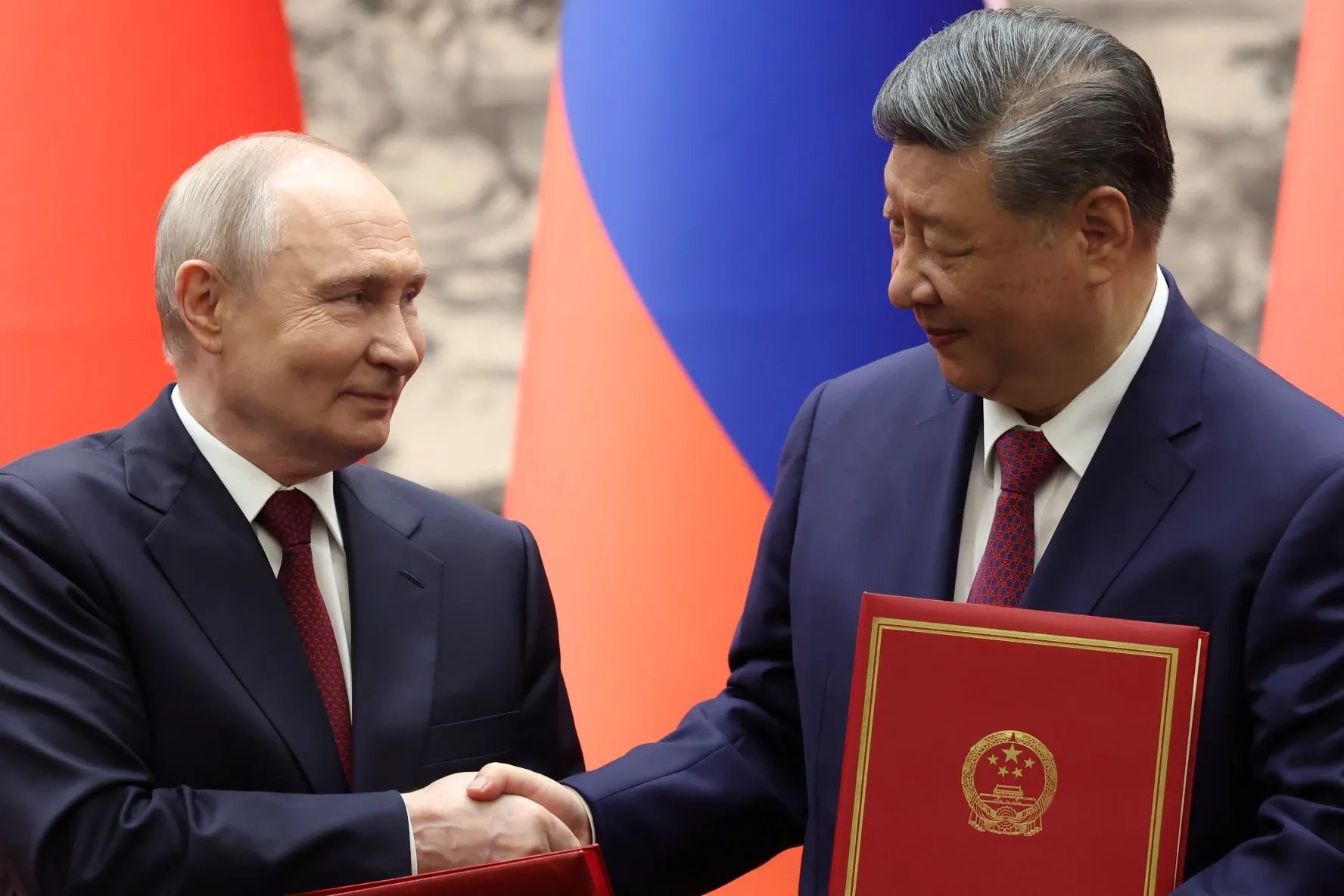
Prime Minister Sharif has room to pursue that agenda because Pakistan’s opening to Russia has survived changes of government. Imran Khan discussed energy and investment in Moscow in 2022. In Beijing three years later, Prime Minister Sharif and Putin again put economic cooperation on the agenda. Tirmizi has spoken of a proposed economic roadmap to 2030. Trade, transit and energy are likely to lead the economic discussions. Afghanistan is the security issue I would expect Islamabad to raise most directly.
In Islamabad, a Russian opening invites questions about Washington. In Moscow, Pakistan’s name can prompt questions about India. A shipment of Pakistani fruit to a Russian customer stands on its own commercial merits. President Asif Ali Zardari made that point in October, when he argued that Pakistan’s relations with Russia should develop independently of its ties with third countries.
The two sides already know they can fill a hall. At the October 2024 Pakistan–Russia Trade and Investment Forum in Moscow, Pakistani companies held around 400 meetings with Russian counterparts and reported generating $30 million in business, according to Pakistan’s Ministry of Commerce. How many of those customers placed a second order? Before the next forum, the trade missions could ask earlier participants which introductions led to shipments and which promising deals fell through. Their answers would help organisers seat firms across from buyers who actually need what they sell.
The 11th Pakistan–Russia Intergovernmental Commission gives both governments a chance to act on what companies tell them. Its meetings are expected to run from November 23 to 25, with Pakistan’s Power Minister Awais Leghari and Russia’s Energy Minister Sergei Tsivilev co-chairing the November 25 session in Moscow. A surgical instrument maker can negotiate a price with a distributor. If the two disagree over what documentation a hospital buyer requires, their trade missions can help them find the right authority. A useful outcome from Moscow would be for each firm with an outstanding question to know who will answer it and by when.
In energy, Pakistan is the buyer. Its first government-to-government cargo of Russian crude reached Karachi in 2023. A refinery weighing another purchase needs to know the delivered cost after freight and insurance, and how much petrol and diesel it can produce from that grade of oil. Moscow has also raised the prospect of upgrading existing hydropower stations. How much of that work could Pakistani engineers undertake themselves?
The Russian Embassy’s trade representative in Islamabad shared a presentation on Russia’s 2025 Technological Sovereignty Model. It shows how Pakistan and Russia could compare their industrial strengths and choose technologies to develop together. Taxila’s Heavy Mechanical Complex has experience designing and building small hydropower plants. Prime Minister Sharif could invite its engineers, a Pakistani plant operator and a Russian turbine maker to assess one station. Within six months they could identify which parts local workshops could make, what training crews would need and how much repair time that would save. A plant manager could then weigh those gains against the cost of the upgrade.
The same discipline would serve Pakistan Steel Mills in Karachi. Built with Soviet assistance, the mill is a reminder of what industrial cooperation once meant to Pakistan. In July 2025 the two sides signed a protocol on restoring and modernising it. A Pakistani manufacturer wants to know what grades of steel the mill could reliably supply and at what price. Prime Minister Sharif could ask what the technical assessments have established and when workers in Karachi can expect an investment decision.
Transit is where the bilateral agenda becomes a regional one. In March 2024, sixteen refrigerated trucks carrying Pakistani kinnows reached Derbent and Grozny after an eighteen-day journey via Iran and Azerbaijan. An extra day at a border uses fuel for refrigeration and takes a day off the fruit’s remaining shelf life. The four countries on that route could identify the crossings where delays cost traders the most. Pakistan’s 2026–27 chairmanship of the Shanghai Cooperation Organisation offers a separate opportunity to work with Russia and Central Asian members on the documents hauliers need at successive borders.
Afghanistan matters to that ambition. For a trader moving goods through Afghanistan to Central Asia, a route is only as dependable as the next border crossing. For Pakistani communities along the Afghan frontier, the immediate concern is protection from attacks by Tehrik-e-Taliban Pakistan (TTP). Moscow has its own concerns about Islamic State Khorasan Province. In June, Russia’s representative at the UN named both groups and offered support for a diplomatic resolution of tensions between Islamabad and Kabul.
The October Moscow Format consultations ended without a joint statement. Prime Minister Sharif could ask Putin to use Moscow’s contacts with the Afghan authorities to reinforce Pakistan’s call for verifiable action against the TTP. Their bilateral counterterrorism working group gives officials a place to compare assessments and follow up while Islamabad and Kabul address individual concerns directly.
Iran is another neighbour on which the two leaders may wish to compare notes. In April, when Ishaq Dar and Sergey Lavrov discussed rescheduling the visit, they also discussed Pakistan’s efforts to bring Tehran and Washington into dialogue. Prime Minister Sharif met Iranian President Masoud Pezeshkian on November 11 and argued for building on the June Islamabad understanding. Eight days later, he said Islamabad remained in contact with both Tehran and Washington. Pakistan shares a border with Iran and relies on energy shipments through the Strait of Hormuz. Pakistani households feel any disruption in the Gulf through fuel prices. He could use a private exchange to explain where Islamabad sees room for movement and ask whether Moscow’s contacts with Tehran could help bring the parties back to talks.
What, then, should Prime Minister Sharif bring home? An exporter should know who will review its sample, a refinery whether the next cargo makes commercial sense, and a border community how its security concerns will reach Kabul. The answer from the business forum may take a few months to arrive. For one of the firms that went to Moscow in March, it could be as simple as a Russian customer asking it back.
Muhammad Taimur Fahad Khan
Muhammad Taimur Fahad Khan covers Europe and Russia at the Centre for Strategic Perspectives, Institute of Strategic Studies, Islamabad. His research examines Pakistan’s relations with Europe and the role of trade in its foreign policy.