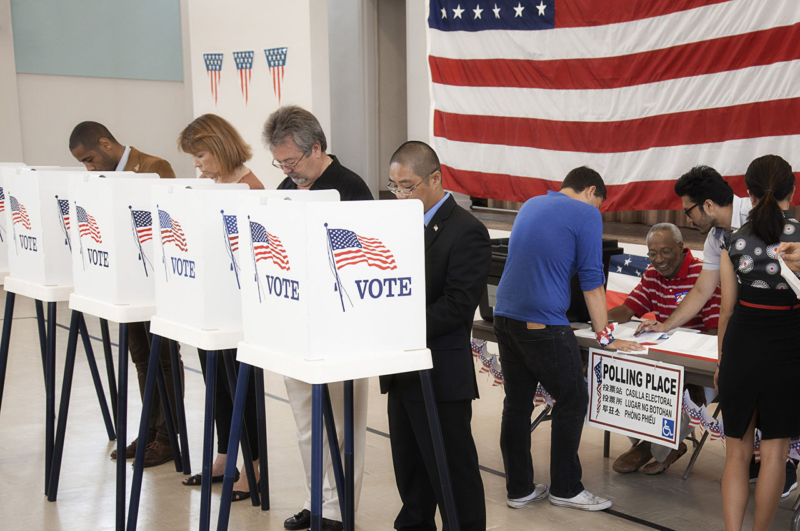
Every two years, the world’s most powerful democracy holds up a mirror to its president. This November, the reflection was brutal. Donald Trump, a leader who thrives on spectacle and defiance, has just been handed a verdict he cannot tweet away: America’s voters want a check on his power, and they have delivered it.
To grasp the scale of this rebuke, it helps to understand the machinery. America’s law-making arm, Congress, has two chambers, much like Pakistan’s Parliament. The House of Representatives, roughly our National Assembly, has 435 members elected from population-based districts. They serve two-year terms, so every seat is contested at every election. The Senate has 100 members, two per state regardless of size, serving staggered six-year terms, with about a third up for election each cycle. Unlike our Senate, which is chosen by provincial assemblies, American senators are elected directly by the people.
In other words, the House is America’s political thermometer, and it reads the national mood with unforgiving speed. Midterms are traditionally read as a referendum on the sitting president, and this one has been read loudly. Democrats have captured both chambers, a rare double sweep that leaves Republicans without a single lever of legislative control. Final tallies are still being settled and reports differ on exact seat counts, but the direction is unmistakable. The voters have spoken, and what they said was: enough.
If one word explains the Republican rout, it is Iran. Trump himself conceded that it is largely true that the Iran war, and the fuel prices tied to the conflict, drove his party’s historic defeat. The numbers back him up. By autumn, the war had become the most unpopular decision of this administration, with 65 per cent of Americans disapproving of his handling of it, according to the Pew Research Center. Americans, it turns out, can tolerate many things from a president. Paying more at the petrol pump for a war they never asked for is not among them.
A Democratic Congress is not merely a symbolic rebuke; it comes with subpoena power. It can open investigations into allegations of corruption against the president, press for the release of the remaining Epstein files, withhold funding for the Iran campaign and decide the future of Americans’ access to healthcare. For a president accustomed to a compliant legislature, the next two years will feel like a different job entirely.
The most urgent question for the region is whether Trump is now more or less likely to resume the war. Before election day, Washington appeared to be on the verge of a new, wide-scale attack. Diplomats’ families were evacuated, military assets poured into the Middle East, and Arab leaders issued cryptic warnings. Yet the expected strike never came.
Two schools of thought now compete. The first holds that the war may wind down. Merissa Khurma of Amena Strategies argues that Trump’s inner circle and Congress could constrain him, and the scale of the Democratic victory gives lawmakers real investigative and budgetary muscle. The second school is far less optimistic. Trump has boasted of his veto power. Only Congress can constitutionally declare war, yet no president has sought its approval for military force since George W. Bush in 2001 and 2002. Meanwhile, two aircraft carrier groups and an amphibious assault ship sit in the Arabian Sea, with a third on its way. A bitter president, no longer facing voters, may feel liberated. As former State Department Iran expert Alan Eyre put it, Trump is now freed up for another round of strikes. Both cannot be right. What is clear is that the answer will be written in Congress’s willingness to use its powers, not in its press releases.
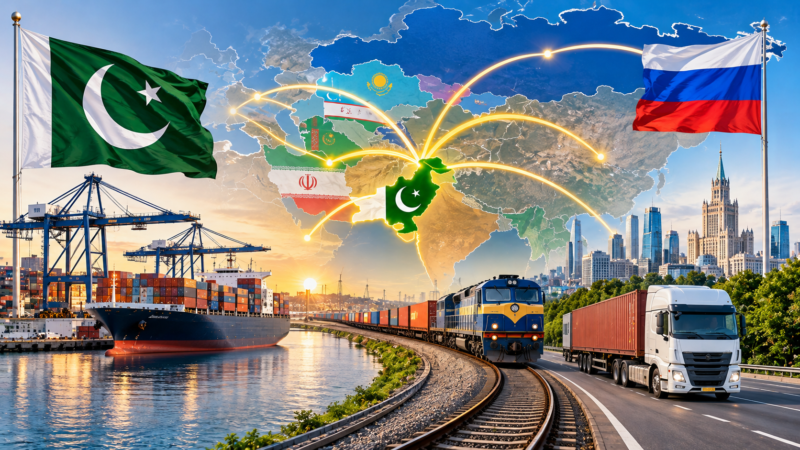
For Islamabad, the temptation will be to read the midterms as a dramatic turning point. It would be a mistake. American foreign policy is steered by institutions, interests and habits that outlast any single election. Whatever the result, Washington will not fundamentally change how it engages the world. This is especially true for Pakistan. The country sits at the crossroads of South Asia, Central Asia, China, Afghanistan and the Middle East, a geography that no American strategist can wish away. Add a nuclear deterrent, formidable military capabilities, a longstanding partnership with China and deep ties with major Muslim nations, and Pakistan emerges as a participant in regional security that Washington cannot afford to ignore. The argument for continuity is only strengthened by the shifting strategic environment around us. The prudent course for Pakistan is therefore steady engagement: courting Democrats and Republicans alike, and anchoring ties in shared interests rather than personalities.
The Verdict
American democracy has just reminded the world of an old truth: power is borrowed, never owned. A president who believed he could bend the political weather has been told that voters, not vetoes, hold the final word. Whether this humbles him or hardens him will shape the Middle East, and ripple across our own neighbourhood, long after the ballots have been counted. The ballot box has struck back. The only question left is how loudly Washington’s guns will answer.

Azhar Zeeshan
Azhar Zeeshan is a Reseacher at the Centre for Aerospace and Security Studies (CASS), Lahore.