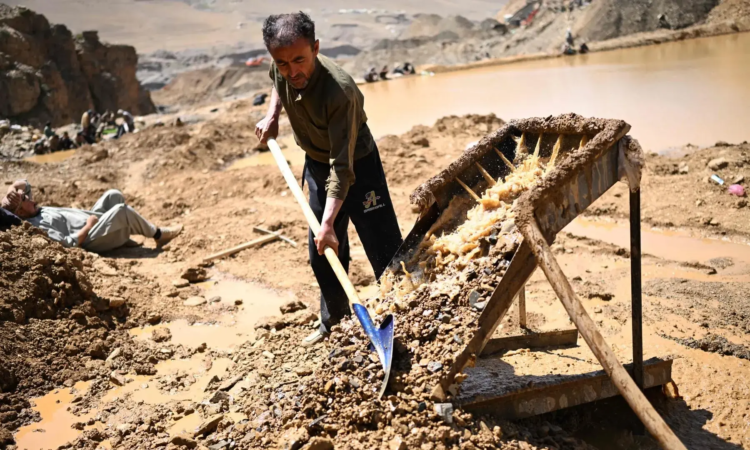
Afghanistan possesses an extraordinary mineral endowment, encompassing copper, lithium, cobalt, rare earth elements, gold, iron ore, gemstones and numerous industrial minerals.
More than 1,400 mineral deposits have been identified across the country, with considerable strategic significance in an era of intensifying global competition over critical minerals. For a country suffering from chronic poverty, economic isolation and institutional fragility, this geological inheritance could theoretically provide the foundations of a substantial economic transformation.
Yet, the emerging political economy of Afghanistan’s extractive industries suggests a considerably less promising trajectory where, under Taliban rule, mineral extraction is increasingly becoming an instrument of political patronage, elite enrichment and factional consolidation, with little evidence of the institutional safeguards necessary to convert resource rents into broad-based economic development.
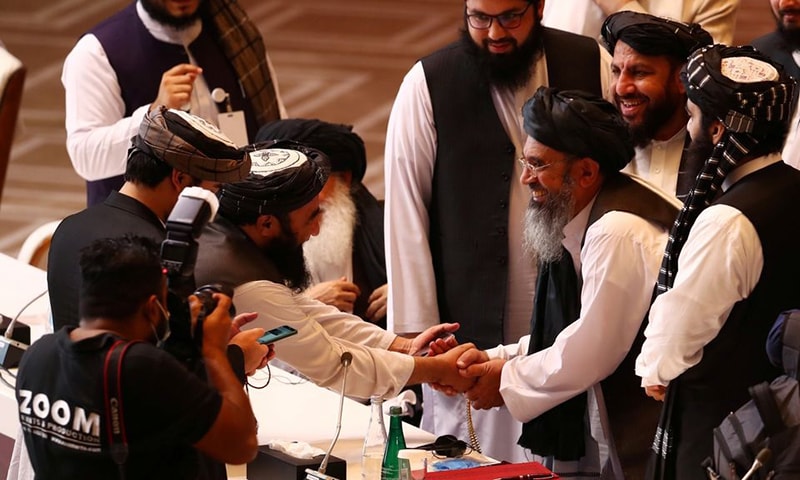
Since returning to power in August 2021, the Taliban have moved aggressively to consolidate control over the mining sector. An investigation by Afghan Witness, covering the period from August 2021 to February 2024, documented at least 205 mining contracts awarded to 156 companies, representing more than one new contract per week.
The Taliban announced mining agreements worth approximately $6.5 billion in September 2023, presenting these arrangements as evidence of renewed economic confidence and foreign investment. However, the composition and institutional character of this expansion warrant considerably greater scrutiny.
Only 14 companies holding publicly disclosed Taliban-era contracts had previously held publicly disclosed contracts under the former Republic.
More troublingly, the Ministry of Mines and Petroleum entered into partnerships with nine companies in 2023 and 2024, becoming a partial shareholder in projects rather than simply collecting royalties.
The distinction is economically consequential to the extent that a ministry which simultaneously allocates concessions, regulates extraction, and participates in commercial ventures creates an inherent conflict of interest.
The institutional deterioration is perhaps more consequential than the volume of contracts themselves. Afghanistan’s former mining governance framework, despite its considerable shortcomings, included a legal architecture for licensing, fiscal disclosure and regulatory oversight.
The country joined the Extractive Industries Transparency Initiative (EITI) in 2010, developing mechanisms for reconciling company payments with government receipts and disclosing licensing arrangements, beneficial ownership and production information.
On June 19 2024, however, the EITI Board formally delisted Afghanistan following the deterioration of civic space, the dissolution of its multi-stakeholder group, and an inability to publish reports.
This represents a serious reversal in extractive-sector accountability precisely when the Taliban are expanding their commercial involvement in mineral extraction. The disappearance of transparency mechanisms is particularly concerning because mining concessions involve substantial informational asymmetries, because without independent scrutiny, citizens and stakeholders cannot establish who owns the companies, what concessions are worth, how much is being extracted or whether the state is receiving its rightful fiscal share.
The resulting political economy bears the characteristics of a classic resource curse, in which valuable natural endowments reinforce institutional weaknesses instead of alleviating them. Afghanistan’s mining sector has historically been vulnerable to illegal extraction, political interference and rent-seeking, and the Taliban did not invent these pathologies.
They have, however, inherited a dysfunctional system while concentrating political, regulatory and commercial authority within an increasingly opaque governing structure. Reports of contracts benefiting companies connected to Taliban commanders, undisclosed commercial interests and alleged payments to officials illustrate the risks of this arrangement.
The concentration of lucrative gold and lapis lazuli concessions in Badakhshan is particularly revealing. Competition between Kandahari leadership networks and commanders associated with other Taliban factions has turned control over mineral revenues into a source of internal political contestation.
In such circumstances, the mining sector becomes a mechanism for distributing patronage, rewarding loyalists and consolidating territorial authority.
The purported boost of international investment does not automatically resolve these governance deficiencies. Although Chinese interest in projects such as the Mes Aynak copper deposit, alongside other foreign commercial engagements, reflects the genuine strategic value of Afghanistan’s mineral endowment, there is nevertheless a pressing need for distinguish investment announcements from actual capital formation, operational production, fiscal receipts, and domestic value addition.
The World Bank reported in 2025 that Taliban authorities had awarded 183 mining contracts, including 13 major projects, while many remained in their early stages.
Meanwhile, the US Geological Survey recorded Afghanistan as the world’s eleventh-largest talc producer in 2024, accounting for 2.6 per cent of global production.
These figures illustrate the difference between an extant speculative mineral potential, versus an established productive extractive economy.
Without reliable electricity, transport infrastructure, processing capacity, skilled labour and enforceable commercial institutions, Afghanistan risks becoming an enclave economy exporting primary commodities while capturing only a fraction of their potential domestic value.
The social costs of this arrangement must also be considered. Unregulated extraction can degrade agricultural land, contaminate water systems, undermine local livelihoods and generate conflict over access to productive territory.
Where communities bear these externalities while politically connected intermediaries capture the rents, mining becomes a distributive mechanism that transfers wealth upwards rather than generating inclusive development.
The danger is particularly acute in a country where political authority is already intertwined with armed factional networks, some of which are known terrorist sympathisers or collaborators.
Mineral revenues can tighten coercive structures, intensify competition over territory, and provide additional resources for patronage, without producing corresponding improvements in public services or household welfare.
Afghanistan needs an entirely different political economy of mining. Transparent competitive tenders, published contracts, beneficial-ownership disclosure, independent revenue audits, environmental safeguards and meaningful revenue-sharing with producing communities are basic prerequisites for a credible extractive industry.
Regional governments and international investors should therefore resist treating the announcement of mining agreements as proof of economic normalisation. Afghanistan’s mineral wealth could finance infrastructure, employment, industrialisation and fiscal recovery, but none of these outcomes follows automatically from the extraction of ore.
When political authority, commercial concessions and mineral rents converge in the hands of an unaccountable ruling network, geological abundance becomes an instrument of regime consolidation rather than national development. The Taliban may control Afghanistan’s mines, but that does not mean Afghanistan’s people will benefit from its mineral wealth, and a country cannot escape the resource curse by discovering more resources.