America wants new sources of critical minerals and stronger commercial ties with Central Asia. Pakistan offers opportunities for both. Yet Washington cannot pursue those interests while treating the terrorism threatening them as an exclusively Pakistani problem.
Violence in Balochistan obstructs mineral development; insecurity along the Afghan frontier weakens regional connectivity. The US has reason to confront these threats, including taking Pakistan’s allegations of Indian sponsorship directly to New Delhi.
American interests extend beyond copper and gold. Pakistan produces chromite, antimony and fluorspar, used in steelmaking, batteries, flame retardants and chemical manufacturing. Rare earths offer further exploration opportunities. Cobalt, used in batteries and jet-engine alloys, also warrants investigation, although commercially viable Pakistani reserves should not be assumed. Geological promise requires independent assessment before it becomes a credible supply commitment.
For American electric vehicle manufacturers, lithium, nickel, cobalt and graphite support different battery technologies, while certain rare earths provide magnets for electric motors. These materials also serve energy, electronics, aerospace and defence industries. Pakistan’s contribution will depend on verified resources and viable processing. Terrorism that deters exploration or delays development, therefore, threatens potential American supply chains alongside Pakistan’s economic prospects.
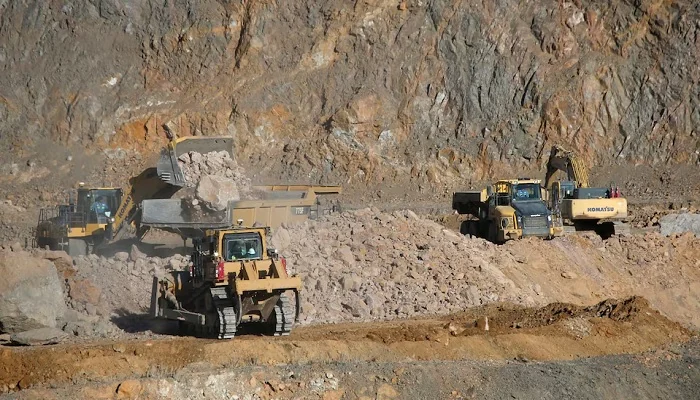
Reko Diq makes the relationship concrete. Its operator, Barrick Mining Corporation, is a Canadian mining company headquartered in Toronto, with shares traded in Toronto and New York. It develops and operates gold and copper projects internationally. Barrick owns 50 per cent of Reko Diq in Balochistan’s Chagai district. Federal Pakistani state enterprises hold 25 per cent and Balochistan’s government the remaining 25 per cent. International capital and Pakistani public interests are invested together.
America already has a financial stake. In November 2025, the US Export-Import Bank (EXIM) approved approximately $1.25 billion in financing for Reko Diq. Its records identify suppliers including Fluor, Caterpillar, Komatsu America, Wabtec and First Solar. This does not automatically entitle America to the mine’s output. It connects American commercial opportunities to Pakistan’s ability to develop its resources securely.
That connection has encountered difficulty. In April 2026, Barrick announced slower development and an extended review until mid-2027 because of escalating security risks. It warned that costs and timelines could increase significantly.
Pakistan has created an institutional mechanism to improve investment coordination. Established in 2023, the Special Investment Facilitation Council brings federal and provincial authorities together to address obstacles across priority sectors, including minerals. Its mandate includes facilitating investors and accelerating decisions. Mining involves licences, infrastructure, utilities and financial arrangements across several authorities. Investors need decisions that survive the journey between government offices.
The SIFC has helped bring mineral opportunities before international investors. It jointly organised the August 2023 Pakistan Minerals Summit with Barrick and participated in the Pakistan Minerals Investment Forum 2025. According to OGDCL, the latter attracted more than 5,000 participants, including 300 international delegates and industry leaders. Such engagement creates opportunities; implementation determines whether they become operating businesses.
The SIFC can now coordinate project timelines, resolve administrative bottlenecks and align mineral investment with transport, electricity and training plans. It can facilitate geological surveys and processing partnerships with American firms. Security coordination should support responsible agencies, while regulatory decisions remain with competent authorities. Regular investor reviews would help identify problems before they become reasons to withdraw. Announcements must lead to contracts, construction and employment.
The employment figures show why this matters locally. Barrick reported approximately 700 employees and 3,500 contractors at Reko Diq at the end of December 2025. Separately, its March 2025 figures showed that 77 per cent of permanent project employees came from Balochistan, including 65 per cent from Chagai district. These figures show substantial local participation, although they do not establish Pakistan’s share of the entire workforce.
Barrick also reports two training cohorts comprising 27 graduates from Balochistan, including eight women. Such programmes build skills beyond one project. Pakistan’s 2023 census counted 14.89 million people in Balochistan and 40.85 million in Khyber Pakhtunkhwa. More than 55 million residents across these provinces need employment and functioning markets. Violence that discourages investment directly limitstheir opportunities.
Pakistan maintains that India supports terrorist networks operating against it, including in Balochistan. India denies sponsoring terrorism. Washington should examine Pakistan’s evidence through intelligence and investigative channels and raise substantiated findings with New Delhi. Its relationship with India provides access and influence. Both should be used to communicate that support for attacks threatening Pakistani lives and American commercial interests would carry consequences.
This requires neither unquestioning acceptance nor diplomatic silence. Washington can seek specific responses to financial trails, communications and operational evidence. Where investigations establish support, it should pursue restrictions and cooperation against those responsible. A strategic partnership with India cannot mean overlooking conduct that undermines American objectives elsewhere. Pakistan should provide evidence partners can independently evaluate and act upon.
Washington designated the Balochistan Liberation Army, including its Majeed Brigade alias, as a Foreign Terrorist Organization in August 2025. That provides a basis for disrupting its financing and support networks. Designation should produce sustained enforcement wherever credible evidence leads. Afghanistan’s authorities must also prevent their territory from facilitating attacks against Pakistan.
Central Asia adds another dimension. The Central Asian Republics, or CARs, comprise Kazakhstan, Kyrgyzstan, Tajikistan, Turkmenistan and Uzbekistan. Their landlocked geography makes dependable access to international markets particularly important. Routes through Afghanistan and Pakistan could connect them with Arabian Sea ports, especially benefiting southern Central Asia. American businesses could use these connections to source minerals, supply machinery and reach customers more economically.
Those savings would depend on security, customs efficiency, infrastructure and reliable transit arrangements. Shorter distances do not guarantee lower delivered costs when trucks face closures and prolonged border delays. Washington should support practical shipment trials and independent cost assessments. Viable southern routes would broaden Central Asian commercial choices beyond established northern corridors and strengthen the economic case for American engagement.
Practical cooperation should cover intelligence sharing, terrorist financing investigations and protection of transport networks. American firms could negotiate transparent supply agreements and invest in exploration, logistics and processing. Pakistan would retain ownership and regulatory authority over its resources. The SIFC could coordinate domestic implementation while diplomacy addresses external threats. Local procurement, training, fair compensation and transparent provincial revenues would help communities benefit.
The larger question is whether Washington will connect its commercial policy with its regional diplomacy. It cannot encourage companies to enter Pakistan while leaving threats to their operations outside its conversations with influential partners. Nor should Pakistan expect investment promotion alone to overcome insecurity. Both governments need a common assessment of the risks and a division of responsibilities. Progress should be measured through safer movement, disrupted networks and projects advancing, rather than through the number of meetings or statements issued each year.
Pakistan must deliver competent administration alongside security. Peaceful grievances require political engagement; terrorist violence requires effective investigation and prosecution. Washington should help disrupt terrorist networks, demand action against Afghan sanctuaries and speak directly to India about substantiated sponsorship allegations. American investment ambitions require attention to the forces obstructing them. A safer Balochistan and a connected Pakistan would serve their people while making America’s regional economic interests more achievable.

Amir Jahangir
The writer is a strategic communications expert, media executive, and policy adviser