In the five Central Asian republics, geography is a tax. The five nations, Kazakhstan, Uzbekistan, Kyrgyzstan, Tajikistan and Turkmenistan, are far from any ocean, and Uzbekistan is a bit further from the ocean. They have long transit times, numerous border crossings and reliance on just a few northern routes to get their exporters through. Pakistan, on the other hand, has the qualities they are lacking: a warm water coastline and a declared desire to become a regional hub. The issue is whether the China-Pakistan Economic Corridor can help make that fit into a working route.
Pakistan’s Offer
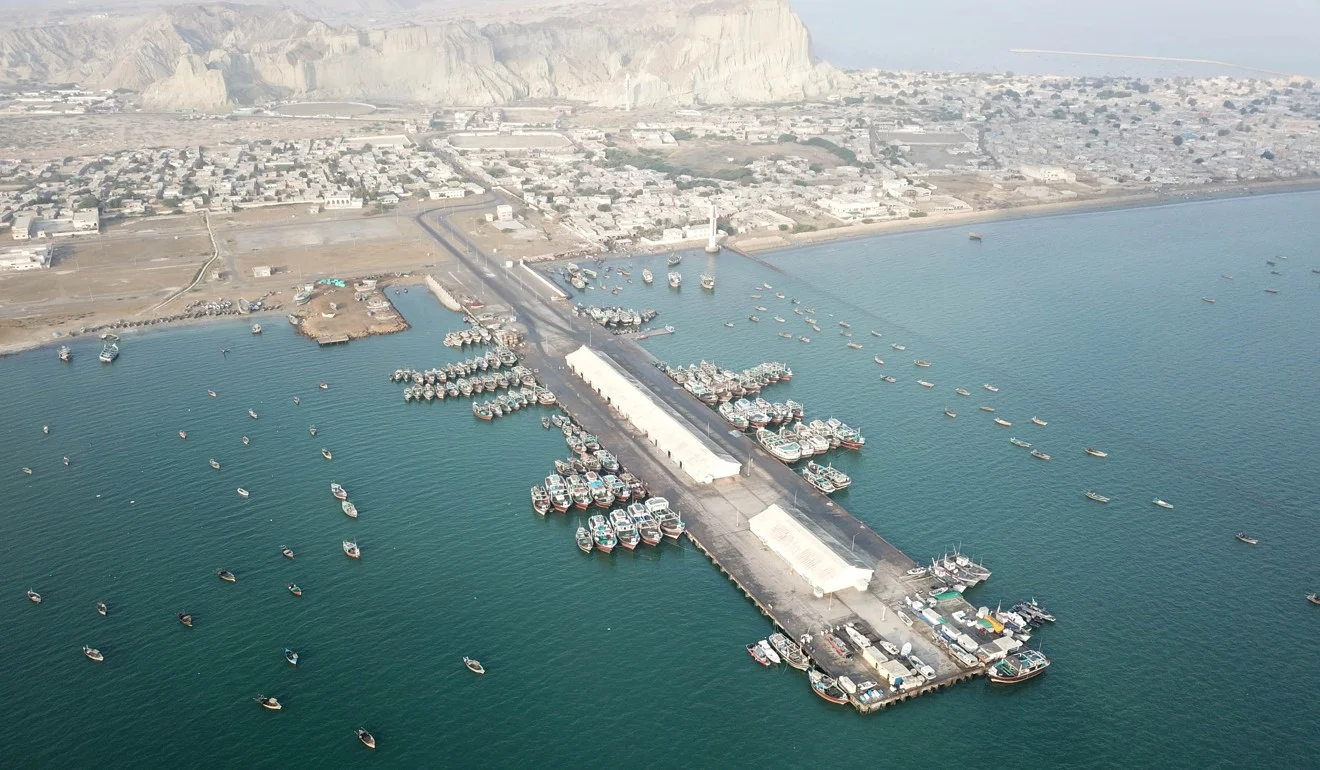
For the landlocked Central Asian countries, Gwadar and Pakistan’s other ports could be the door to the Arabian Sea and Gwadar and Pakistan’s other ports could be that door. On the other hand, Pakistan would become the logistics and transit centre between Central Asia and China and the rest of the world. But for this to happen, CPEC needs to become somewhat more of a regional economic network than it is currently.
The foundation exists. In the past 11 years, CPEC has completed power plants, roads and a deep-sea port at Gwadar. Islamabad and Beijing agreed in May 2026 on a “high-quality” next stage of CPEC development based on Gwadar’s expansion and transport upgrades, and they were open to third-party participation in CPEC projects. The final line is the most important for this area. The corridor is accessible to other partner countries, allowing the transport of Kazakh grain, Uzbek textiles, and Turkmen equipment with ease as well.
The government’s plans for FY2026-27 align with Pakistan’s plans to expand CPEC. These include building a new international airport at Gwadar with air cargo services, speeding up the commercialisation of the port and free zones, conducting a joint study on the mineral corridor between Gwadar and Nokundi, and operationalising the port and some SEZs. All these are components of a logistics hub, rather than a port. The Karachi-Peshawar railway project, which is estimated to cost $6.7-7 billion, would aid in transporting goods from the coast to the northern border.
A Shorter Route for Central Asian Cargoes
The commercial logic is simple. For Uzbekistan and Turkmenistan, in particular, Gwadar provides shortcuts to the sea and reduces reliance on traditional northern transit routes. They outline the possibility of a trade route from Gwadar to Iran to Central Asia, which may, if continued, alter parts of the geography of trade in Eurasia. This is a valuable lesson to be learnt: that Pakistan’s pitch is best when it is one more door rather than a gate of a competing bloc. Gwadar and Chabahar, Iran, can work together, and CPEC’s language of third-party participation can lend itself to openness.
The most talked-about project to the link is the Uzbekistan-Afghanistan-Pakistan (UAP) railway. Its supporters say it could reduce the time it takes to transport goods from Uzbekistan to Pakistan from roughly 35 days to less than a week, and Kazakhstan has committed $500 million, making investments in its own spur. In July 2025, Tashkent, Kabul and Islamabad signed a framework agreement for a joint feasibility study.
The Rail Link Which Yet Is Not a Railway
Any good advocacy needs to accept that reality is not doing as well as the vision. The UAP railway isn’t a building project; it is a possibility. It still has a feasibility study to be completed by the end of 2026, no work has started yet, and the expected operating date is after 2030. According to the same analysis, the current route is operational when the Afghanistan-Pakistan border is open, and by mid 2026, the primary border crossings were closed. The route of the planned line also runs through regions which are the focus of intense conflict between Pakistan and Afghanistan.
There are also gaps in Gwadar. One think-tank evaluation found that the physical connections between the port and the rest of the country are still poor; some projects have been stalled, and a seamless expansion of CPEC into Central Asia seems challenging in the present circumstance. As one commentator says, a port requires businesses, logistics firms, warehouses, processing units, transport companies and efficient customs services, apart from berths.
All of this does not contradict the vision. This causes the sequence to count. Corridors cannot be offered by their own public announcements. They will transport goods only if there is a route that is predictable, affordable and secure.
What Would Make It Work?
Preparations for the railway are to be made before fixing the border. Truck and multimodal services can establish demand much earlier than track is laid, and are much cheaper than a railway. They need to have crossings and customs; they need to have both of these, but today they don’t have both of these.
Develop Gwadar as an ecosystem. Whether Central Asian traders opt for Gwadar or Karachi or a competitor, it will be dictated by bonded warehousing, single window clearance, competitive tariffs and regular shipping calls. Free zones, airports, and industrial zones in Pakistan need to be fully developed and advertised to the companies that want to operate in them.
Provide Central Asians with a stake. The appetite is there, with Kazakhstan willing to invest in a spur. Customers would become co-owners of the route with all the reasons to defend it, because of the dedicated terminal capacity, the joint ventures or the transit guarantees.
Consider security as a cost of the economy. Any aspiring investor will be just as concerned as Beijing when it comes to attacks against their nationals and projects. A corridor which cannot provide safe passage will not tempt third-party capital; CPEC now says it will.
The Road Ahead
Will CPEC be able to link the Central Asian countries to Pakistani seaports and the wider international markets? Economically, it is a yes. A landlocked region must have an outlet to the sea, and Pakistan has the sea outlet. But the corridor will be constructed not by agreements and ceremonies, but rather by customs reforms, fixed borders and reliable schedules. The State which bridges the gap between vision and delivery first will have the traffic, and Pakistan has all the reasons to be that State.

Laiba Mamoon
I am an undergraduate International Relations student at the International Islamic University Islamabad. I have research experience with the Institute of Regional Studies (IRS) and the Institute of Strategic Studies Islamabad (ISSI)