Despite the Taliban having completed the Wakhan Road and unilaterally opened it on the Afghan side, China’s previously cautious response has now turned into an explicit and categorical refusal. China has declined to open the Wakhan Corridor route and has imposed a condition that the Taliban must take verifiable practical action against anti-China terrorist groups operating in Afghanistan before the corridor can be opened. This decision represents a major setback for the Taliban, whose policy of providing sanctuary to militant organizations is increasingly undermining their regional relations and economic ambitions.
According to S#2, Yue Xiaoyong, China’s Special Representative for Afghan Affairs, summoned the Taliban ambassador, Molwi Asadullah Bilal Karimi, to his office in Beijing and conveyed China’s position. He warned that ETIM and Al-Qaeda elements operating in Badakhshan and northern Afghanistan could use the corridor for cross-border movement, a situation China would find unacceptable.
According to the same source, during a meeting held in Beijing between 17 and 19 October, the Chinese Special Representative made it clear that the route would remain closed until the Taliban took concrete action against these groups. In a confidential letter addressed to Mullah Hibatullah Akhundzada, the Taliban ambassador described Beijing’s position as stringent and stressed that China was demanding practical counterterrorism measures rather than assurances.
China regards the East Turkestan Islamic Movement (ETIM) as a threat because of its stated objective of establishing an Islamic state in Xinjiang. Beijing is particularly concerned about the group’s alleged presence in Badakhshan, close to the Chinese border. So far, the Taliban have failed to take effective measures that would satisfy Chinese demands.
According to the source, the Taliban recently completed the construction of a 123-kilometre road in the Wakhan Corridor unilaterally and held its inauguration ceremony on 4 October. They also unilaterally announced that trade with China could commence through this route, even though China did not send any representative to the ceremony despite receiving an invitation from the Taliban, nor did it publicly acknowledge the development.
According to the source, following the Taliban’s unilateral announcement that the corridor had been opened, China reinforced security arrangements along the border, including the installation of barbed-wire fencing. Trenches were also dug, further restricting the possibility of opening the route.
Information received from Kabul indicates that the warning issued by the Chinese Special Representative after summoning the Afghan ambassador followed an attempt by the Taliban on 16 October to forcibly open the border crossing with China.
The Taliban’s Attempt to Force Open the Border
Tensions between China and the Afghan Taliban escalated when, on 16 October, an armed Taliban unit entered China’s security zone during an attempt to unilaterally open the Wakhan Corridor. The Taliban unit, consisting of at least four US-made Ranger vehicles, was immediately stopped by Chinese forces while attempting to move the barbed-wire barriers. The Chinese forces pushed the Taliban personnel back. No shots were fired during the incident.
According to sources (S#3), a Taliban unit entered China’s security zone during the attempt, prompting intervention by Chinese border forces, who forced the personnel to leave the area.
According to the sources, instead of opening the Wakhan border crossing, China installed barbed-wire fencing and deployed additional security forces to secure the area. These measures demonstrate Beijing’s determination to prevent unauthorised access to its territory and to keep the border closed until its security concerns are addressed.
The incident also triggered a diplomatic response. Sources said Chinese officials summoned the Taliban ambassador in Beijing and issued a stern warning over the attempt to gain access through the Wakhan Corridor. The Chinese side reportedly made it clear that unauthorized entry into its security zone would not be tolerated.
However, the matter was not made public, as both sides sought to avoid escalating tensions and preserve room for diplomatic engagement.
According to the sources, Beijing also demanded that the Afghan Taliban take effective and verifiable action against terrorists affiliated with the East Turkestan Islamic Movement (ETIM) operating in Badakhshan. China wants concrete evidence that militant groups cannot use Afghan territory to organize activities against Chinese interests.
Wakhan Road Completed, but China Reluctant to Open the Border Crossing
The prospect of a direct land connection between Afghanistan and China has apparently moved closer to reality with the construction of a road through the Wakhan Corridor. However, the most important stage of the project remains incomplete. The Taliban government announced the construction of a road reaching the Chinese border through the difficult mountainous terrain of Badakhshan and held its inauguration ceremony on 4 October 2026. On the other hand, China neither sent an official representative to the ceremony nor announced the opening of the border crossing for trade or movement.
This has created a clear contradiction between the completion of the infrastructure project on the Afghan side and China’s decision to keep its border closed.
This contradiction is not merely a matter of trade or border management between two countries. It is rooted in China’s national security interests, the sensitive situation in Xinjiang, the presence of foreign militant organisations in Afghanistan, Beijing’s security negotiations with the Taliban government, and changing strategic circumstances across Central and South Asia.
The construction of the Wakhan Road has given renewed importance to a geographical region that has remained among the world’s most remote and inaccessible areas for decades.
The construction of the road has created new prospects for trade and transportation. However, it has also raised new questions concerning border surveillance, the movement of militant groups, illegal cross-border activities, the transportation of weapons and other materials, and security along the international frontier.
China has not yet established an operational customs or immigration facility at this location. This means that despite the Taliban government’s declaration of the road as a trade corridor, its practical status remains that of an Afghan infrastructure project rather than an operational international trade route.
Beijing’s approach makes it clear that its priority is border security and the protection of Xinjiang rather than immediate economic benefits.
China’s concerns regarding the Wakhan Corridor are primarily linked to Xinjiang and the East Turkestan Islamic Movement commonly identified as ETIM or the Turkistan Islamic Party (TIP). According to a source, China has formally handed a dossier to the Taliban government on this issue. The dossier was first delivered in August and was handed over again during the subsequent meeting between the Taliban ambassador and China’s Special Representative.
The dossier reportedly highlights the presence of ETIM in Badakhshan and Nuristan and the expansion of its influence in these areas.
It includes what are described as documented records of the movements of Haji Furqan Khan, Abdul Haq Uyghur and other Uyghur militants to and from their terrorist camps in Badakhshan and Nuristan.
Chinese records also reportedly contain a video showing a group of Uyghur militants accompanying Taliban personnel through the Pamir Mountains towards the Chinese border during the construction of the road. According to the source, the Taliban escorted this militant group under their security protection and facilitated its visit to the Chinese border area. Taliban officials allege that Pakistan is supplying this evidence to China.
China’s position is that elements affiliated with this organization have historically used networks operating abroad to plan attacks and armed operations in Xinjiang. For this reason, the presence of ETIM-linked fighters in Afghanistan is not merely an internal Afghan matter for Beijing but a direct national security concern.
ETIM and the Agreement with Afghanistan
Following the Taliban’s return to power in 2021, China made it an important condition of its relations with Kabul that Afghan territory must not be used for any armed activity against Xinjiang.
The Taliban leadership has given assurances on several occasions that Afghan territory would not be allowed to be used against any other country. However, despite these assurances, international concerns regarding ETIM have not disappeared.
For China, the issue is not simply whether ETIM fighters are present in Afghanistan. Beijing is also concerned, about the organizational, financial, manpower and training resources available to them, the strength of their local networks, and the extent of their access to the Taliban’s government structure and security institutions.
From the Chinese authorities’ perspective, if an armed organization operating in Afghanistan enjoys safe havens, freedom of movement, training facilities or local assistance, its activities cannot be regarded as confined to Afghanistan alone, particularly when its declared objective concerns China’s Xinjiang region.
The issue of Afghan identity and travel documents being issued to foreign militants, including ETIM members, reportedly with the patronage of Taliban authorities, represents a separate warning signal for China.
Members of ETIM/TIP are reportedly able to move relatively freely within Afghanistan and have gradually concentrated in Badakhshan.
According to the information cited in this report, ETIM/TIP members based in Afghanistan have appealed to their members in Syria and neighbouring countries to relocate to Afghanistan in preparation for returning to Xinjiang to wage jihad.
According to the source, at least 7,000 to 9,000 Uyghur militants have relocated to Afghanistan in response to this appeal. Of these, at least 250 militants have reportedly been inducted into the Badakhshan police force. This could potentially enable them to facilitate the activities of other militants. China is concerned about all these developments.
According to sources, with the cooperation of the General Directorate of Intelligence (GDI), the Afghan Taliban have adopted a policy of financially strengthening foreign militants under a plan developed by Al-Qaeda’s leadership.
Under this policy, two types of arrangements have reportedly been made for Uyghur militants in Badakhshan.
The first involves facilitating their access to financial resources through local poppy cultivation and mining activities in Badakhshan and other areas.
The second aspect of this financial support involves recruiting these individuals into security forces.
From Syria to Afghanistan: A New Security Dimension of Militant Relocation
The Syrian connection is particularly important in the case of ETIM.During the Syrian civil war, thousands of foreign fighters from Central Asia and Xinjiang remained active in northwestern Syria. Among them were elements affiliated with ETIM/TIP.
According to information obtained from sources, ETIM-linked groups arriving from Syria have established hideouts in various districts of Badakhshan under Taliban patronage and developed relationships with local facilitators.
This suggests that elements with battlefield experience in Syria are attempting to reorganize their networks in northeastern Afghanistan.
In this situation, China’s concerns are no longer limited to militants already present in Afghanistan. Trained elements potentially arriving from abroad could also become part of Beijing’s security calculations.
Four Badakhshan Districts Near Wakhan and ETIM Centres
Information obtained from sources identifies four districts of Badakhshan as particularly significant. According to these sources, camps and hideouts have been provided to various ETIM-affiliated groups in the districts of Ishkashim, Shighnan, Kuran wa Munjan and Warduj.
ASHKASHIM
Ishkashim is located in the southeastern part of Badakhshan and is connected to the wider geographical area of routes leading towards Wakhan.
The connection between Ishkashim and Wakhan runs through the mountainous routes of Badakhshan. The district is also significant because of its border environment with Tajikistan.
According to sources, ETIM-affiliated elements have established hideouts in this area.
A large number of ETIM members are reportedly present under the leadership of an ETIM commander identified as Abdul Rahman Uyghur, alias Saifullah. Some of these individuals are also reportedly living with their families in different villages.
SHIGHNAN
Shighnan is located in northeastern Badakhshan and shares a border with Tajikistan along the Panj River.
The district is important because of its historical links between Afghanistan and Tajikistan, local population movements and mountainous routes.
Shighnan can be viewed in the context of the western and northwestern connections of the Wakhan region.
Sources claim that a considerable number of ETIM-affiliated groups are present in this area.
According to Source #5 (S#5), these individuals, under Taliban patronage, also cooperate with smuggling networks operating along the Tajikistan border and maintain preparations for operations against China.The camp is reportedly led by a commander identified as Farooq Turk.
KURAN WA MUNJAN
Kuran wa Munjan is located in the southern mountainous part of Badakhshan. Its mountain ranges, difficult valleys and limited land connections make it geographically sensitive.
Although the district does not lie directly on the Chinese border, it is connected to the surrounding mountainous routes and remains significant within the broader security environment of Badakhshan. According to sources, ETIM-affiliated elements have established hideouts in this area.
A considerable number of Uyghur families reportedly live here. Rather than being concentrated in a single camp, Uyghur militants are said to be living among the local population.
There is also reportedly evidence of frequent visits to the area by Haji Furqan.
WARDUJ
Warduj is among the districts of Badakhshan that have previously been mentioned in international reports concerning foreign fighters and ETIM.
According to information received, approximately 500 fighters are reportedly present in this district. Sources say that the groups operating in these four districts are interconnected in terms of their organisational structures and activities, while some elements consist of fighters arriving from Syria.
According to the sources, these groups arrange accommodation, movement and other requirements through local facilitators.
These reports suggest that Badakhshan should be viewed as a province where old foreign-fighter networks, local militant elements, Taliban security structures and border geography are interconnected and are regarded by China as a direct security concern.
BARG-E MATAL IN NURISTAN
Nuristan cannot be overlooked in any security assessment of the Wakhan Corridor alongside Badakhshan. The northeastern mountainous areas of both provinces form part of a wider geographical and security environment.
Sources have reported the establishment of a new camp affiliated with ETIM in Barg-e Matal district of Nuristan.
According to them, the camp has been established under the leadership of a militant commander named Haider Ismail Yaftali.
Haider Yaftali is reportedly an Afghan national who has been associated with Al-Qaeda for at least three decades and subsequently became affiliated with ETIM. He is also said to have extensive experience in the Syrian war.
Sources claim that foreign fighters are present at this facility and that organizational activities are being conducted there.
Because of its geographical location, the camp is being linked to the wider security environment of northeastern Afghanistan and the Wakhan region.
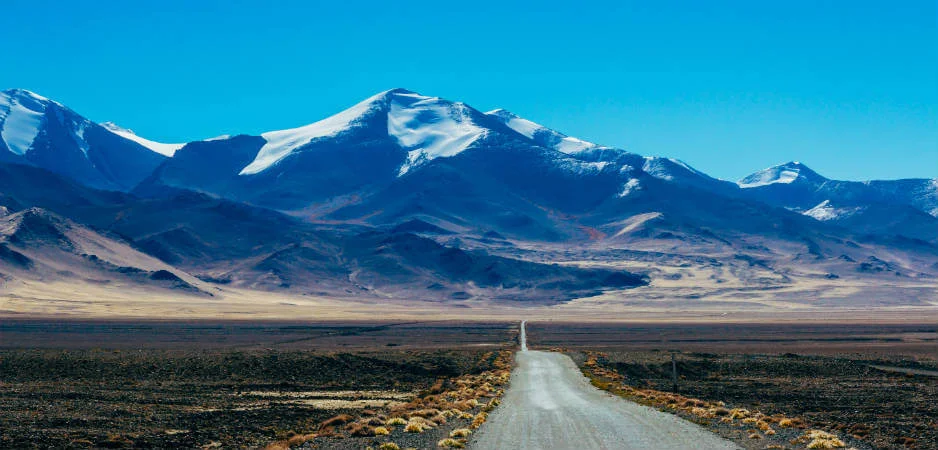
The most important feature of the Wakhan Corridor is its geography. The region is situated within the high mountain ranges of the Pamir and Hindu Kush. In several locations, elevations exceed 4,000 meters. Severe winters, snowfall, narrow valleys, high mountain passes, limited roads and difficult terrain make transportation challenging.
Historically, these geographical difficulties kept Wakhan isolated from major commercial activities and large-scale military movements. However, the construction of the road has created the possibility of changing this situation.
The Taliban’s unilateral and emergency construction of a road in this region without any formal or informal agreement with China is itself a matter of concern.
Given the absence of effective border surveillance and allegations of Taliban facilitation of terrorist groups, the road has emerged as a potential new security challenge for China.
For Beijing, the issue is not merely whether an armed group is present in Wakhan. It is also concerned about how border surveillance will be maintained if the movement of people and goods increases following the construction of the road.
Increased Security Requirements Following the Construction of the New Road
Following the construction of the road, access to certain areas of Wakhan has reportedly become easier for militant groups.
China has also raised questions with the Taliban ambassador regarding which institution is responsible for monitoring people travelling along this new road.
Other questions include:
- What system is in place for inspecting goods transported through the route?
- Which authorities are responsible for monitoring individuals entering and leaving the area?
- How will the Taliban government respond if an armed group attempts to use the route?
These are fundamental questions that Beijing will need answered before it can consider opening the border.
Other Organizations beside ETIM also Concern China
A security assessment of Wakhan should not be limited to ETIM alone.The presence of several other armed groups in northern and northeastern Afghanistan could also affect regional security.
The activities of Islamic State Khorasan Province (ISKP) in Badakhshan and northern Afghanistan constitute a separate security concern. According to source report, ISKP has remained active in different parts of northern Afghanistan, including Badakhshan, maintaining its networks to generate threats at the regional level.
The objectives of ISKP and ETIM are not identical. ISKP has a broader regional and international agenda, whereas ETIM’s primary objective is related to Xinjiang. Therefore, the two organizations cannot be treated as part of the same organizational structure.
However, the presence of multiple armed groups in the same geographical region can complicate security arrangements.
Similarly, Jamaat Ansarullah and other militant networks originating from Central Asia remain important factors.
Previous United Nations reports have also referred to training and organizational centers operated by Tajik and Uzbek fighters in different parts of Afghanistan.
Saifullah Khalid
A senior journalist, editor, security analyst, and columnist with 35 years of experience. Since 2001, he has extensively covered political and strategic developments in Afghanistan and Central Asia since 1991. He has authored 4 books , 2 on Afghanistan. In 1994, he authored a book on Afghanistan titled Main Ne Kabul Jaltay Dekha (I Saw Kabul Burning), and in July 2026, he published his book Taliban Ka Asli Chehra (The Real Face of the Taliban) in Urdu.