Exported Instability: How Afghan Sanctuary Put Pakistan at the Top of the Global Terrorism Index
Download the complete 8-page Research Report by Irtija Ahmad (Assistant Research Officer, Institute of Regional Studies), featuring empirical datasets, UN monitoring documentation, and policy recommendations.
Key Findings & Executive Summary
- Impact, Not Culpability: The Global Terrorism Index (GTI) measures the internal consequences and human toll of terrorism within a state rather than attributing responsibility. Ranking at the top reflects that Pakistan was the nation most severely impacted by terror attacks, fatalities, and injuries globally in 2025.
- The August 2021 Inflection Point: Terrorist incidents inside Pakistan declined substantially between 2014 and 2019 following robust domestic counter-militancy campaigns. The sharp escalation occurred entirely after the Afghan Taliban returned to power in Kabul in August 2021, reversing previous stabilization gains.
- Ideological & Operational Sanctuary: The Tehrik-i-Taliban Pakistan (TTP) is bound to Afghan Taliban Supreme Leader Haibatullah Akhundzada through an unrevoked oath of allegiance (Bay’ah). UN Security Council Sanctions Monitoring Team reports confirm the group operates freely from Afghan safe havens with logistical, operational, and financial backing, fielding an estimated 6,000 fighters.
- Strategic Denial & External Proxy Support: Militant hostility has systematically converged on Pakistan’s western border regions and major Chinese infrastructure investments under the China-Pakistan Economic Corridor (CPEC), reflecting deliberate efforts by hostile state actors to undermine bilateral strategic partnerships.
1. A Ranking of Impact, Not Culpability
In March 2026, the Institute for Economics and Peace (IEP) ranked Pakistan at the top of the Global Terrorism Index (GTI). Pakistan recorded 1,045 terror incidents and 1,139 terrorism-related fatalities in 2025, marking the most lethal year since 2013 and the nation’s sixth consecutive annual increase. The GTI ranks nations strictly on the volume of incidents, fatalities, injuries, and hostages. In essence, it assesses victims rather than perpetrators. No country globally experienced more terror attacks, casualties, or hostage-takings in 2025 than Pakistan, which explains its position at the apex of the index.
Crucially, the IEP’s own empirical analysis connects Pakistan’s deterioration directly to cross-border dynamics. It links the surge in violence to militant networks exploiting instability along the Afghanistan-Pakistan frontier following the Taliban’s return to power in Kabul. Cross-border militancy is identified as the central catalyst of open hostilities between the two states in early 2026. The Tehrik-i-Taliban Pakistan (TTP) alone claimed 637 fatalities in 2025, accounting for 56% of the national total, with all attacks staged inside Pakistani territory, predominantly in districts adjacent to the Afghan border. When an armed group targets a sovereign state exclusively from sanctuaries situated beyond its borders, it represents the clearest paradigm of terrorism visited upon a state rather than generated by it. The roots of that threat lie not in Islamabad’s domestic choices, but in four decades of regional conflict next door.
2. The Afghan Jihad: A Shared Project, an Unshared Burden
The contention that Pakistan’s contemporary security dilemma is self-inflicted relies on an ahistorical and narrow interpretation of the 1980s. During the Cold War, the international resistance to the Soviet occupation of Afghanistan was conceptualized, financed, and directed multilaterally, with the United States and Saudi Arabia matching funds to sustain the anti-Soviet campaign. Due to unalterable geography, Pakistan served as the indispensable logistical conduit. When the Soviet Union withdrew in 1989, international patrons abruptly departed the theater. Pakistan was left entirely alone to manage millions of displaced Afghan refugees, a burgeoning illicit weapons pipeline, the narcotics economy, and deeply entrenched militant networks. The United Nations High Commissioner for Refugees (UNHCR) has repeatedly recognized the Afghan displacement in Pakistan as the world’s largest protracted refugee population.
This structural pattern recurred after 2001, when Pakistan became a frontline partner in the US-led military intervention in Afghanistan. According to the Ministry of Foreign Affairs, Pakistan’s campaign against terrorism over the subsequent two decades claimed more than 90,000 lives and inflicted over $150 billion in direct and indirect economic damages. In comparison, total US civilian and security assistance during that timeframe amounted to roughly $20 billion. The historical trajectory of every major international intervention in Afghanistan has proven consistent: intervening powers eventually exit, while Pakistan inherits the residual violence, human displacement, and security fallout. Inverting this history to portray Pakistan as the primary author of regional militancy ignores both the record and the data.
3. Geography and the Spillover Problem
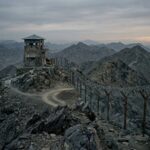
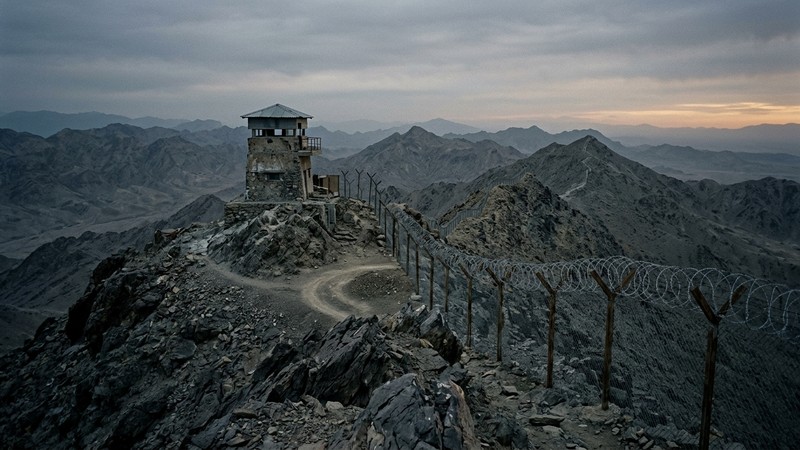
Pakistan and Afghanistan share a 2,640-kilometer international border traversing some of the most rugged, mountainous, and inhospitable terrain in South Asia. For decades, militant outfits have weaponized the ethnic kinship, unregulated commerce, and difficult geography of the borderlands to recruit, maneuver, and seek sanctuary. To mitigate this structural vulnerability, Pakistan commenced an ambitious border fencing initiative in 2017, constructing border outposts, forts, and surveillance barriers along the Durand Line—a measure that authorities in Kabul have consistently resisted and attempted to disrupt.
The spillover from conflict in Afghanistan is not a voluntary policy choice by Islamabad; it is an unavoidable consequence of geographical proximity. However, while geographical proximity is a permanent structural constant, the volume and lethality of cross-border violence have fluctuated dramatically over the past decade. The variable that correlates most accurately with these shifts is not Pakistani domestic policy, but the governing regime in Kabul.
4. The TTP Before and After August 2021
The operational trajectory of the TTP provides empirical proof of this dynamic. Following the launch of Operation Zarb-e-Azb in 2014, Pakistan’s military systematically dismantled the group’s command centers, communications infrastructure, and weapons caches in the erstwhile tribal areas. The shattered remnants of the organization were pushed out of Pakistani territory and forced into hiding across the Afghan frontier. Between 2014 and 2019, terrorist violence inside Pakistan experienced a steep, sustained decline.
That trajectory reversed dramatically when the Afghan Taliban seized Kabul in August 2021. According to the Global Terrorism Index, terrorist attacks in Pakistan in 2025 were six times higher than in 2020. Data from the Armed Conflict Location & Event Data Project (ACLED) shows that TTP attacks surged more than sevenfold, escalating from 118 incidents in 2022 to 838 attacks in 2025.
This reality has been repeatedly corroborated by independent international observers. The United Nations Security Council’s 1988 Sanctions Committee Analytical Support and Sanctions Monitoring Team confirmed that Afghanistan’s de facto authorities continue to grant the TTP financial assistance, logistical mobility, and operational sanctuary. This permissive environment enabled the TTP to stage over 600 attacks within a single six-month monitoring window, launching operations directly from Afghan soil. The UN monitors noted that the TTP has established new training infrastructure across Kunar, Nangarhar, Khost, and Paktika provinces, dismissing Kabul’s claims that Afghan soil is not being used for cross-border terrorism, and estimating TTP strength in Afghanistan at approximately 6,000 armed fighters. The Monitoring Team has further documented the issuance of safe houses, movement passes, and firearms permits to TTP personnel, alongside shared training facilities utilized collaboratively by the TTP, Islamic State Khorasan Province (ISKP), and the Balochistan Liberation Army (BLA).
The Taliban-TTP Ideological Bond
The Afghan Taliban’s sheltering of the TTP is neither accidental nor merely a failure of administrative capacity; it is rooted in deep ideological convergence and personal allegiance. On 19 August 2021, just days after the Taliban entered Kabul, TTP Emir Noor Wali Mehsud publicly renewed his oath of fealty (Bay’ah) to Afghan Taliban Supreme Leader Haibatullah Akhundzada. By December 2021, Mehsud explicitly declared that the TTP is a direct branch of the Islamic Emirate of Afghanistan. The fall of Kabul was accompanied by the mass opening of prisons across Afghanistan, freeing hundreds of hardened TTP commanders and fighters, including former deputy chief Maulvi Mohammad. Between 2020 and 2023, the TTP absorbed nearly thirty splinter factions, centralizing its operational command under the protective umbrella of the Afghan sanctuary. UN monitors have noted that Al-Qaeda’s media arm has voiced public backing for the TTP, further magnifying its operational reach.
| Indicator | Pre-August 2021 | Post-August 2021 |
|---|---|---|
| Attacks by the TTP and its affiliates* | 95 (2020) | 454 (2025) |
| Recorded fatalities | 140 (2020) | 679 (2025) |
| Average TTP attacks per month | 14.5 (2020) | 45.8 (2022) |
| Militant groups merged into the TTP | 8 (2020) | 21 (2021 to April 2023) |
| TTP-linked fighters in Afghanistan (UN estimate) | 6,000 – 8,000 (2020) | About 6,000 (2025) |
Source: Pak Institute for Peace Studies (PIPS), CTC Sentinel (West Point), and UN Security Council Monitoring Team. *Excluding Baloch separatist groups. Note: PIPS and GTI totals reflect distinct counting methodologies.
As Table 1 demonstrates, while the overall fighter count remained relatively steady, attacks and fatalities quadrupled post-2021. Furthermore, the lethality of the TTP has been augmented by advanced equipment. According to a March 2022 US Department of Defense report to Congress, roughly $7.12 billion worth of advanced military hardware, optics, and firearms were left behind in Afghanistan following the US military exit. Substantial quantities of these American-manufactured weapons have since been recovered from neutralized militants inside Pakistan. Islamabad’s policy stance did not change between 2020 and 2025. Kabul changed. Safe haven alone, however, does not fully account for the strategic scope of the violence; external state actors have actively capitalized on this permissive environment.
5. Strategic Rivalry and Proxy Violence
Owing to its pivotal geographical position, Pakistan functions as a strategic transit corridor that rival regional powers seek either to utilize or deny to competitors. The primary manifestation of this dynamic is the China-Pakistan Economic Corridor (CPEC), connecting western China to the deep-sea port of Gwadar. Over recent years, targeted attacks against Chinese nationals—including the Dasu attack in 2021 (nine Chinese killed), Karachi University in 2022 (three killed), Besham in March 2024 (five killed), and near Karachi airport in October 2024 (two killed)—demonstrate a calculated effort to disrupt Pakistan’s most vital economic partnership rather than satisfy local political grievances.
As the flagship initiative of China’s Belt and Road Initiative (BRI), the strategic success of CPEC holds systemic geopolitical consequences, making its obstruction an overt objective for regional adversaries. India has officially and repeatedly contested CPEC, with its External Affairs Minister arguing that the corridor violates Indian sovereignty because it passes through Gilgit-Baltistan. Pakistan’s Foreign Office has linked terror attacks on Chinese personnel to external intelligence agencies determined to destabilize Sino-Pakistani strategic cooperation.
Pakistani authorities have long pointed to New Delhi’s intelligence footprint in orchestrating this proxy campaign. In November 2020, Pakistan’s Foreign Minister and the Director General of Inter-Services Public Relations (ISPR) presented an exhaustive dossier documenting Indian financial subvention, logistical channels, and intelligence supervision of anti-CPEC militias. In May 2025, Pakistan’s Ministry of Interior formally designated all insurgent and terrorist groups operating in Balochistan as Fitna al-Hindustan, citing their operational direction from Indian intelligence. Insurgent groups account for the overwhelming majority of violence in the province: of the 253 attacks recorded in Balochistan in 2025, 225 were staged by these outfits, compared to 28 by religious militant factions. Following the hijacking of the Jaffar Express in March 2025, Pakistani officials produced evidence showing the perpetrators maintained direct communications with handlers operating from Afghan territory. Combined with the historic arrest of Indian naval intelligence officer Kulbhushan Jadhav in Balochistan in 2016, these factors illustrate how Afghan sanctuary and hostile state intelligence intersect into a sustained proxy war against the Pakistani state.
6. Why the “Past Policies” Frame Fails
The argument that Pakistan’s current security crisis is merely “blowback” from historical policies fails scrutiny on several fundamental counts:
- Multilateral Genesis: It erases the reality that the anti-Soviet resistance of the 1980s was an internationally conceived, financed, and celebrated global campaign in which Western and Arab capitals were primary stakeholders.
- Domestic Effectiveness: It fails to explain the sharp decline in violence between 2014 and 2019, when Pakistan’s comprehensive military operations broke the back of domestic terrorism within its own borders.
- Kabul as the Primary Driver: It ignores the fact that the post-2021 escalation coincided precisely with a regime change in Kabul, not any shift in Islamabad’s counter-terrorism doctrine.
- Target Selection: The TTP does not function as an instrument of the Pakistani state; it is its lethal antagonist. The group’s principal targets are Pakistani soldiers, police personnel, civic institutions, schools, and mosques.
7. Strategic Recommendations
To navigate this complex security environment, Pakistan must ground its diplomatic, operational, and counter-terrorism posture in five key recommendations:
- Anchor Global Engagement in Autonomous UN Findings: International diplomatic communication must be systematically anchored in the reports of the UN Security Council Sanctions Monitoring Team. Because UN documentation carries global multilateral legitimacy that national statements cannot replicate, Islamabad should leverage these findings to demand the full enforcement of UN sanctions against TTP leadership and its facilitators in Afghanistan.
- Demand Verification and Accountability for Leftover Arms: Pakistan should pursue a structured, bilateral weapons-tracing agreement with the United States to track and inventory American-origin weaponry, night-vision devices, and assault rifles recovered from militants on Pakistani soil.
- Consolidate National Data Architecture: Civilian and military institutions should establish a unified, audited statistical consensus on terrorism casualties, displacement figures, economic damages, and law enforcement losses. Coherent burden-sharing claims require indisputable, standardized data.
- Build a Regional Counter-Terrorism Consensus: Pakistan should deepen multilateral cooperation with regional stakeholders—notably China, Iran, Russia, and Central Asian republics—to build collective diplomatic and economic pressure compelling Kabul to honor its counter-terrorism commitments.
- Declassify Empirical Dossiers for Public Scrutiny: Evidence concerning hostile external state sponsorship of militant groups should be packaged and released in accessible, verifiable, and declassified formats. Transparent empirical evidence persuades international observers far more effectively than declaratory rhetoric.
Conclusion
Pakistan’s top ranking on the Global Terrorism Index is a sobering testament to the immense burdens the country has shouldered: the enduring wreckage of an internationally sponsored conflict in the 1980s, the human and economic costs of a two-decade war after 2001, and, since 2021, an active militant sanctuary along its western border that UN monitors have meticulously documented. The index measures those who bleed. The urgent diplomatic and strategic imperative now is to ensure the international community holds accountable those who export the violence.
Exported Instability: How Afghan Sanctuary Put Pakistan at the Top of the Global Terrorism Index
By Irtija Ahmad (Assistant Research Officer, Institute of Regional Studies) · 8 Pages · Policy Analysis & Empirical Datasets (PDF)
This backgrounder is based on the research report authored by Irtija Ahmad, Assistant Research Officer at the Institute of Regional Studies (IRS), Islamabad.
Suggested citation: Irtija Ahmad, Exported Instability: How Afghan Sanctuary Put Pakistan at the Top of the Global Terrorism Index, SAT Backgrounder (Islamabad: South Asia Times, November 2026).

Irtija Ahmad
Irtija Ahmad is an Assistant Research Officer at the Institute of Regional Studies, Islamabad. She holds an MSc in International Public Policy and Development from Royal Holloway, University of London (Distinction), and an MPA from Quaid-i-Azam University, Islamabad, where she graduated as Gold Medallist of the Class of 2022. Her work combines security analysis with policy-informed research on governance in Pakistan, examining why institutional commitments often fail to survive a change in government or the news cycle. She has also written on global health for The Borgen Project.