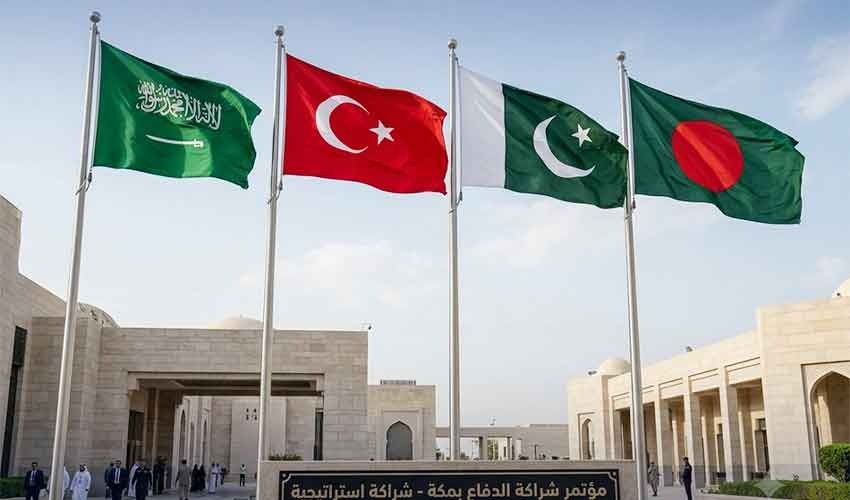
The Makkah accord signed by Pakistan, Saudi Arabia and Turkey on August 7, 2026 marked a significant development in the evolving security architect of the Middle East and South Asia. The agreement comes amid a rapidly changing regional security environment.
The regional states are reassessing their security alliances. The agreement contains collective defence framework provision comparable to NATO’s Article 5, under which an attack on one of the three states would be considered as an attack against them all.
The signatories have stressed that the accord is not against any state, it is a defensive arrangement rather than an offensive coalition. The pact is also open for other states to join who are willing to uphold its fundamental principles.
The pact’s implications already began to expand beyond the Persian Gulf and the Levant. Bangladesh has expressed interest in participating in the arrangement, raising the possibility that pact could acquire a South Asian dimension.
Dhaka’s potential inclusion in Makkah pact would raise strategic anxieties in New Delhi. A potential expansion of the pact towards South Asia could bring Bangladesh into a defence framework involving Pakistan and Turkey, two countries with increasingly significant military and strategic ties.
It could alter the regional balance and create new security complications for New Delhi where Pakistan is gaining strategic depth in India’s east alongside China.
Bangladesh’s interest in Makkah Pact needs to be understood against the broader recalibration of Dhaka’s foreign policy under Prime Minister Tarique Rahman and the Bangladesh Nationalist Party (BNP). The Dhaka administration aims to diversify its security, economic and strategic alliances under its proclaimed “Bangladesh First” doctrine, departing from what political leaders in Dhaka have called an excessive reliance on India in the past.
This includes efforts to improve relations with Pakistan, deepen engagement with Turkey and Saudi Arabia, and expanding ties with China. Dhaka-Islamabad bilateral relations are also moving beyond the previous decade limitations evident in increasing bilateral trade talks and reviving direct maritime and people-to-people connectivity.
From a deterrent perspective, the Makkah pact provides one institutional response to changing environment. The strategic value of Makkah Agreement lies in its ability to integrate three different types of strategic might under a single security framework.
Pakistan provides military expertise and human capital. Saudi Arabia brings investment resources, economic leverage, and geopolitical influence. Turkey contributes an increasingly sophisticated defence industry, including capabilities in unmanned systems, naval platforms and other military technologies.
Combining these resources might enable defence diplomacy to go beyond political statements and include cooperative defense-industrial projects, military education, institutional capacity building, and technology collaboration. Further expansion of the pact towards South Asia would be more consequential for India where Dhaka’s potential inclusion in the pact would provide strategic depth to Pakistan vis-à-vis India.
India’s “Act East” policy and maritime security doctrine revolve around the Bay of Bengal. The Eastern Naval Command at Visakhapatnam and important military installations in the Andaman and Nicobar Islands are only two examples of India’s vital naval infrastructure in the area.
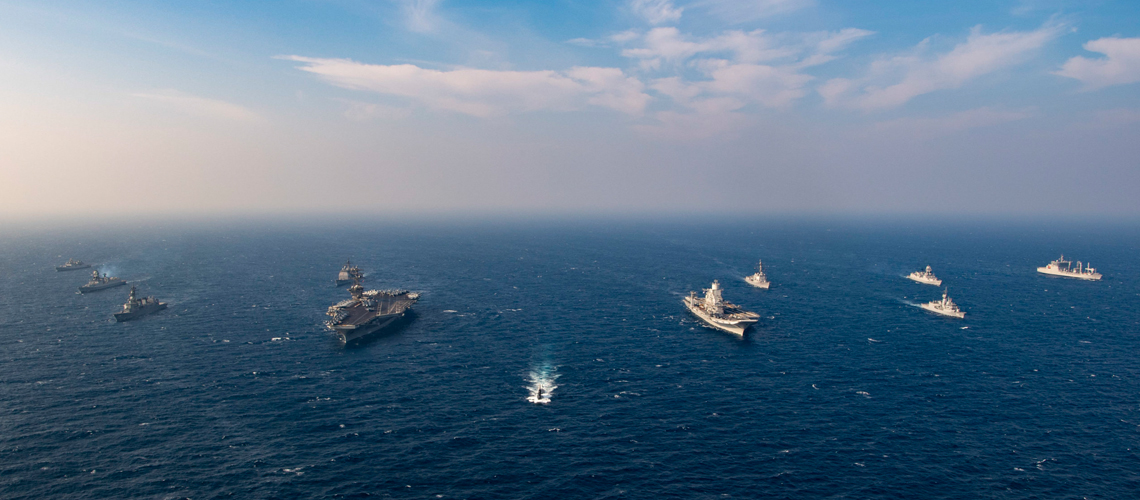
If Bangladesh’s participation eventually develops into deeper defence cooperation including joint exercises, naval visits, defence-industrial cooperation or expanded military access the Bay of Bengal would no longer be an insulated maritime backyard for India.
India would have to shift substantial maritime intelligence and naval monitoring resources from the larger Indian Ocean region to its eastern seaboard in the presence of sophisticated Turkish naval technology, observation platforms, or coordinated trilateral naval exercises in the Bay of Bengal.
For India, the concern would not necessarily be the immediate deployment of Pakistani forces in Bangladesh, but the emergence of a new security relationship on its eastern flank. The Indian Armed Forces were able to concentrate their main strategic resources along the Line of Control (LoC) with Pakistan and the Line of Actual Control (LAC) with China for decades because India’s eastern flank was thought to be stable.
However, a significant change in Dhaka’s security orientation would upset this equilibrium. A strong defence partnership among Bangladesh, Pakistan, Turkey and Saudi Arabia could compel New Delhi to devote greater attention to the Bay of Bengal, rather than concentrating overwhelming on its western and northern strategic theatres.