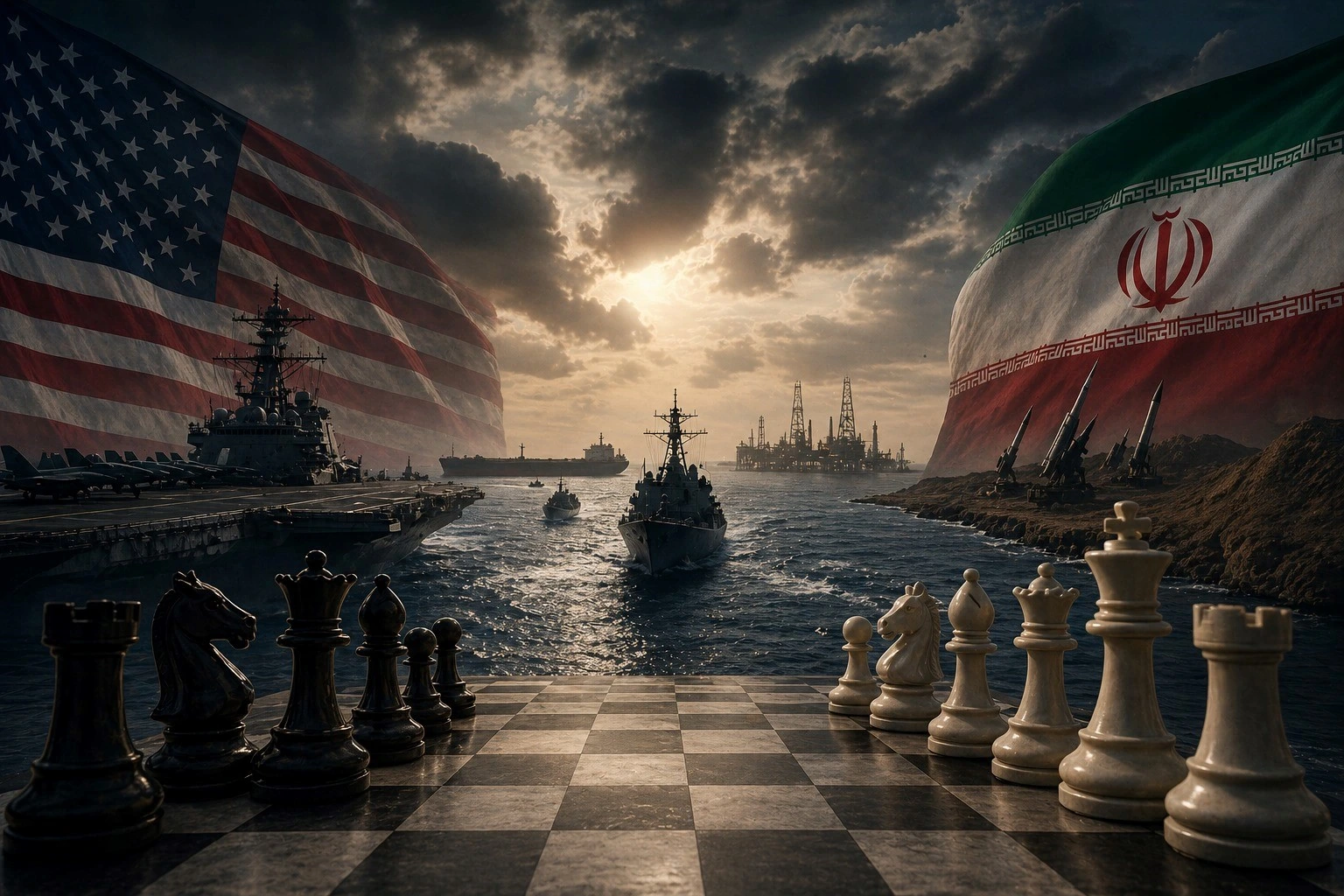
In the discipline of defence and strategy, there is a well-known principle: you are either negotiating with your adversary, or you are besieging them. You cannot logically do both. Yet, in a glaring display of what can only be described as coffeehouse chess, Washington has attempted precisely that, substituting sound positional strategy for disjointed tricks and profound geopolitical incoherence.
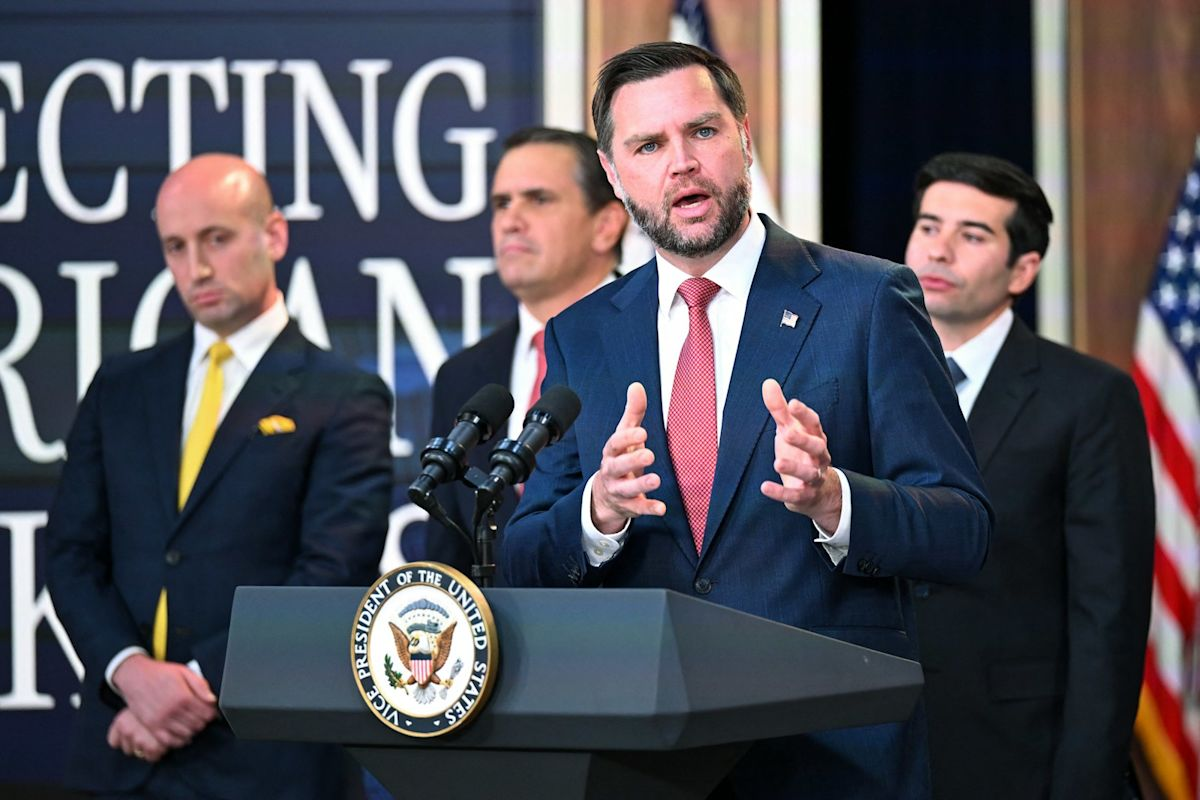
While Pakistani officials meticulously arranged the seating for ceasefire talks in Islamabad, around the same time, two American destroyers deliberately pushed into the Strait of Hormuz, broadcasting their presence in a waterway which remained untouched by the US Navy since Operation Epic Fury began in late February. Unsurprisingly, it was natural that the peace talks hit a roadblock as Vice President of the United States JD Vance walked away, citing Iranian intransigence. Mere hours later, President Donald Trump declared a naval blockade. In the very same news cycle, the President bizarrely assured the press that the ceasefire was “holding well.”
A ceasefire and a naval blockade cannot coexist. Under international law, a naval blockade is, however, an act of war. Not metaphorically. It is classified as a belligerent act requiring formal declaration, notification to all affected states, and proportionality review, according to the San Remo Manual on International Law Applicable to Armed Conflicts at Sea. During the 1962 Cuban Missile Crisis, President John F. Kennedy’s administration painstakingly avoided the word “blockade,” opting instead for a “defensive quarantine” to preserve legal cover and prevent uncontrollable nuclear escalation. Today, an administration housing another Kennedy has recklessly discarded that historic caution, announcing a blockade via social media without a UN mandate, and without coalition support.
This impulsive escalation plays directly into Tehran’s hands. Iran is executing the strategic equivalent of the Sicilian Defence. Instead of meeting American military might with conventional force, it has embraced devastating asymmetry. Tehran is deploying $30,000 drones that force Washington to fire $4 million Patriot interceptors. It is launching ballistic missiles that cost a fraction of the $36 million SM-3 Block IIA interceptors required to shoot them down. When the cost-exchange ratio sits at a staggering 106:1 against the United States, the traditional metrics of superpower victory dissolve entirely.
Furthermore, through cheap unmanned systems, mines, and fast-attack boats, Iran has effectively achieved a condominium over the Strait of Hormuz. It has disrupted the global energy market by slashing Riyadh’s output by 600,000 barrels per day with a single strike. Meanwhile, it has also borne the brunt of American retaliation. However, Iran has already decentralized its command structure, which has ensured that no single American strike, no matter how precise, can trigger a systemic collapse of the Iranian military or political apparatus.
In the wake of the so-called naval blockade, Washington is now essentially bleeding treasure to enforce a maritime closure that Tehran had already achieved for pennies. According to the American Enterprise Institute, US military spending has reached up to $31 billion in just five weeks, an astonishing $21,800 per second since the beginning of this war. The irony of the blockade became unmistakable when, on the very day it was announced, the White House suspended the Jones Act. In doing so, the administration effectively acknowledged that the United States’ own merchant fleet lacked the capacity to handle the disruption caused by the blockade. In simple terms, while projecting control over a critical global waterway, Washington was simultaneously conceding that it could not manage the economic consequences of that control at home.
If the blockade is legally hollow, economically ruinous, and strategically redundant, who is it actually for? The answer lies not in the Persian Gulf, but in the American heartland. This maneuver is calibrated entirely for a domestic audience, a base that equates carrier strike groups with unyielding resolve and reads the word “blockade” as an absolute victory.
Meanwhile, the political vacuum left by Washington’s blundering has already been filled by regional powers, most notably by Pakistan. Pakistan has emerged as the quiet victor of this crisis. By brokering the first face-to-face contact between the US and Iran since 1979, backed by a nuclear-capable military, Islamabad is positioning itself as an indispensable security guarantor for a region rapidly losing faith in American reliability. This posture is reinforced by its existing Strategic Mutual Defence Agreement with Saudi Arabia, now gaining renewed operational relevance, alongside growing chatter of a similar framework taking shape with Qatar.
In the end, wars are not decided by declarations, nor by the spectacle of power projected in headlines, but by the cold arithmetic of strategy, endurance, and coherence. What is unfolding in the Strait of Hormuz is not merely a contest of capabilities, but a test of which side better understands the nature of modern conflict. One is investing in optics, the other in outcomes; one is escalating costs, the other is managing them.
Washington may continue to announce blockades and deploy carrier groups, but such moves cannot substitute for a strategy that aligns means with ends. Tehran, for all the damage it has absorbed, remains anchored in a framework designed to outlast, outprice, and outmaneuver a superior adversary. That is the essence of the Sicilian Defence: conceding space in the short term to control the game in the long run.
The real question, then, is not whether the blockade will hold, but whether the logic behind it can. Because in chess, as in geopolitics, it is not the loudest move that wins the game, it is the one that still makes sense when the board settles.

Your go-to editorial hub for policy perspectives and informed analysis on pressing regional and global issues.